 Print
The Empty Parking Lot That Should Frighten Every American Who Eats Beef
Rebuilding The Beef Herd?
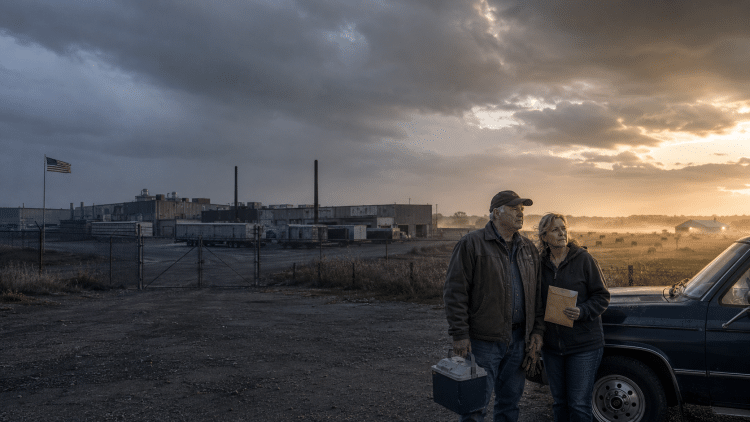
Well, the parking lot at Joslin ought to be full right now.
Pickup trucks should be lined up beneath the lights. Men and women should be walking through the doors with lunch coolers in their hands, work gloves tucked into their pockets, and another hard shift waiting on the other side.
Instead, the place has gone quiet.
That silence carries a long way across farm country. I live about 40 minutes from the Tyson beef plant in Joslin, Illinois, and what happened there wasn’t merely another corporate adjustment. It was a gut punch delivered to an entire corner of the Midwest.
On August 13, workers arrived for their shifts and received letters telling them the plant was closing. Harvest operations stopped immediately. After 43 years, a facility capable of processing roughly 3,000 cattle a day was finished, and about 2,500 workers were suddenly facing life without the paychecks their families had counted on.
Now, barely two weeks later, Washington says it has a plan to rebuild the American beef herd.
That sounds encouraging. But out here, where people still notice when the lights go dark at a packing plant, another question rises from the empty parking lot:
What good is rebuilding the herd if we keep losing the people and places needed to process it?
America Is Running Short of Cattle

To be fair, the problem is real. America’s cattle herd has fallen to its lowest level in 75 years. Years of drought, high feed costs, expensive fuel, tight credit, wildfires, and trouble importing cattle from Mexico have pushed ranchers to reduce their herds.
Rebuilding won’t happen overnight. Heifers must be retained instead of sold, bred, carried through gestation, calved, and raised. That takes grass, water, money, good weather, and time.
Meanwhile, families face higher prices in the meat case while ranchers pay through the nose for everything required to keep cattle alive.
So, on August 31, the USDA announced its new Ranchers First Initiative. The plan is meant to encourage herd rebuilding, help ranchers manage risk, recover grazing ground after disasters, and strengthen independent processing.
Those are worthy goals.
But a government plan should be judged by what finally reaches the pasture, the processing floor, and the supper table—not by how sturdy the podium looks on announcement day.
What The New Plan Promises
One proposal would help protect the value of heifers that ranchers retain for breeding. That matters because every heifer kept back is one less animal generating income today. Ranchers are being asked to sacrifice a present paycheck in hopes of producing more calves tomorrow.
USDA also plans guaranteed loans to establish cooperatives and expand smaller plants. A regional-continuity effort is supposed to keep processing capacity from disappearing when a company closes, sells, or consolidates a facility.
In addition, the government says it will encourage prisons, hospitals, schools, and other public institutions to purchase locally processed American beef. That could create steady demand for cattle raised and processed closer to home instead of funneling everything through a handful of corporate chokepoints.
On paper, that is the most promising part of the plan.
The American beef business doesn’t merely need more cattle. It needs more doors through which those cattle can move—and more of those doors need to be owned by people who have roots in the communities standing behind them.
Four Companies Stand At The Gate
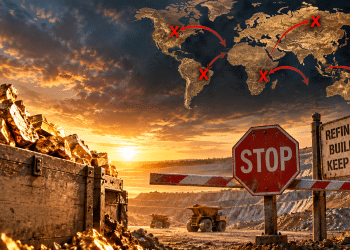
Today, the four largest beef packers handle about 85 percent of steer and heifer purchases. Back in 1980, the four largest controlled only about 36 percent.
That’s an enormous change.
When dozens of independent buyers become four giant buyers, the rancher has fewer places to sell. When one enormous plant closes, thousands of jobs disappear at once. When processing is shifted hundreds of miles away, local cattle travel farther, rural businesses lose customers, and another piece of the regional food system is pulled out by the roots.
Big plants can efficiently process large numbers of cattle at a lower cost per animal. Nobody should pretend otherwise.
But efficiency is not the same thing as resilience.
A homesteader understands the difference. Planting every row in the same crop may look efficient until disease moves through the field. Storing every jar on one shelf may save space until the shelf collapses. Depending on one well may seem sensible until the pump quits.
And putting most of the nation’s beef through a few corporate gates works wonderfully—right up until one of those gates slams shut.
Joslin Was More Than A Line On A Spreadsheet
From a corporate office, Joslin may look like capacity that can be shifted to Nebraska, Kansas, or Texas. On a spreadsheet, production can be absorbed elsewhere.
But spreadsheets don’t show the mortgage due in two weeks. They don’t show the diner serving the early shift, the gas station filling pickups, the church benevolence fund stretched thin, or families wondering whether they must move.
They don’t show a worker carrying his lunch cooler back to the truck after being told that 43 years of operation ended before lunch.
That is the trouble with a food system built around bigness. Its efficiencies are counted nationally, but its wounds bleed locally.
Can Washington Help Build Something Better?
USDA says recent plant closures could leave nearly 20 percent of beef-processing capacity available as the herd eventually grows. The agency sees an opportunity to move some of that capacity toward American-owned independent processors, regional businesses, and producer cooperatives.
That is an intriguing promise, but “available capacity” is an awfully clean phrase for an abandoned plant and thousands of displaced workers.
The test will be whether regional processors or rancher-owned cooperatives can acquire facilities, meet inspection requirements, recruit workers, secure cattle, and survive the years required for the herd to recover.
A loan may help open the gate, but debt alone doesn’t create a healthy market. Small processors also need predictable inspection, workable regulations, trained labor, and customers willing to pay a price that keeps rancher and processor alive.
Nor should food safety be treated like needless red tape. Families deserve meat processed under clean, careful conditions. The goal should be sensible inspection that protects consumers without building a regulatory wall only multinational companies can afford to climb.
Rebuild The Chain, Not Just The Herd
If Washington truly wants to put ranchers first, it must look beyond cattle numbers.
Rebuilding the herd without rebuilding regional slaughter and processing would be like raising a garden without owning a canner, freezer, root cellar, or pantry. You may produce a beautiful harvest, but you remain dependent on somebody else to preserve it—and somebody else gets to name the price.
America needs locally owned processors, rancher cooperatives, transparent cattle markets, honest country-of-origin labeling, skilled butcher training, and regulations scaled to an operation’s actual size and risk.
Most of all, it needs to stop treating rural towns as disposable machinery.
The community supplies workers, roads, utilities, schools, emergency services, and decades of loyalty. When the numbers change, the company can leave.
The town cannot.
The Lights At Joslin Are A Warning
There is something deeply off-grid about rebuilding smaller, sturdier systems. It is the same reason we save seed, keep tools we know how to repair, buy from a nearby farmer, and store food under our own roof.
We know that distance creates dependence. We know that consolidation creates fragile chokepoints. And we know that a system can look mighty right up until the one indispensable link snaps.
The Ranchers First Initiative may contain the beginnings of something useful. Helping ranchers retain breeding animals makes sense. Supporting independent processors makes sense. Steering public purchases toward American-raised and locally processed beef makes sense.
But announcements are seed, not harvest.
The real harvest will come only if cattle numbers rise, independent plants open, ranchers gain more than one buyer, consumers can afford the meat, and rural workers once again find steady jobs near the communities they call home.
Until then, the darkened plant at Joslin stands as a warning beside the road.
America cannot rebuild its beef supply by counting cattle alone. We must rebuild the whole chain—from the pasture fence to the processing floor to the family table.
Otherwise, Washington may succeed in giving us more cattle.
And leave us with fewer places, fewer workers, and fewer towns capable of turning those cattle into food.