 Print
Print
The Machine Everybody Counts On During A Blackout Can Quietly Die While Sitting In The Garage
There’s a particular sound every homesteader loves during a power outage. It’s the sound of a generator firing on the second pull.
The lights blink back on. The freezer full of beef starts humming again. The well pump comes alive. The furnace blower kicks over, and your wife looks at you like maybe buying that noisy red machine wasn’t such a crazy idea after all.
But there’s another sound.
Pull.
Nothing.
Pull again.
Nothing.
Then comes that miserable little cough… sputter… silence.
And suddenly you’re standing in a dark garage with a flashlight between your teeth, staring at the machine you were absolutely certain was going to save the day. That’s when you discover something nobody tells you while you’re rolling that brand-new generator toward the checkout counter.
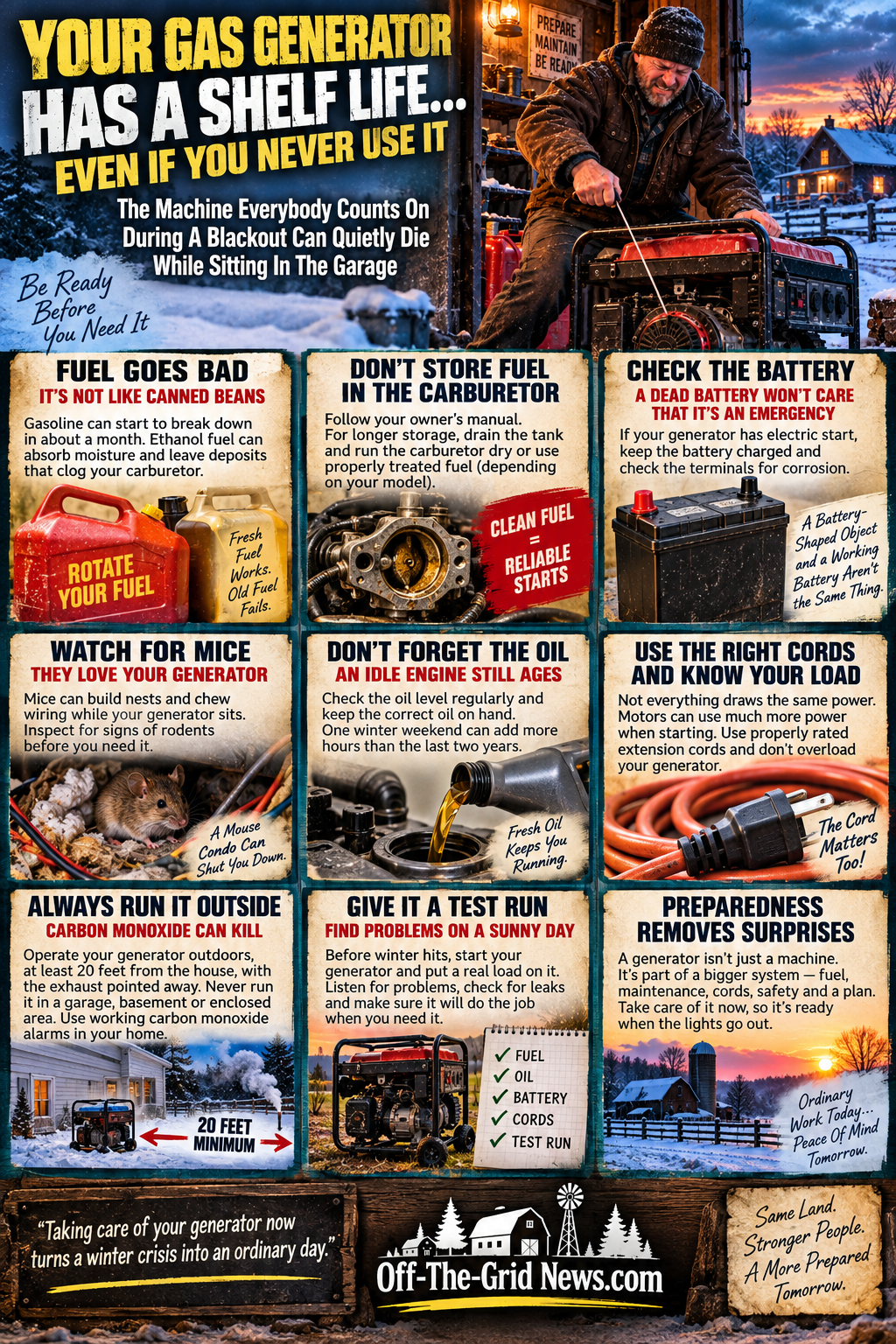
Your generator has a shelf life… even if you never use it.
Strangely enough, sitting still can sometimes be harder on a generator than working. And that means the machine you’ve been counting on may be quietly growing less dependable while collecting dust.
The Generator That “Only Has 23 Hours On It”
You’ve probably heard this when somebody sells a used generator.
“Practically brand new. Only 23 hours.”
That sounds wonderful, but I’d immediately ask another question: How many years did it spend sitting? Because an engine doesn’t stop aging just because the hour meter stops moving.
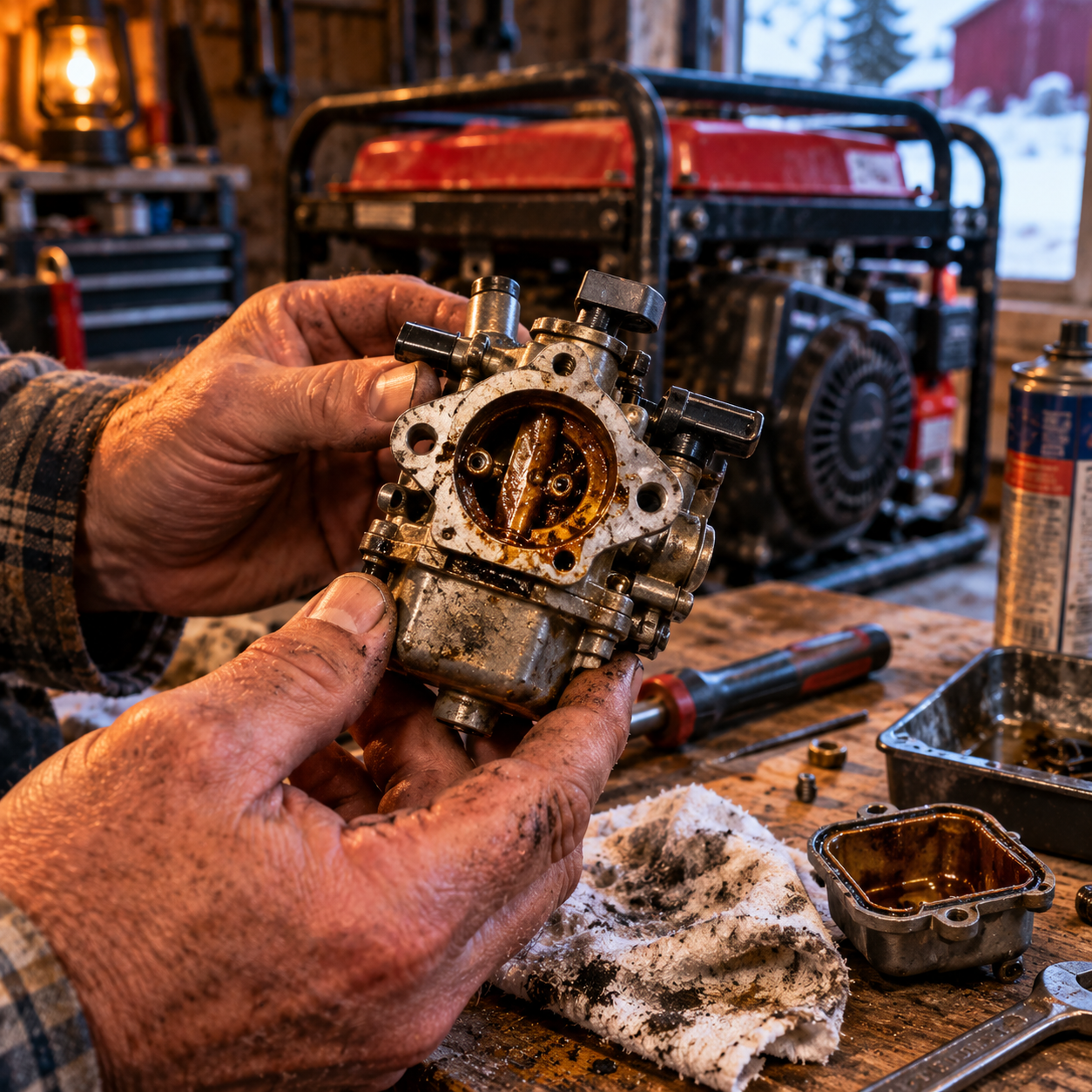
Gasoline gets old. Carburetors gum up. Batteries discharge. Electrical connections corrode. Rubber components age, and if the machine is sitting in a barn or shed, mice may decide the wiring makes a mighty fine addition to their winter remodeling project.
Meanwhile, the owner looks at that shiny machine sitting quietly in the corner and thinks he’s prepared.
And that’s the dangerous part.
A broken generator isn’t nearly as dangerous as a generator you think works, because you’ll build the rest of your preparedness plan around it. The freezer, well pump, furnace, sump pump and maybe even part of your livestock operation may all be counting on one little gasoline engine waking up when you need it most.
And one of the biggest reasons it might not wake up is sitting right there in the fuel tank.
Gasoline Doesn’t Age Like Canned Beans
Most of us grew up thinking gasoline was basically permanent. Dad had a rusty red gas can behind the shed, and somehow whatever came out of that thing seemed capable of making a Briggs & Stratton run.
Modern gasoline isn’t quite that forgiving. Generac says fuel can begin deteriorating in roughly a month, and the company recommends draining the tank and running the carburetor dry when certain portable generators will be stored longer than 30 days. The exact procedure depends on the machine, which is why that owner’s manual you tossed in the drawer actually matters.
Meanwhile, gasoline containing ethanol brings another wrinkle because alcohol and moisture can create problems during storage. Over time, old fuel can leave deposits behind inside the fuel system, and that’s especially troublesome inside a carburetor where some passages are mighty small.
Now that tiny passage that’s supposed to feed your engine begins acting like a clogged artery. That’s why you can have five gallons of gasoline sitting three inches away from an engine that’s coughing like it’s starving to death.
Which brings us to one of the cheapest forms of generator insurance you’ll ever buy.
Don’t Store Your Emergency Inside The Carburetor
If you’re putting a gasoline generator away for a long stretch, don’t simply roll it into the corner and forget about it. Follow the manufacturer’s storage instructions for that particular machine.
Depending on the generator, that may mean using properly treated fresh fuel and periodically running the unit, or draining the fuel system for longer storage. Briggs & Stratton recommends either an empty fuel tank or properly treated fuel for portable generators that aren’t used often, while Generac gives its own storage instructions for its machines.
The larger principle is simple.
Don’t let yesterday’s gasoline decide whether tomorrow’s lights come on.
And while you’re thinking about fuel, think about the cans sitting beside the generator, too. Rotate stored gasoline rather than treating it like a five-gallon bucket of wheat sealed for Judgment Day.
Mark the date on the container. Follow safe storage rules, use older fuel appropriately, and replace it with fresh fuel before you’re depending on it during an emergency.
It’s boring.
So is checking chicken water, stacking firewood and greasing a tractor.
But boring chores have a funny way of becoming extremely interesting when you skip them, especially when the temperature outside is dropping toward zero.
Then There’s The Battery Nobody Remembers
Of course, many larger generators don’t have a pull cord. They have a button, which is wonderful right up until you push it and hear one lonely sound.
Click.
That starting battery has been sitting there quietly losing charge while you’ve been admiring your preparedness. A battery doesn’t care that there’s an ice storm outside, and it doesn’t care that the freezer contains half a steer.
If it’s dead, it’s dead.
So check it before you need it. Briggs & Stratton specifically recommends keeping electric-start generator batteries charged, along with performing a dry run so you know the machine will operate before an outage arrives.
Inspect the terminals for corrosion and make sure you know whether the battery is actually healthy instead of merely present.
Because a battery-shaped object and a working battery aren’t necessarily the same thing.
And neither is a generator-shaped object.
Mice Don’t Respect Emergency Equipment
Here’s another problem rural folks understand better than anybody.
Mice love machinery.
Leave a generator sitting in a barn, garage or shed long enough and some little gray engineer may decide you’ve provided him with a luxury winter apartment. He’ll bring insulation, corn kernels and probably seventeen relatives, and occasionally he’ll chew wiring while he’s there.
So your generator inspection should include more than checking the oil and kicking the tires. Look around the air intake, wiring, exhaust area and engine compartment for nests, chewing and debris.
You really don’t want the first smell after starting your emergency generator to be roasted mouse condominium.
And while you’ve got the flashlight out, keep looking, because there’s another basic maintenance item that’s surprisingly easy to forget.
Oil Gets Forgotten Because The Engine Isn’t Running
Here’s the funny thing about generator maintenance. Everybody remembers gasoline, but oil tends to get treated like somebody else’s problem.
Yet your generator may sit for months and then suddenly be expected to go from retirement to working an eight-, twelve- or twenty-hour shift. That’s asking a lot from a little engine, especially if nobody has checked its oil since the last thunderstorm.
So know your machine’s oil-change interval and check the oil level before an outage rather than during one. Briggs & Stratton recommends checking generator oil regularly and keeping extra oil on hand for emergencies.
That last part is easy to overlook.
If a winter storm knocks the power out for several days, your generator may rack up more running hours in one weekend than it accumulated during the previous two years. Suddenly you’re performing maintenance during the emergency.
That’s why preparedness isn’t just owning equipment.
It’s owning what keeps the equipment alive.
Your Extension Cord Is Part Of The Generator
This is where people can get themselves into real trouble. They’ll buy a beautiful generator and then connect it to the world with an extension cord that looks like it came free with a Christmas tree.
The cord matters, and so does the load. A freezer, refrigerator, well pump, furnace blower and sump pump don’t all behave the same way, and equipment with motors can demand considerably more power while starting than while running.
That means the wattage number printed on the side of your generator isn’t permission to plug in everything with a cord. Know what you actually intend to power, understand your generator’s capacity, and use properly rated cords and equipment.
And if you’re connecting a portable generator to household wiring, don’t invent your own electrical engineering at midnight. The Consumer Product Safety Commission warns against plugging a generator into a household outlet to “backfeed” the house, because it can create an electrocution hazard for utility workers and neighbors.
Use properly installed transfer equipment when powering household circuits.
Preparedness shouldn’t kill the fellow trying to restore your power.
And neither should carbon monoxide.
The Most Important Generator Rule Is Outside
Every year people get this wrong, and this mistake can be deadly.
A portable generator belongs outside.
The U.S. Consumer Product Safety Commission says portable generators should be operated outdoors at least 20 feet from the house, with the exhaust pointed away from the home. Not in the basement. Not in the shed. Not in the garage with the door cracked open, and not on the porch because snow is coming down sideways.
Carbon monoxide is colorless and odorless. Opening a garage door or window isn’t enough to make an enclosed generator setup safe, which is why CPSC also recommends working carbon-monoxide alarms on every level of the home and outside sleeping areas.
And that points toward a bigger lesson.
The generator isn’t your backup system.
The whole system is your backup system.
Give It A Chore Before It Gets An Emergency
Here’s what I’d do before cold weather really settles over the homestead.
Pick a nice Saturday afternoon. Blue sky overhead. Coffee in hand. No ice hanging from the power lines and no storm warnings crawling across the television.
Then pull the generator out and make it work.
Not merely start.
Work.
Inspect it according to the manual. Check the oil, fuel and battery. Examine the cords. Look for mouse damage. Then start the machine outdoors and safely put a reasonable load on it.
That’s not just backyard tinkering. Briggs & Stratton specifically recommends performing a generator “dry run” so you’re familiar with operating the machine before an outage.
Then listen.
Engines talk. A surging engine is telling you something, and so is smoke, leaking fuel, strange vibration or a breaker that trips under a load you thought the machine could handle.
Finding that problem on a sunny October afternoon is mildly annoying.
Finding it at 2:13 a.m. in January is a crisis.
And there’s an enormous difference between those two things.
Preparedness Is Really About Removing Surprises
That’s what we’ve been doing on farms and homesteads forever. You stack wood before snow, mend fence before cattle discover the hole and put hay in the barn before the pasture turns brown.
You preserve tomatoes while tomatoes exist.
None of that is particularly dramatic, but preparedness was never supposed to be dramatic. The whole point is doing ordinary things today so extraordinary circumstances tomorrow become easier to handle.
In other words, preparedness is supposed to make the dramatic boring.
So don’t walk past that generator in the garage this fall and simply feel good because it’s there. Pull the cover off, check the fuel, check the oil, inspect the battery and look for the mouse hotel.
Then roll that machine outside and let it earn its keep for a little while.
Because someday the wind may start howling across the fields. The power lines may begin dancing, the yard light may blink twice and suddenly the whole farmhouse will go black.
You’ll grab a flashlight and head toward that generator.
And right then, you don’t want a piece of emergency equipment.
You want an old hired hand.
One you’ve fed, exercised and taken care of. One you’ve already watched work when the sun was shining and nothing important depended on it.
So when the barnyard finally goes dark, you pull the cord.
And the old hired hand shows up for work.