 Print


Those of us who have run a farm or homestead also know how important it is to conserve resources. If you manage your land properly, you won’t have to worry about poor soil quality or the erosion problems that many small farmers face. If you are raising livestock and poultry, implementing rotational grazing can conserve your property’s resources, reduce the cost of feed and be much healthier for your livestock and your soil.
In a nutshell, rotational grazing means moving your livestock around your land every day or two. This allows forage to grow back, prevents erosion caused by over grazing, fertilizes the soil and makes for healthier herds.
Where to Start
First start by taking stock of what you have. Let’s say you are the happy owner of 50 acres, half of which is wooded. Ten acres is composed of fields (which you don’t want livestock grazing in!) and there are 10 acres of pastures. The final five acres include gardens and your yard. Let’s say you are raising hogs, goats and chickens, all on pasture.
To start, we will take the 10 acres of open pasture and build a perimeter fence around it. Next we will divide the pasture into 10, one-acre lots and fence them in as well. If we were looking say north to south down the center there would be five lots to the east and five to the south. In the middle of the pasture area there should be a corral with a water source and shelter for your livestock. There needs to be a lane running down the center of these lots to facilitate the moving of your herds from corral and taking water to the grazing lots.
New Survival Seed Bank™ Lets You Plant A Full Acre Crisis Garden!
Your pasture area, even divided, should provide water, food and shelter for your critters. Many farmers I know also move the perimeter slightly into the woods to provide shade and cover from heat and weather. At the very least having a few trees in each one-acre lot will be a bonus, but not always possible.
Implementation
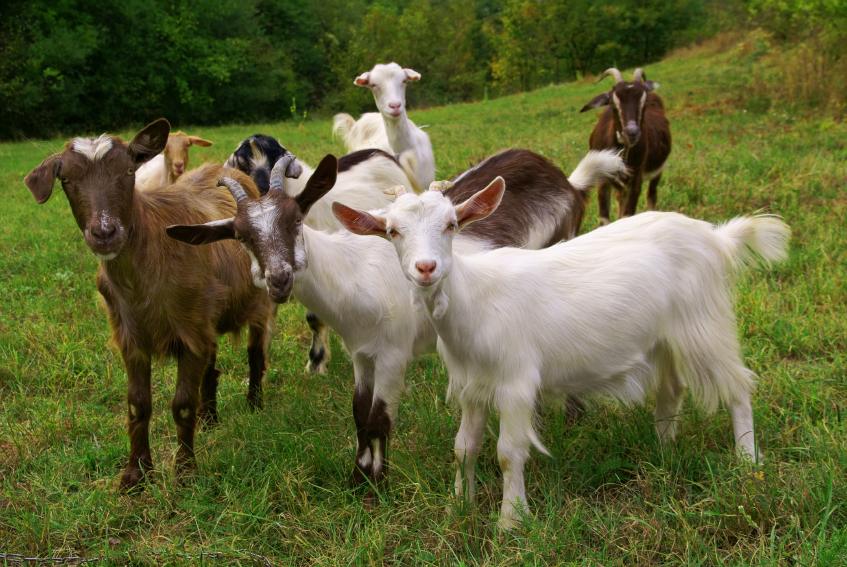 After you have set up your pasture land, it is time to begin using your new rotational grazing system. Number your lots, one to 10 in this case, and start at lot one. Before you begin, wait for the forage to be at least eight inches high. When you begin, open the gate to the first lot while keeping the gate open to the corral, allowing livestock to traverse between feed and water/shelter. Make sure the other lots are closed off. After a day or two, you will notice the forage has been eaten down greatly. Don’t let your livestock get down to the roots. Move your animals to the next lot while there is still a couple inches left of forage.
Once the livestock have reached the third lot you can allow free ranged poultry into the first lot. After a couple days, the dung left by the larger livestock should have insects and larva which will be eaten by your poultry. By eating the insects from your larger animal’s droppings, your chickens and turkeys will breakdown the manure (while adding their own), and help it to be adsorbed as fertilizer into the soil.
This can work if you have 10 or more lots and use two lots at a time for larger herds. If this is the case, I recommend dividing your animals into two separate herds and building two corrals with water and shelter. Each herd would feed on five lots, allowing seven to 14 days per lot between feedings.
Things to Consider
After a few years your pasture area will be extremely fertile. If you are using other fields for crop growing, you may want to switch field and pasture. This is work, don’t kid yourself otherwise. But after a week or two of grunting and sweating the move will be complete and you will have extremely rich soil to grow crops on. After laying seed for forage and allowing it time to grow to the proper height or maturity for livestock consumption, you will be ready to let your animals start on a whole new piece of land.
Separating different species is another consideration. Hogs and cattle generally don’t mix and it is best to separate them to prevent parasites. However, pigs can graze with sheep and goats – although it is prudent to separate them during lambing and not bring them back together until the lambs are a couple weeks old.
Supplemental feeding in most cases will be needed with pigs. Most folks I know use some slop and corn. Corn will further induce the poultry to break up the scat.
This article has only scratched the surface on rotational grazing management. But I pray I have given you a great start into researching the topic more. It is not an overly complicated method, but it takes some time to get it working.
Have you ever tried rotational grazing? What advice would you add? Share your tips in the section below: