 Print
Print
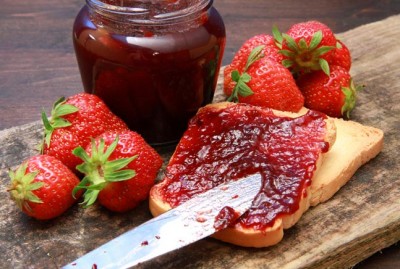
Warm weather often means jam-making time at my house. Raspberry jam is my particular favorite, but I make a big stock of strawberry for my husband too. Jams and conserves are among the simplest canning projects to undertake. All you need is ripe fruit, sugar, and some form of pectin.
Jam-Making Basics
Old-timers relied on the pectin found naturally in fruit to thicken their jams through long cooking, and you can use this approach today if you like. Some fruits, like sour apples, blackberries, crab apples, and grapes, naturally have a lot of pectin, while apricots, peaches, pears, and raspberries tend to be low in pectin. To make jams and jellies without any added pectin, combine three parts ripe fruit with one part under-ripe fruit, which contains more pectin. I’ve found this approach to be a bit unpredictable, and it requires a lot more fruit than fast cooking jam recipes. Another disadvantage is that the jam doesn’t taste as fresh and fruity because of the long cooking time required.
Another option is to use commercial pectin, available in liquid and powder form. This pectin, found in hardware and grocery stores, is made from the white pith of citrus fruits. If you make a lot of jam, consider buying it in bulk. Another option is low-methyl pectin, available online in health food stores. This is a natural product, which appeals to many people, but you’ll have to add calcium salt for it to gel. Jams made with low-methyl pectin taste very fresh because of the short cooking time needed, but they spoil more quickly and water tends to puddle in them.
Regardless of which form of pectin you buy, follow the directions exactly and don’t double the recipe, and you’ll end up with fairly consistent results. I prefer powdered pectin bought in a bulk container for most of my jam-making adventures.
Homemade Pectin
Once I mastered jam making, inevitably, I began wondering how I could make jam without the expense of buying commercial pectin. If you’ve got access to apple trees, you can easily make pectin at home. Use the pectin just as you would commercial liquid pectin. Four cups of homemade pectin equals three ounces of commercial pectin.
PRESERVING IS BACK, AND IT’S BETTER THAN EVER.
Here are the steps for making homemade pectin:
- Pick several pounds of apples. Thinly slice them, but don’t peel or core them. You can use any type of apple, including slightly green ones and those that are less-than-perfect. Young crab apples or Granny Smith apples work well. This is a great way to use up apples that have wormholes or other defects. Simply trim out the damaged areas.
- Combine the apples in a large stockpot with water at a rate of one pint water for each one pound of apple slices.
- Boil the apple slices and water for forty-five minutes, stirring occasionally.
- Line a colander with cheesecloth. Pour the apple slices and juice through the colander into a large pot or bowl.
- Return the apple slices to the stockpot and add more water, using the same measurements as before. Simmer over medium heat for fifteen to twenty minutes.
- Remove the stockpot from the heat and let set for ten minutes. Strain the apples and juice through cheesecloth as you did before into the bowl or pot.
- Gather the cheesecloth up tightly around the cooked apple slices to make a bag. Squeeze your bag, collecting any remaining juice into the bowl or pot. The combined juice is the homemade pectin. You should have one quart of pectin for every one pound of apples you cooked.
- Cover and refrigerate the pectin if you’re making jams right away. For long-term storage, ladle the pectin into four-cup freezer containers, leaving 1 inch of headspace. Cover and freeze for up to three months. To use, thaw in the refrigerator overnight. You can also can homemade pectin. Pour it into quart jars, add two-piece lids, and process in a water bath canner for fifteen minutes.
Making Jam With Homemade Pectin
Homemade pectin looks and tastes a lot like unsweetened apple juice. Unlike commercial pectins, it can stand up to longer cooking times, so you have more flexibility. In fact, it’s so flexible that you can make up your own recipes, based on individual preferences.
For example, a standard jam recipe usually goes something like this:
- 4 pounds fruit
- 2 cups sugar
- 1 quart liquid pectin
However, depending on the sweetness of the fruit, you can cut the sugar down quite a bit. You may also find, depending on the ripeness and amount of natural pectin in the fruit, that you need to add more pectin to thicken the jam. I usually combine the fruit and pectin in a large stockpot and boil it, stirring constantly for ten to fifteen minutes. Take a small spoonful of jam and place it on a plate. If it mounds up slightly on the plate, I know I’ve got the consistency I like. I can then add the sugar and simmer five minutes more. If, on the other hand, the jam spreads all over the plate in a runny mess, I simply add more pectin and boil it again. If the jam tastes too tart, I just add a bit more sugar.
The thickening ability of the pectin varies from year to year, depending on the ripeness of the apples, as well as the varieties and your preparation. Just plan on experimenting a bit with each batch until your jam is perfect.
Quick Tip On Making Pectin
Here’s another idea for saving apple pieces for pectin: Whenever you cut up an apple for fresh eating or cooking, save the peels and cores and place them in a resealable plastic bag. Store the bag in the freezer. When the bag is full, use the apple pieces to make liquid pectin. Also, once you’ve cooked the apple slices down for pectin, run the apple pulp through a food mill to make applesauce or apple butter. What a great way to stretch your resources!
© Off the Grid News