 Print
Print
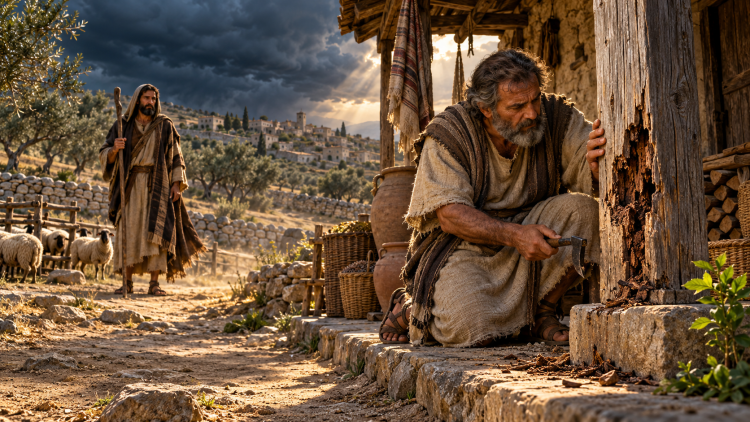
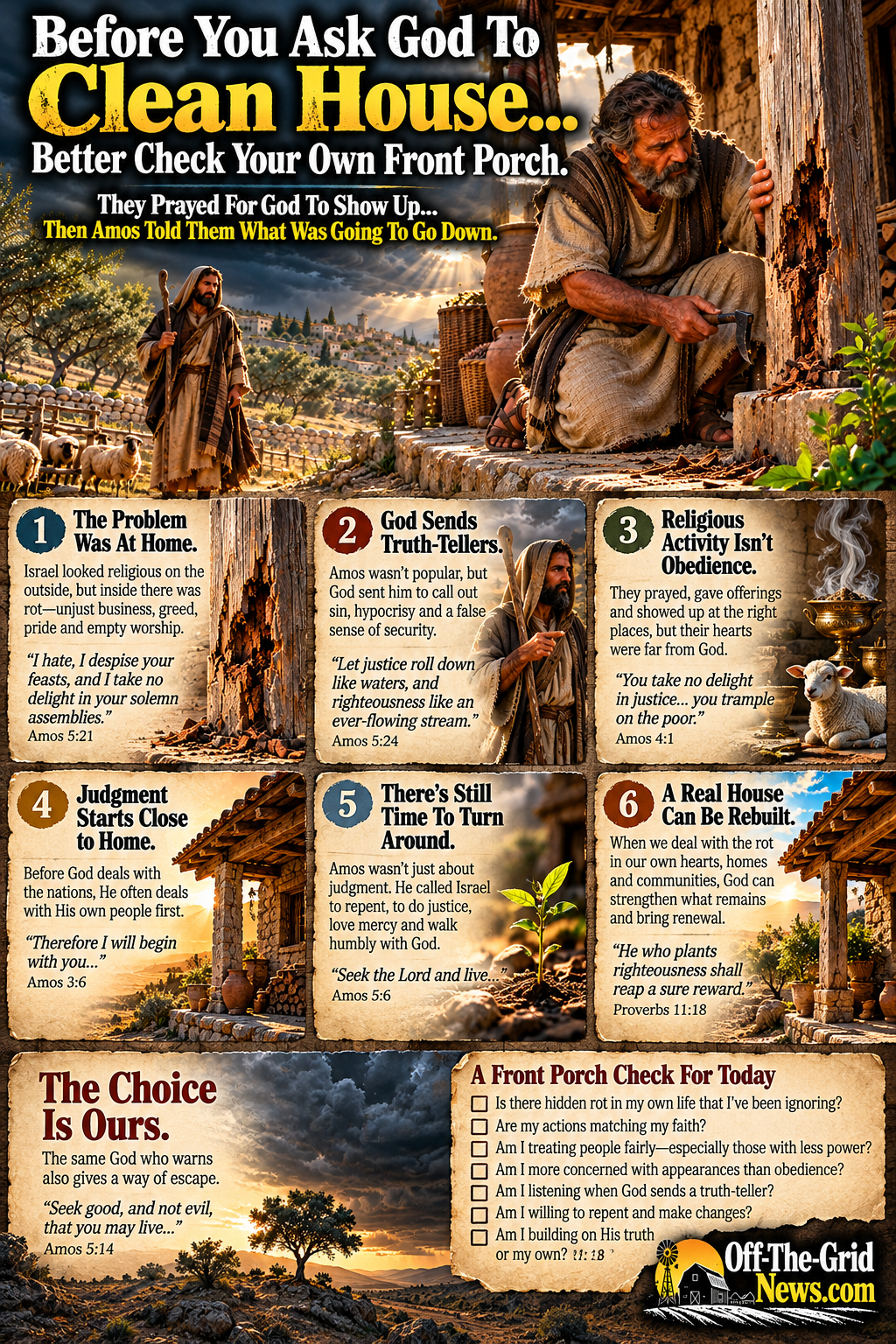
They Prayed For God To Show Up… Then Amos Told Them What Was Going To Go Down
The uncomfortable Bible warning for 2026: A full pantry, a church membership, and the “right” politics won’t put your homestead beyond God’s reach.
Suppose you hire somebody to inspect your old farmhouse. You figure he’ll admire the oak beams, compliment the stone fireplace, and tell you the place ought to stand another hundred years.
But instead, he crawls underneath it, pokes a screwdriver through a rotten sill, and says, “You’ve got trouble.” Suddenly, you’re considerably less enthusiastic about having an inspection.
Now suppose your inspector is God.
That’s the uncomfortable territory we’re entering today. Because plenty of us want God to inspect Washington, straighten out the schools, and haul the crooks out of the courthouse. We’re a little less eager when He turns up our driveway.
The prophet Amos had something to say about that. And his warning hasn’t lost an ounce of bite in 2026.
They Wanted God To Show Up… Until Amos Explained What That Meant
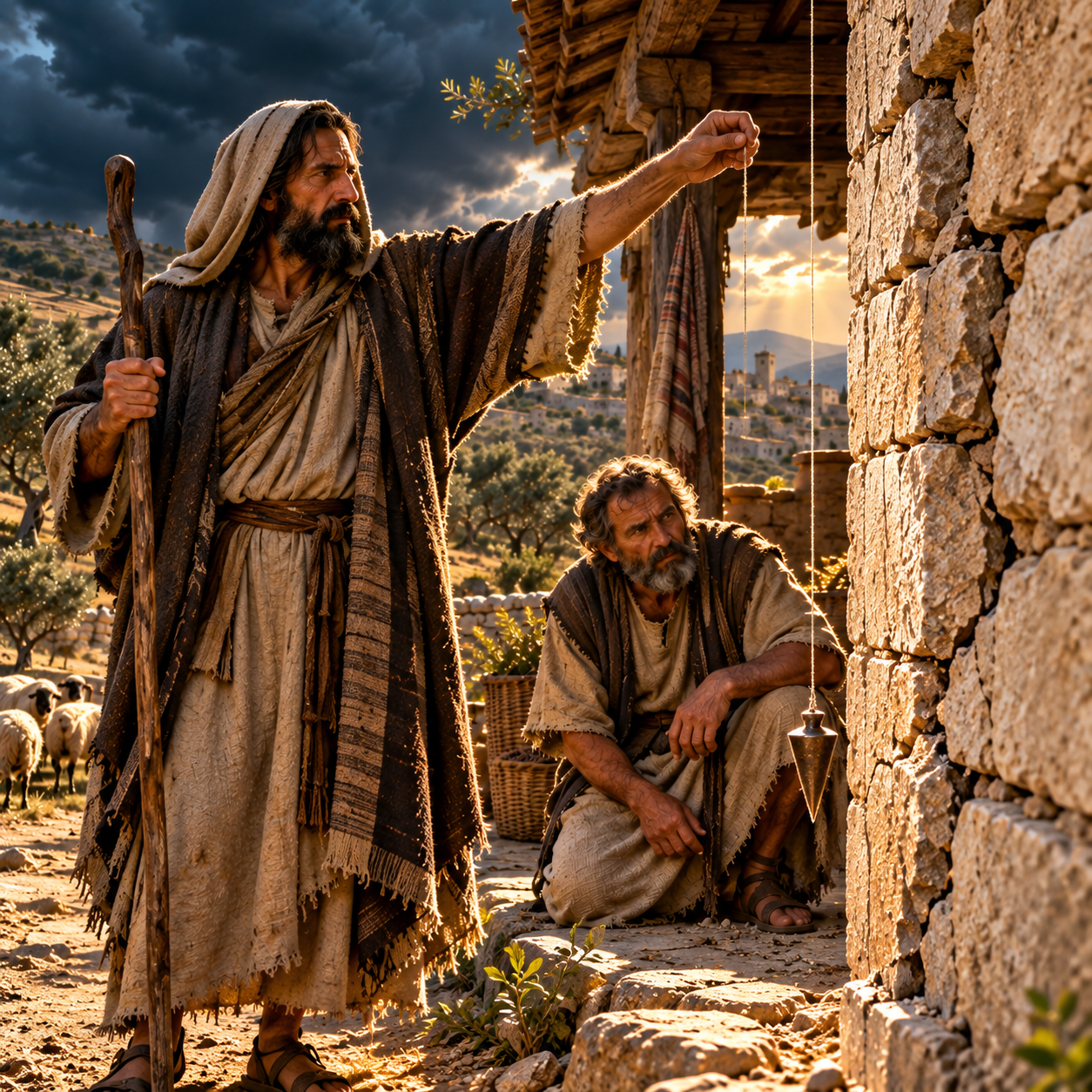
In Amos 5:18–20, people were looking forward to the day of the Lord. Apparently, they expected God’s arrival to settle things in their favor.
After all, they had the religious identity, the ceremonies, and the songs. Surely the trouble belonged to those other people over there.
Then Amos gave them a picture nobody would put on a cheerful Sunday morning church bulletin: A man escapes a lion, runs into a bear, finally reaches his house, and gets bitten by a snake when he leans against the wall.
There goes the escape plan, right?
The point wasn’t that they needed better wildlife management. The point was they couldn’t run beyond God’s reach, and their religious confidence wouldn’t shelter them from His judgment.
For a homesteader, that ought to land like a dropped feed sack. You can move beyond the city limits, drill a well, and grow your own potatoes. But you cannot buy forty acres outside God’s jurisdiction.
A Louder Worship Service Won’t Fix A Crooked Scale
Next, God rejects their feasts, offerings, and music in Amos 5:21–24. He calls for justice and righteousness instead.
Consider how that warning might sound across a farm gate. A man sells his neighbor a sick calf while hiding what he knows, then sings about loving his neighbor on Sunday. The tune may be lovely, but the transaction still stinks.
Likewise, a church can have polished floors, a beautiful choir, and enough coffee to float a fishing boat. None of it turns dishonesty into integrity or indifference into mercy.
Worship belongs to a life offered to God. It cannot serve as hush money for the parts we refuse to surrender.
That makes this a difficult sermon to sell. “Come hear how terrible your enemies are” will fill more seats than “Let’s discuss what you owe the fellow you cheated.”
The Crisis You Keep Avoiding Is Still Growing
Theologian R. J. Rushdoony explored this connection in his message “Judgment as Crisis”, which inspired this article. His central challenge was that we try to dodge the confrontations that expose our rebellion and require a change.
Think about a fence post rotting at ground level. You can paint the top, hang a fresh gate on it, and announce that everything looks wonderful. But the next hard shove will tell the truth.
So it goes with the apology you won’t make, the dishonest habit you excuse, or the family responsibility you keep handing off. Delay can make the eventual reckoning harder.
Here’s the warning we can move to 2026 and beyond: Don’t confuse another extension with deliverance. A refinanced obligation, a new political promise, or a fresh distraction may buy time without correcting what went wrong.
An extra season is useful if you repair the fence. It’s dangerous if you take it as proof that rotten wood has become strong.
And nope, that doesn’t mean every sick child or failed harvest exposes some particular hidden sin. In Luke 13:1–5, Jesus refuses to let His listeners treat victims of disaster as worse sinners; He turns the call to repentance back on the listeners themselves.
The question is what we need to put right while we still have time.
God Didn’t Give Us A Bible To Prop Up The Short Table Leg
In John 16:8–11, Jesus says the Holy Spirit will convict the world concerning sin, righteousness, and judgment. That’s uncomfortable work when we’ve grown fond of our excuses.
We’d often prefer Scripture to provide a little encouragement before breakfast and leave the rest of our arrangements alone. Trouble is, the Bible keeps wandering into the kitchen, the checkbook, the bedroom, and the way we talk to people.
It asks whether our weights are honest. Whether we keep our word. Whether the financially broke or physically helpless person down the road matters enough to interrupt our plans.
Now, a theological word for treating God’s moral commands as disposable is antinomianism. Around the homestead, we might describe it as wanting the Father’s inheritance while refusing the Father’s instructions.
Grace forgives sinners and trains them to live differently, as Titus 2:11–14 explains. A forgiven thief has every reason to stop stealing.
Washington Makes A Mighty Poor Messiah
The original sermon also warned about divided loyalties: professing allegiance to God while placing ultimate confidence in political power. Rushdoony applied Amos’s condemnation of idolatry to the temptation to treat the state as a savior.
That temptation deserves a fresh inspection for us today. If our hope rises and falls entirely with elections, court rulings, government checks, and whoever controls the machinery, we should ask what we actually trust.
Of course, government matters. So do voting, laws, and resisting injustice. But a useful hired hand becomes a dangerous master when you give him the deed to the whole farm.
The same question reaches into education. Deuteronomy 6:6–7 places teaching God’s words inside the daily life of the household. Parents cannot outsource their responsibility and then act surprised when somebody else’s convictions take root.
Whatever schooling arrangement a family uses, somebody is teaching those children what is true, what is good, and who gets the final say. We ought to know who… and measure that teaching against Scripture.
You wouldn’t accept an unmarked sack of seed from a stranger and plant the whole garden without asking what’s inside. Your children deserve at least that much attention.
Take Away Judgment And You Empty The Cross
Here’s where the subject gets deeper than politics or bad habits. If sin brings no real judgment, what exactly did Christ come to save us from?
Hebrews 9:27–28 puts death, judgment, Christ’s sacrifice, and His return together. The Savior who bore sins will appear again to bring salvation to those waiting for Him.
That’s a whole lot bigger than helping decent people feel more positive about themselves. The cross deals with guilt we cannot wash off and an account we cannot settle ourselves.
You cannot put away enough peaches, stack enough firewood, or accumulate enough church attendance to pay it. Even your best harvest won’t purchase a pardon.
Yet Romans 8:1 announces freedom from condemnation for those in Christ Jesus. Christian confidence rests in Him, which gives us solid ground for repentance instead of another reason to hide.
We can admit the rot because our hope doesn’t depend on pretending the house is sound.
Sometimes The Field Gets Its Rest When The Owner Loses Control
There’s a striking agricultural detail in 2 Chronicles 36:20–21. Judah’s exile brought desolation, and the land enjoyed its Sabbath rest.
The people experienced catastrophe. The exhausted ground received relief. That ought to humble anyone who assumes his continued control of things must always be the best possible outcome.
Still, the biblical story carries a promise of restoration. Amos 9:11–15 ends with rebuilding, planting, and fruitfulness after the warnings of judgment.
That promise gives us grounds for hope without handing every Christian a guarantee of an easy season. The final horizon reaches beyond any successful farm: Isaiah 25:8 looks toward death swallowed up, and… tears wiped away.
So God’s purposes reach further than keeping our present arrangements comfortable.
Before You Reinforce The Gate, Walk Your Own Fence Line
So, yes, store food. Learn useful skills, strengthen your household, and help your neighbors prepare. Those are worthwhile things to do.
Alongside that work, inspect what you’ve been avoiding. Pay what you owe, tell the truth, ask forgiveness, and open the Bible with a willingness to obey what you find there.
Then teach your children that Christ’s authority reaches Monday morning as surely as Sunday worship. Let them see it in how you work, how you settle disagreements, and how you treat somebody who cannot repay you.
Because the most dangerous kind of unpreparedness can sit behind a locked gate with three years of groceries. It belongs to the man who has planned for everything except being wrong before God.
Before we ask the Lord to clean up the country, we’d better stop hiding things under our own porch.