 Print
Print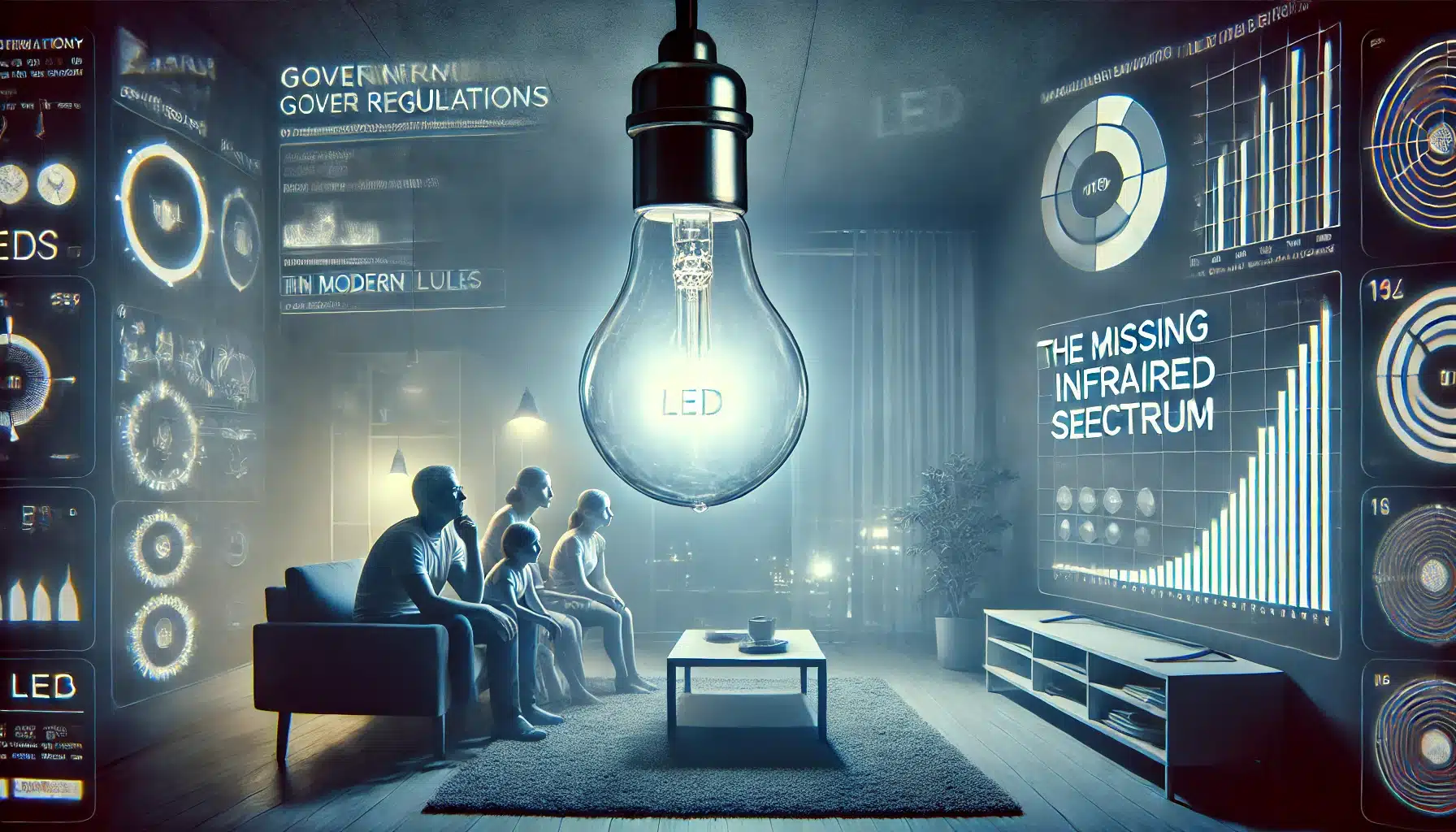
More Dangerous LED Laws On The Way
Since the dawn of artificial lighting, incandescent bulbs have dominated households, providing warm, broad-spectrum light that closely mimics natural sunlight.
However, regulations from the U.S. Department of Energy (DOE) have accelerated the transition from these traditional bulbs, favoring LED technology due to its energy efficiency. While LED bulbs consume significantly less power, the implications of this shift go beyond electricity bills, raising questions about long-term health effects and the quality of light people experience indoors.
The Science of Light and Its Impact on Health
Natural sunlight is composed of a broad spectrum of light, including visible, ultraviolet (UV), and infrared (IR) wavelengths. Infrared light, often overlooked in discussions about lighting, plays a crucial role in human biology.
It penetrates deep into the body, promoting metabolic changes and supporting mitochondrial function. Research suggests that infrared light can aid in healing processes, improve circulation, and support overall well-being.
In contrast, LED bulbs are engineered to maximize visible light efficiency while eliminating infrared wavelengths. This focus on “useful” light has inadvertently removed the infrared spectrum humans have coexisted with for thousands of years.
With people spending an estimated 93% of their time indoors, the absence of infrared light in artificial lighting may have unintended consequences for health, particularly in areas related to circadian rhythms, sleep, and cellular function.
Efficiency Mistruths
The DOE’s new regulations are set to raise the minimum efficiency requirement for light bulbs from 45 lumens per watt (enforced in 2023) to 125 lumens per watt by 2028. This standard will effectively eliminate any bulbs that produce a broad light spectrum, as the most “efficient” way to meet these requirements is to maximize blue and green light output while eliminating infrared and red light.
However, the efficiency metrics used to evaluate lighting do not account for the biological impact of different wavelengths. Lumens per watt measures how much visible light a bulb produces relative to its energy consumption.
Still, it does not consider how that light interacts with the human body. While LEDs may reduce power consumption, they do so at the cost of removing the infrared spectrum, which some scientists argue is critical for maintaining healthy circadian rhythms and overall well-being.

Blue Light Health Risks Ignored By Bureaucrats
The potential health risks of LED dominant exposure to high levels of blue light, especially in the evening, has been linked to disruptions in melatonin production, a hormone essential for regulating sleep cycles. The absence of infrared light further compounds this issue, as natural light typically includes a mix of both blue and infrared wavelengths.
In the past, incandescent bulbs provided a warm, broad-spectrum glow that included infrared light, which helped balance the effects of blue light exposure.
By 2028, with the new efficiency standards in place, the only legal bulbs available for general use will likely emit an even narrower spectrum of light, increasing blue light exposure while further eliminating red and infrared wavelengths.
This could lead to a greater prevalence of sleep disturbances, metabolic disorders, and other serious health issues linked to artificial lighting. These health issues include disrupted sleep patterns, increased risk of obesity, diabetes, cardiovascular diseases, and certain cancers.
Money Savings vs. Health Costs
The DOE estimates that the new regulations will save consumers $2.2 billion annually through reduced energy consumption and lower carbon emissions. However, these calculations fail to account for potential health costs.
Sleep disorders, obesity, diabetes, cardiovascular diseases, and certain cancers have all been linked to excessive exposure to artificial light, particularly high-intensity blue light. The estimated economic burden of circadian rhythm disorders alone is approximately $411 billion annually, overshadowing the projected energy savings.
Alternatives and Potential Solutions
With incandescent and halogen bulbs effectively banned, consumers seeking healthier lighting options have turned to innovative LED solutions that aim to replicate natural light more closely. Several companies have developed alternative lighting technologies that integrate infrared wavelengths while meeting regulatory efficiency standards.
One such company, Nira, has designed LED bulbs with integrated infrared filaments that restore some of the benefits lost in traditional LED designs. Another company, PhosphorTech, has developed coatings that convert blue light into red and infrared wavelengths, helping mimic the natural sunset and reducing blue light exposure in the evening.
A potential long-term solution could be the creation of a new light bulb classification, such as the ‘General Wellness Lamp.’ This category would include bulbs that support human health by incorporating a balanced light spectrum, including infrared.
These bulbs would be designed to mimic the natural light spectrum, providing the necessary balance of visible and infrared light for human health. By establishing a separate regulatory framework for wellness-focused lighting, policymakers could ensure that efficiency gains do not come at the cost of public health.
Empowering Consumers to Advocate for Healthy Lighting
While energy efficiency is essential, the quality of indoor lighting and its impact on human health must also be considered. The DOE’s upcoming 2028 regulations will significantly limit consumer choice, potentially leaving millions of people with no option but to use bulbs that disrupt sleep and biological rhythms.
Legislative action is one of the few ways to challenge this regulatory shift. Concerned citizens can write to DOE Secretary Chris Wright and their congressional representatives to advocate for including infrared-friendly lighting options in future regulations.
A Call to Action
By raising awareness about the biological importance of infrared light and the unintended health consequences of existing efficiency standards, it may be possible to push for more balanced policies.
Until such changes occur, individuals can mitigate the effects of blue light exposure by using innovative lighting solutions that adjust throughout the day, incorporating infrared-enhanced LED bulbs, and prioritizing natural sunlight exposure whenever possible.
Natural sunlight is a crucial counterbalance to artificial lighting, providing the full spectrum of light, including infrared, that our bodies need for optimal health. As the lighting industry continues to evolve, the balance between efficiency and health will remain a crucial issue, shaping the future of indoor environments for generations to come.