Off The Grid News Better Ideas For Off The Grid Living

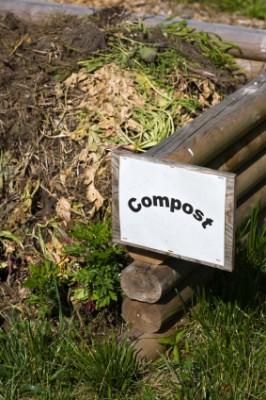
Most of us have already heard about the many benefits of using compost in our gardens. If you are like my husband and me, you’ve probably read your share of articles on the topic, as well as discussed it in length with your gardening friends. You may have even debated as to whether it is really necessary to follow all of the rules. I’m sure some of you have read the articles and witnessed the debates and have walked away completely overwhelmed.
My husband and I have had some form of a compost pile for most of the last fifteen years. In this article, I would like to share with you what we have tried and how it worked out for us.
Composting In Town: The Pallet Compost Bin
Our first composting experience began when we were living in an arid southwest Colorado town. We used wooden pallets donated by my husband’s place of employment. They were wired together in an open box-like fashion and – voila! – we had the beginnings of our first compost pile. The high sides kept all but the most persistent neighborhood dogs out, and it was easily disassembled when we wanted to use the compost–we simply unwired and removed the front pallet, making the compost easily accessible.
The Stacked Tire Compost Bin
Around the same time, we read about the virtues of stacked tires for use in composting and in growing things. The climate we were living in was such that there was potential for freezing weather and even snow as late/early as the 4th of July. This meant that the warmer temperatures needed for a compost pile to thrive (and for many crops to grow and produce), was often hindered by the regular cool temperatures. The idea behind the stacked tires was that the sun would warm the tires during the day, and they would keep the plants and soil warm through the cooler nights. This seemed like a great idea to try. We started a stacked tire compost setup right at the one corner of the garden.
Challenges
Starting our first compost piles was somewhat of a challenge, since there was not a lot of vegetation available in such an arid region, and we were just a couple with a very limited amount of kitchen scraps. We scrounged around for what we could find. We began with grass clippings from our small untreated lawn, kitchen scraps, and (non-seedy) weeds from where we put our small garden. In the fall, we added leaves to the mix.
Our other challenge was the occasional stray dog that would take a liking to whatever was in the compost. This didn’t become a huge problem, other than their stealing our precious materials, and it was easily remedied with the pallet setup by placing some wire fencing over the top of the compost bin.
Occasionally, a neighborhood cat would take a liking to our compost bin and use it for a litter box. This was mostly remedied with the pallet setup, but not as easily in the tire setup; although I did discover that if I could keep the tire compost damp, the cats would leave it alone.
New Natural Fertilizer Doubles Garden Production!
Successes
We were able to see the compost piles doing their job when my husband was turning it one cool morning and steam was rising from it. We were excited, as it was proof that the organisms were breaking the organic matter down to compost material. It was a gratifying feeling to see that.
We were not able to see the compost we made at this home through to the betterment of the garden, since we moved to the area near where we are now located. The people that purchased the house asked that the compost pile be removed/destroyed, as they felt it was an eyesore. We were rather put out at this, but we wanted to sell, so we did get rid of our beloved compost bin and garden and moved on.
Composting On The Homestead
Composting on our homestead is somewhat of a different ball game. For one thing, our homestead is located in a fairly humid, vegetation-rich part of the country. There is still a true winter in the area, but there is also a long, hot summer where the nights get nowhere near the danger of freezing (both a blessing and a curse).
Another thing is that there are quite a few more critters that come out at night to help themselves to whatever is out there, whether it be the garden or the compost bin.
Pallet Compost Bin Reruns
Starting our first compost bin in our new location was simple. We used the wooden pallet idea once again, and located the pile way out by the chicken coop. I’m not sure what we were thinking, putting it all the way out there, as our kids were a little bit afraid of trekking out there to dump the scrap bowl some evenings. I think we had it in our minds that we would have a lot of chicken waste to put in there, but it just didn’t work out that way since we ultimately ended up putting the chicken manure directly from the coop to the garden.
Our second compost bin was another pallet setup closer to the house. This location was much better, as it was kid-friendly and much closer to the garden. Since we had so much vegetation to start with, there was no problem getting started. We simply started with grass clippings (really grass-and-whatever-else-grows-here clippings) and added garden waste, non-seedy weeds, kitchen scraps that the chickens didn’t get, and eggshells from our chickens. The turnover was much quicker here, but we weren’t surprised, given that we had so much to work with and the climate was perfect for keeping the organisms happy.
The Open Compost Pile
What I call our open compost pile was just that: a pile of grass clippings on the edge of one of our fields. We have a ton of grass that we have to keep up with mowing in the summertime, and one year we decided to make a big pile of clippings. By the next spring, the clipping/compost pile had turned into a pile of nice soil, and I decided to plant that year’s pumpkins directly in the pile. From what I recall, we did get a few pumpkins out of the deal. More than in the years since, due to the squash bugs attacking my plants. But that’s another story.
An Accidental Discovery…Compost Tea
Have you read about using compost tea? We’d come across it and thought about trying it out, but somehow never got around to doing it… on purpose, that is.
My husband and I stumbled into using compost tea in our garden by accident. One of our garbage cans had cracked and gotten a hole at the bottom. We hated to just throw it away, so my husband put it to use as a new compost bin experiment. He constructed a wooden frame for it to sit up off of the ground to ensure air circulation and water drainage.
So, we had ourselves a new compost bin. This bin actually seemed to work somewhat faster than our airy pallet compost setups. This bin was also more easily covered in case we started to have problems with animals getting into the compost.
One rainy day we walked by this garbage can compost bin and noticed the amber hue to the water draining from the bottom. The light bulb went on in our heads and we got a bucket and collected the water and began using it to water the garden as a light fertilizer. It seemed to be better than plain water and didn’t hurt the plants, so I think it went well. We didn’t do any scientific studies on it to compare crops given compost tea with those not given compost tea, but we can definitely see how the compost tea idea began!
Challenges
Our main challenge on the homestead has been keeping animals out of the compost bin. We’ve decided to let them eat out of the bin, as we’d rather they do that than pillage in our garden instead. We do have a live trap that we use if the garden attacks get out of hand.
Successes
I would say that our homestead composting ventures have been fairly successful. The only ways I can see a lot more improvement and impact with our compost would be to make more of it and be more diligent about filling the bins with our lawn clippings.
As an aside, our grass clippings have done very well when placed directly on our garden soil as mulch after plants have come up. The grass eventually breaks down into soil, and our once-heavy clay soil has been vastly improved with this practice, as well as the added compost from our bins. It’s a similar process, just in a different location.
Composting Rules We’ve Broken
There have been a few rules that we have broken along the way. Yes, I cringed and second-guessed myself as I did the deed, but the compost bin has survived.
The number one rule we have broken is the “Do not put meat or bones into the compost pile.” While most of my bones lately have gone into bone broth and have therefore been rendered to mush, we have been known to throw bones into our compost piles. Heck, someone I know has even tossed a chicken or two that was killed by stray dogs into their pile and covered it with compost and grass clippings and not had any problems. (I wouldn’t recommend tossing a diseased animal into the compost bin, due to risk of adding disease to your compost and then to your veggies and possibly to you.) The drawbacks to breaking this rule are that it tends to take longer for these things to break down, it may lure unwanted creatures to your pile, and it might smell for a couple of days, depending on how hot your compost pile is and how long it takes to break down. If you are willing to wait, it might not be that horrible of an idea to put undiseased meat and bone products into your compost pile. I would recommend having a compost pile for this purpose located far away from your garden and home if you decide on putting an unfortunate chicken in the mix. And if you live in town, it’s probably not a good idea to break the rule. Be kind to your neighbors.
Another rule that we have broken is the “Mix or turn your compost regularly.” Again, we take this as a suggestion, not a rule. Nature itself doesn’t go around with a pitchfork in the woods, turning over the leaves and the other organic matter, so why is it needed? The answer: to speed the process. We aren’t in a huge hurry and tend to let nature run its course; we’ll turn it if we feel the need, but if we don’t, it will still survive.
A third rule (or maybe I should call it a suggestion at this point…) is to compost your packaging, rather than throw it into the garbage. We personally don’t like to toss papers and cardboard into the compost bin, as it tends to be fairly windy out here in the country, and that sort of thing tends to escape and blow across the countryside. I hate finding other people’s garbage on my property, no matter how it got there. We’ll save the papers for the furnace, thanks.
It’s Not Rocket Science!
All this to say that composting is not rocket science. Sure, we can talk about all of the science behind it, but it all comes down to the fact that organic matter breaks down to dirt. Don’t let the details scare you out of starting a compost pile for yourself. Start small if you are intimidated. Find out what works for you, your location, and your time frame. Learn as you go, and most of all, have fun doing it!
©2013 Off the Grid News