Print
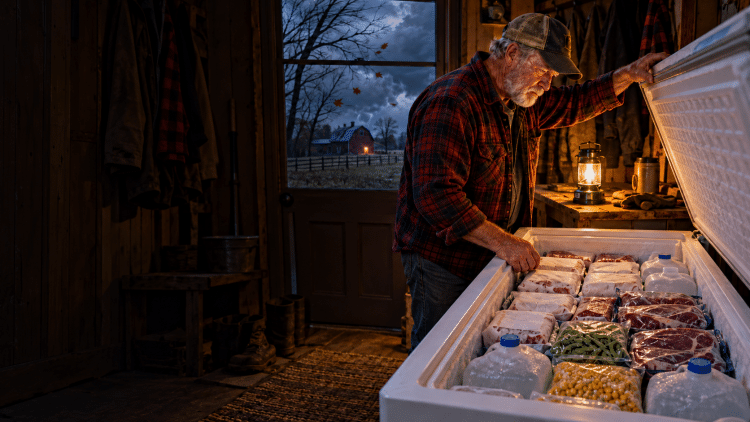
Before The Next Storm Turns Your Freezer Full of Meat Into A Very Expensive Mess
Your Freezer Is a Bank Vault Full of Cold… Here’s How to Keep a Storm From Cleaning It Out
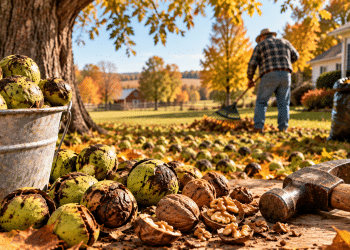
Late October is payday on the homestead. Only this paycheck comes wrapped in butcher paper, tucked into freezer bags, and stacked beneath a lid heavy enough to pinch your fingers.
The steer that ate through your feed money all summer is finally feeding you back. The last garden beans are bagged, the sweet corn is put away, and if somebody has already filled a deer tag, the venison may be occupying the ice cream’s old address.
Now take a good look at that chest freezer. You may be staring at a thousand dollars’ worth of food—or considerably more—and a good chunk of the year’s work.
There are fence repairs in there. Cold mornings in the barn. Hours spent weeding, watering, picking, hauling, and standing at the kitchen counter when you would rather have been sitting down.
And somewhere down the road, one ice-loaded branch is thinking about taking the whole operation out.
That’s the catch with a well-stocked freezer. It can hold months of meals, but its connection to the power company is no stronger than the lines running past your place. Wind, ice, or a tree across the road can turn a comfortable evening into a race against the thaw.
So before the next storm starts rattling the windows, give your freezer a little attention. An hour spent getting ready can help protect the food you worked all year to put away.
Your Freezer Is a Bank Vault Full of Cold
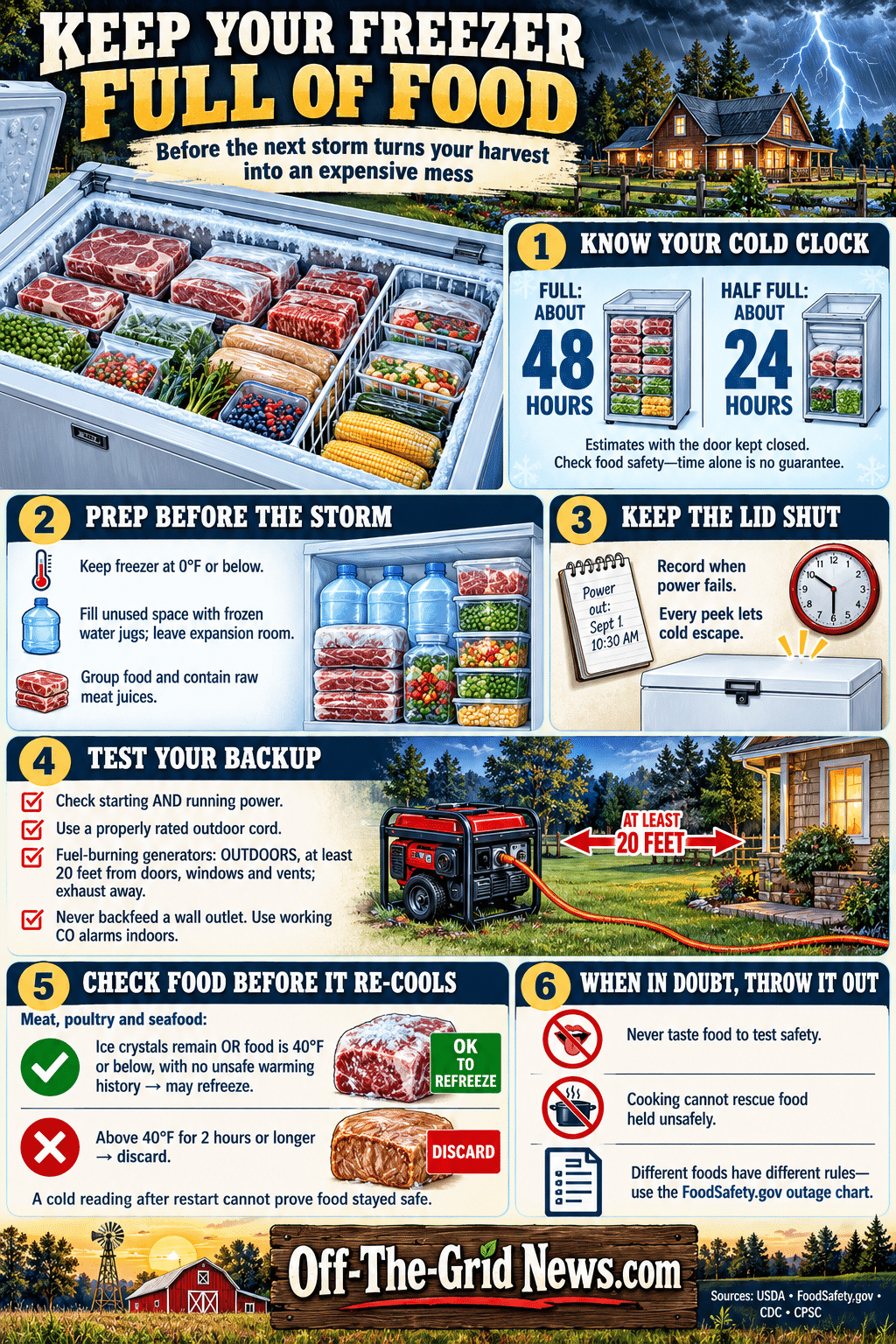
First, here’s a number worth remembering: about 48 hours. According to USDA emergency guidance, that’s roughly how long a full freezer can hold a safe temperature without electricity when the door stays closed; a half-full freezer gives you about 24 hours.
Those are estimates, not a permission slip to ignore the thermometer. But they explain why a full freezer has an advantage when the lights go out.
Every frozen roast and brick of venison is cold stored for later. Together, those packages warm more slowly than a few lonely pork chops rattling around in an otherwise empty box.
Think of it as a bank vault full of cold. The more you have tucked away, the bigger your reserve.
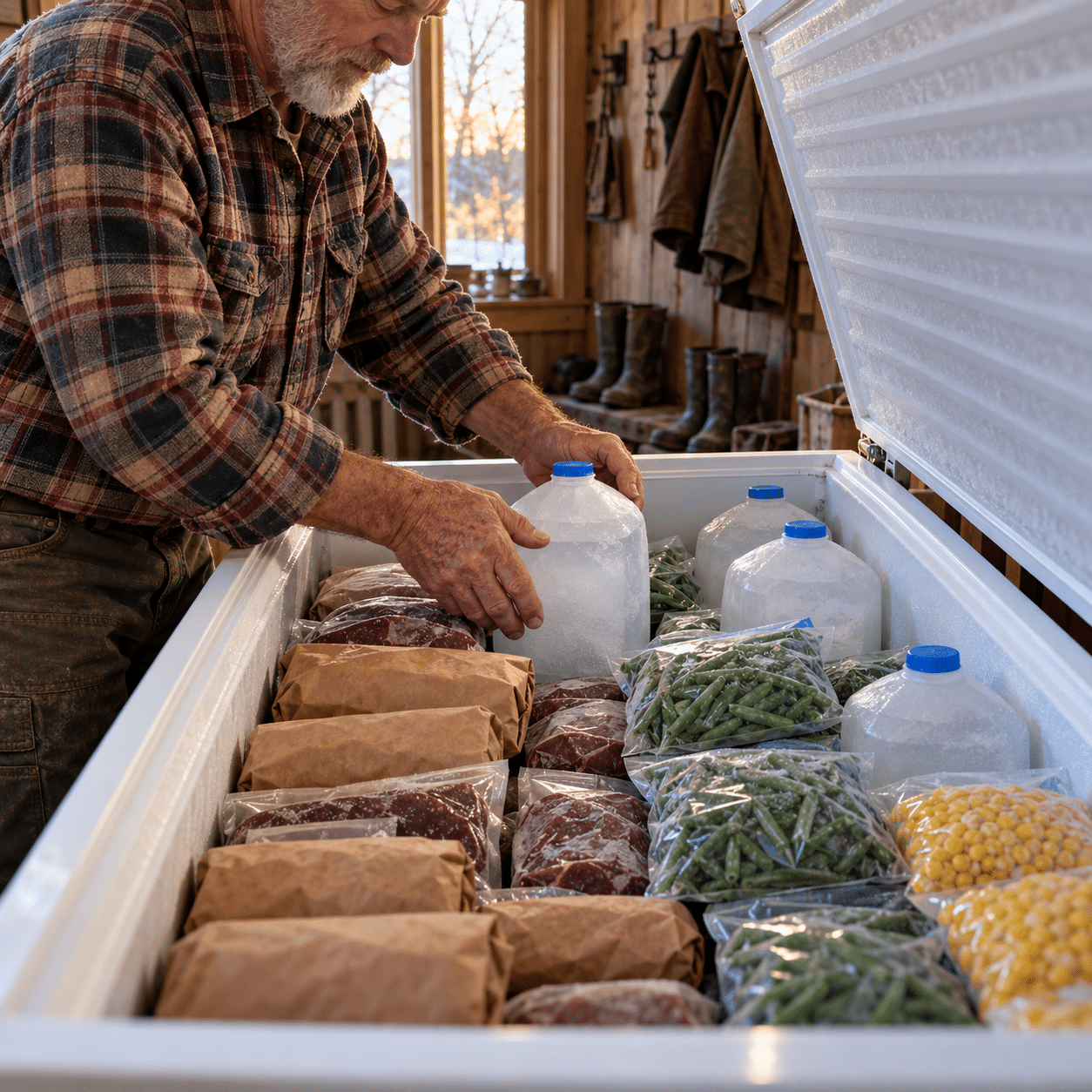
So fill the empty spaces ahead of time. USDA recommends frozen plastic jugs of water, bags of ice, or gel packs; use clean containers suitable for freezing, leave room for water to expand, and follow your freezer’s loading instructions.
Of course, a jug of water doesn’t become an ice block the minute you close the lid. Give it time to freeze solid before the storm arrives, and keep food grouped together without blocking any vents your model needs.
Then make one family rule absolutely clear: nobody opens the freezer just to see how things are doing.
Every curious peek spends some of the cold you’re trying to save.
Put a Thermometer Where Guesswork Used to Be
Next, buy an appliance thermometer if you don’t already have one. It’s a small purchase for something guarding a season’s worth of groceries.
Under normal operating conditions, keep the freezer at 0°F or below and the refrigerator at 40°F or below, as USDA’s storm-preparation guidance recommends. Check now, while the power is working and you still have time to discover a problem without a flashlight in your teeth.
Position the thermometer where you can read it quickly. If you use a remote display or temperature logger, learn how it works before you need it, including whether it keeps recording when household power or Wi-Fi fails.
Meanwhile, remember that the freezer thermometer measures the air around it. When you need to judge a particular thawed package, a food thermometer can help establish the food’s temperature, as USDA explains.
And please retire the old sniff test. Food can look ordinary and smell perfectly respectable while carrying bacteria that can make you sick; never taste it to settle the question.
Your nose is useful around the barn. It is not a food-safety laboratory.
Make the Generator Prove Itself Before Supper Depends on It
Now, about that generator sitting in the shed. Owning one and having a working freezer-backup plan are two different chores.
Before a storm, check the freezer manufacturer’s starting and running requirements against the generator’s capacity. A compressor can need extra power to start, so a machine that handles the running load may still struggle when the freezer kicks on.
Then test the actual arrangement. Use the cord you intend to use, reach the outlet you intend to reach, and connect the freezer you intend to protect; a successful test with a trouble light tells you very little about starting a compressor.
Inspect the cord from end to end. Follow CPSC generator safety guidance: use a heavy-duty outdoor-rated cord with adequate capacity for the connected load, no cuts or tears, and intact grounding prongs, while following the equipment manuals’ cord-size and length requirements.
And never plug a generator into a household wall outlet to feed the house. That shortcut, called backfeeding, can energize wiring unexpectedly and kill somebody; connecting a generator to household wiring requires properly installed equipment that isolates it from utility power.
Just as important, keep a fuel-burning generator outdoors, at least 20 feet from windows, doors, and vents, with exhaust directed away from buildings. CDC’s outage guidance warns against running one in a house, basement, or garage—even with doors open—and calls for a battery-powered or battery-backup carbon monoxide detector indoors.
Saving the hamburger is good. Keeping the people who eat it alive comes first.
Finally, follow the generator’s weather-protection instructions and let it cool before refueling. Work out fuel storage and maintenance ahead of time; the middle of an ice storm is a miserable time to discover that your backup plan needs a carburetor cleaning.
Find the Ice Before Everybody Else Needs It
If an outage looks likely to stretch into days, start making calls early. A supplier’s phone number taped to the freezer is more useful than a vague memory that somebody in town used to sell dry ice.
USDA gives this planning estimate: roughly 50 pounds of dry ice can hold an 18-cubic-foot full freezer for two days. That makes dry ice worth investigating, but it also deserves more respect than a bag of cubes from the gas station.
Before choosing it, check your freezer manufacturer’s instructions and ask the supplier about safe use, ventilation, and transport. Cornell’s dry-ice guidance cautions against putting it in enclosed appliances because of gas accumulation and possible component damage, so don’t assume every freezer or location is suitable.
If your setup permits it, keep dry ice off bare skin and away from direct contact with food. Use appropriate dry insulated gloves or tools, ensure adequate ventilation, and never seal it in an airtight container; the carbon dioxide it releases can accumulate dangerously and build pressure.
Transport also needs planning. Use a separate, ventilated cargo area rather than the occupied passenger compartment, and get clear instructions before loading up.
Meanwhile, ordinary block ice and those frozen water jugs remain useful tools. They take up space, but that’s considerably less aggravating than finding yourself with plenty of freezer space because you had to throw the food away.
When the Lights Return Keep Your Head
Eventually, the kitchen clock starts blinking and the freezer hums again. Wonderful—but don’t let that familiar sound make the decisions for you.
A cold reading after the machine has been running again cannot tell you how warm the food got while the power was off. Assess it promptly, before re-cooling hides the evidence, and use any reliable temperature history you have.
For meat, poultry, and seafood, the FoodSafety.gov outage chart allows refreezing when ice crystals remain or the food is at 40°F or below, provided there is no evidence of unsafe warming followed by re-cooling. Texture and flavor may suffer; a safe roast can still come out a little less impressive than the one you put away.
But discard those foods if they have been above 40°F for two hours or longer. If you cannot establish that a questionable package stayed safe, let it go.
Then work package by package. Small, thin packages and items near the front or door tend to thaw faster than thick cuts deeper inside; don’t use one solid turkey as a character reference for everything else.
Keep meat and poultry in leakproof packaging or on rimmed trays so escaping juices cannot contaminate other food. And consult the chart for different food categories: ice cream, vegetables, bread, and meat do not all have identical discard rules.
If meat has remained safe, cooking it promptly may be a practical alternative to refreezing it. Use the appropriate safe minimum internal temperature for the food, checked with a food thermometer.
However, cooking is not a rescue operation for meat that has already been held unsafely. Neither a hot skillet nor a fresh layer of frost erases its temperature history.
That can be an expensive decision. A household full of food poisoning is an even worse bargain.
Give This Job an Hour Before the Storm Takes Your Evening
Before the next serious forecast, work through this list. You can organize the plan in about an hour, although freezing water jugs, servicing equipment, or arranging electrical work may take longer.
Put appliance thermometers in the freezer and refrigerator; confirm 0°F or below and 40°F or below, respectively.
Start freezing clean water containers with expansion room, then use them to fill unused freezer space according to the appliance instructions.
Group food sensibly and put meat and poultry in leakproof containers or rimmed trays.
Identify ice suppliers, confirm availability, and check whether dry ice is appropriate for your freezer and location.
Test the generator with the freezer and the correctly rated outdoor cord; confirm a safe outdoor operating location and working CO detectors.
Print the FoodSafety.gov outage chart linked above and tape it where you can find it without opening the freezer.
When power fails, record the time, keep the lid shut, and plan a prompt food-safety assessment before restarted equipment re-cools questionable food.
The steer already did its part. So did the garden, the hunter, and whoever stood at the counter wrapping all those packages while the rest of the house went to bed.
Now the job is yours again. Give that freezer a little preparation while the lights are still on, and you give all that hard-earned food a better chance of staying right where it belongs.
On your family’s supper table.