 Print
Print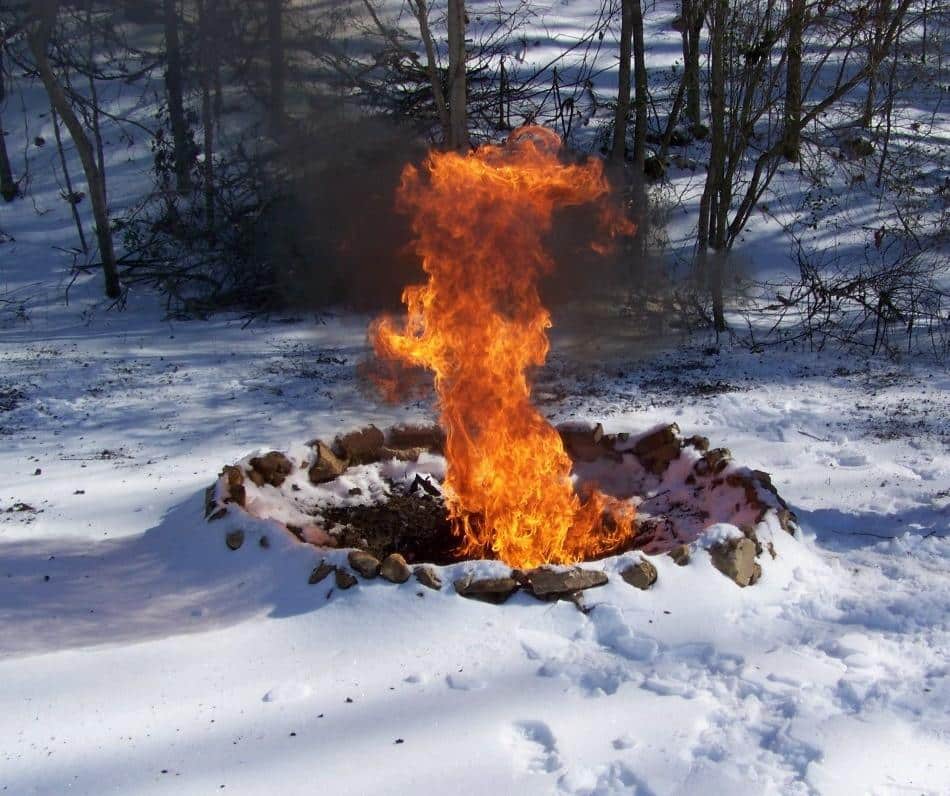
Wintertime is the hardest time to survive. A combination of the weather and the lack of readily available food have caused many a hearty soul to lose their lives through the years. Proper preparation and care are necessary to survive.
If there ever was a time when you need a fire, it’s when you’re stranded outside in the snow. As darkness falls, the temperatures can plummet, leaving you feeling as if you’re sitting in an icebox. Without a fire, this could lead to a very dangerous situation, one that could cost you the loss of some fingers and toes to frostbite or even the loss of your life.
Starting a fire can be especially difficult in the cold of winter. About the only thing harder is trying to do it in the middle of a rainstorm. There are two basic problems in the snow. The first is that snow melted by the fire turns to water, which can quench your flames and hard work. The second is that it is heat, not a flame, which causes fuel to burn. In the cold of winter, you actually have to raise the temperature of the fuel farther, so that it will ignite. This can make the fire start slower than normal.
Selecting a Site
The first thing to consider when starting a fire in the snow is the site. The fire must be in a location where it is protected from the snow, as well as from wind and water. Oftentimes, people traveling in the wilderness like to start a fire under a tree. That may not work if the tree has a lot of snow burden. The warm air from the fire could cause that snow to soften and fall off the tree into the fire.
An Amazing Breakthrough In Compact Portable Backup Power — Easily Fits In Your Pocket Or Backpack!
If you decide to start a fire under a tree, first reach up and knock the snow off the branches above the fire. That eliminates the risk and doesn’t make it so that you have to clear the same site twice.
Once you’ve done that, start to clear the snow from the actual site. You can either brush the snow away or tamp it down by walking on it. If you are going to tamp it down, realize that it will melt, so you want to make sure that the water can drain way from the site.
Building the Fire Pit
I’m a firm believer in putting in a stone floor for my fire pit whenever I’m making a fire in the rain or snow. By raising the fuel an inch or two above the ground and having it sit on stones, I provide the water channels to run off through. Never put the stones right up against each other when doing this, but leave a small space between them.
You need a good heat reflector when building a fire in the snow. After all, the main purpose of building the fire is to keep you warm. Adding a hefty heat reflector will help tremendously with that. A big tree, a cliff face or a large stone can work as a heat reflector. You can also make one out of a rescue blanket, using the silver side to give the most reflection.
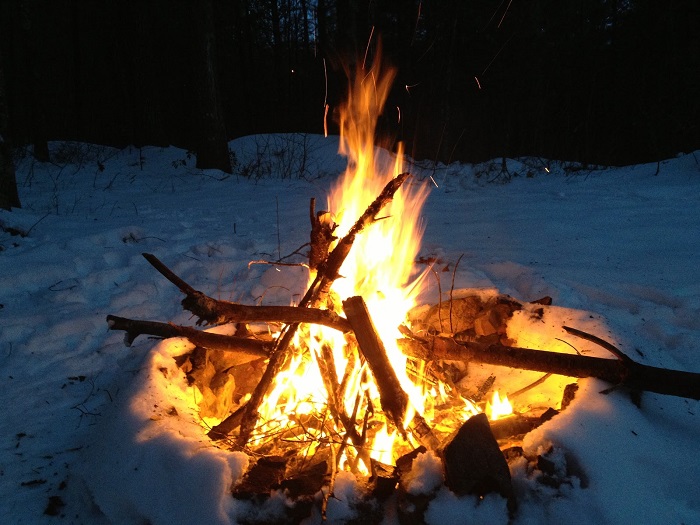
Clear a place to pile extra firewood near the fire as well. If possible, raise that area up on rocks as well. If not, use a couple of crosswise sticks to keep the wood out of the snow. Any wood you find will probably have some snow accumulated on it, so a close firewood stack provides an opportunity for the wood to dry before you have to use it.
Building Your Fire
You’ll want to build your fire in the normal way, using tinder, kindling and fuel. When gathering your fuel, try and gather some large pieces, either sections of trunk or chunks of tree stump. Those will be especially good for keeping the fire burning through the night and helping to keep you warm. Gather extra wood, as you’ll find yourself going through it faster than normal.
If your tinder and kindling are dry, you shouldn’t have much trouble starting the fire, although you might find that it takes longer than normal. Remember: You have to add more heat than normal to the tinder in order to bring it up to burning temperatures.
I’m a firm believer in starting fires with one match or with one use of my metal match. I basically try to force that on myself so that I know I can always start a fire in the worst circumstances. However, when it is rainy or snowy, I don’t mind using an accelerant if I can’t start the fire right away.
My favorite fire accelerant is cotton balls soaked in petroleum jelly. Actually, instead of cotton balls, I usually use the cotton makeup removal rounds. They tend to keep together better as I’m working the petroleum jelly into them. Although most people use the backside of a spoon to work the petroleum jelly in, I’ve found that I can do a better job with my fingers.
Getting the Most Out of Your Fire
You want to make sure that your shelter and your fire are very close together. As much as possible, build the fire right in the entrance to your tent or other shelter, always being careful to not let anything flammable or that can melt get too close to the fire. Rescue blankets in the back and roof of your shelter can help keep the heat from your fire in your shelter, keeping you warmer. I always travel with several of them so that I can capture heat in this manner. You also want to make sure you have one between you and the ground.
Heat rocks in the fire and use them to warm your bed before getting into it. A heated rock can also be wrapped in a spare sweater to sleep with, as a heater in your bed. While rocks are not the most comfortable bed companion, you’ll enjoy the warmth.
Coals are the most important part of any fire, as they generate the most heat. Keep adding fuel to your fire so that it can burn and be converted to charcoal. At that point, it will be generating the most heat that it can. That’s much more important than having a lot of pretty flames shoot up from the fire.
The coals from a fire can be moved, using them to warm the ground beneath your bed. Use sticks or a camp shovel to move them to where you are going to sleep and then back again to your fire pit, once they’ve warmed the ground.