 Print
Print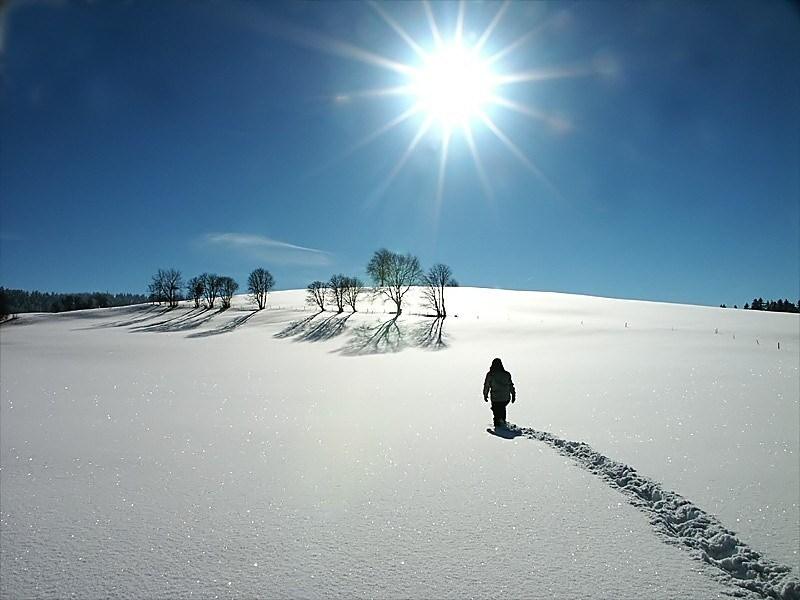
Survival in the snow isn’t easy, but with a few tips you can make it – even if you’re miles from civilization. Here are five do’s and five don’ts of traversing winter terrain on foot:
DO wear snowshoes. Snowshoes distribute your weight in the surrounding area, meaning that you won’t fall through the snow with each step. While they do take some time getting used to and can make your feet and ankle sore after a good day’s walk, they will save you valuable energy and an immense amount of time in getting where you need to go.
DO dress in layers. And have extra clothes in your backpack as well. Dress in three layers: 1. The clothes in contact with your skin, 2. A wool jacket and pants as insulation and warmth, and 3. An outer shell for protection against the elements. Dressing in layers allows you to add and remove layers depending on your body temperature, and keeping an extra round of clothes in tow gives you an alternative to the sweatiness that your current clothes will endure.
DO pack plenty of water. Walking across the winter terrain will require more time, exertion and energy than if you were to walk over terrain in another climate. Nevertheless, many people just back a single bottle and then take a tin cup to melt snow along the way. However, melting snow takes time. It’s best that you carry extra bottles of water. You can prevent your bottles from becoming frozen by either wrapping them up in a warm sock or in an insulated cover.
Ultra-Efficient Water Filter Fits In Your Pocket!
DO carry a collapsible pole or stick. Don’t think that you won’t need a good walking stick or pole. Carrying one will keep you steady as you walk, allow you to feel uneven ground, and give you something to grasp if you fall into a crevice of some sort, or (gulp) a lake.
DO watch the temperature/weather. Winter temperature can change drastically; one minute it can be nice and sunny out with the snow thawing, whereas the next it can turn into the beginning of a raging blizzard. Pay consistent attention to the temperature so you can plan your actions ahead of time; you won’t want to wait until the last minute to scramble up a shelter if a storm seems evident, for example.
DON’T sweat heavily. You can’t allow yourself to get cold, but even if you’re wrapped up in the warmest winter garments known to man, sweat will turn into your number one enemy. Since moving over snowy terrain requires greater effort, you’ll sweat easier and your clothes could become damp and suck heat away. This could become the beginning of frostbite and/or hypothermia. As you begin to sweat, take a break and swap out clothing.
DON’T cross over ice. Even if lakes or rivers appear fully frozen, don’t move across them. The ice may be thick in some areas, but in another, dangerously thin. If you come to a lake, walk around it. If you come to a river and need to cross, find some form of a natural bridge to cross, or if possible, jump across where the river is most narrow.
Learn The Secrets Of A Veteran Hunter As He Demonstrates How To Quickly Field-Dress Game
DON’T traverse the terrain in a snowstorm or blizzard. As soon as any kind of snowstorm starts, immediately begin construction of a shelter and a fire. As the storm rages, stay bundled up and wait it out, even if it lasts hours.
DON’T travel up or down steep slopes. It’s even dangerous when it isn’t winter. There will almost always be a way around steep slopes, even if that alternative route will take more time. When you are forced to travel down steep slopes, do so at an angle (meaning you don’t go directly up or down), and kick your feet into the snow with each step.
DON’T step on snow cornices. A cornice is an overhanging snow edge on a ridge or mountain that is formed by the wind-blowing snow. They may look like they can hold your weight, but it’s not worth the chance. If the cornice collapses beneath you, it can send you tumbling down a ridge and lead to injury or death.
Those are my do’s and don’ts. What would you add to the list? Share your thoughts in the section below:
Get $600 Worth Of Survival Blueprints … Absolutely Free!