 Print
Print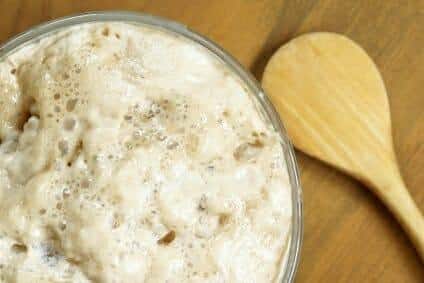
 What does beer, bread, vinegar, black tea, cheese, chocolate, crème fraîche, soy sauce and pickles have in common? They are all fermented foods.
Today we primarily think of fermentation as the result of adding something, typically powdered yeast or what marketing departments around the world call “beneficial bacteria”, but fermentation is a natural process, and both yeasts and beneficial bacteria are naturally occurring in hundreds of foodstuffs. Before there were cultured yeast strains for bread and beer, long before pressure canning and freezing, there was wild fermentation.
Growing Your Own Bread Yeast
Most people are familiar with sourdough bread. It has recently made a comeback among the health conscious because, despite the carbohydrates, even white sourdough bread has proven beneficial for blood sugar levels. Today you can buy a powder sourdough starter in the grocery store, but you can just as well grow your own.
Simply mix 1/2 cup of water with 1/2 cup of flour in a glass jar, screw the lid on and keep it somewhere warm for two days. After two days, the mix will hopefully have started to make small bubbles and smell slightly sour. Add 1/4 cup of flour and 1/4 cup of water and leave for another day. Repeat this step once. You should now have a bubbly natural yeast mix. Use 1/4 – 1/2 cup of the mixture instead of yeast when baking bread, and increase the leavening time by several hours. Keep the rest in the jar and feed it regular – bi-daily if kept at room temperature, weekly if in a refrigerator.
If you want to be certain to catch some of that wild yeast, grating an apple into the initial mix provides both the necessary sugars and extra yeast. The apple itself will dissolve within a few days.
Fermenting Vegetables
There is no secret recipe to making sauerkraut, kimchi and pickled vegetables. The key is simply to make sure all of the vegetables are submerged in liquid, whether that liquid is brine or wine. Nearly any vegetable can be fermented and, since you can spice up your vegetable ferment with anything from seaweed and chili, to dill and caraway, the available flavors are endless.
To get started, why not try a simple sauerkraut? Measure 1-2 tablespoons of sea salt in a cup, depending on how salty you want your vegetables. Grate 2 lbs of cabbage and place it inside a large bowl. Sprinkle salt over the cabbage as you layer it. Pack your cabbage tightly, pushing it down, nice and tight, with a spoon or a hand. Place a plate or lid on top of the cabbage and a heavy weight on top of that to ensure continuous pressure on the cabbage. Cover it with a towel and leave it for 24 hours, occasionally pressing down on the weight to help release the liquids from the cabbage.
After 24 hours have passed, check on your sauerkraut. If it has not released enough liquid to submerge the bottom of the lid, add a little salt water. Now leave the sauerkraut to ferment, checking on it every other day. If mold starts growing on the top, simply skim it off. It is a surface phenomenon and what happens when the bacteria interact with the air. Your kraut is not getting any air, so it is not getting moldy. Around day five, your kraut will start tasting tangy and you can start eating it. It will develop stronger flavor over time.
For a more interesting sauerkraut, you can add your favorite vegetables and fruits (from grated carrots to apple slices) at the layering and salting stage along with your favorite spices.
Making Yogurt at Home
Fermenting wild yogurt and dairy products from scratch is more about luck than skill, but you can cheat by starting with an existing strain. To make yogurt at home, simply buy a good quality yogurt with live culture and use that as a starter.
Heat milk to 110 degrees and stir in one tablespoon of your starter yogurt. Pour the mixture into a warm sterilized jar, put the cap on, insulate the jar by wrapping it with a tea towel, and leave it in a warm place for 20-24 hours. After 24 hours it should have thickened and become tangy.
Store the yogurt cold and save a tablespoon of your homemade yogurt as a starter for future batches. If you are vegan or lactose intolerant, you can use soy milk and even coconut milk to make yogurt the same way.
Wild Alcohol
It used to be that all beer, cider and wine were fermented naturally. Today, large-scale commercial wild beer is made only in a single valley in Belgium. If you are interested in making your own, a home brewing club may be the best place to start.
Grains are not quite as easy to ferment as fruits, vegetables and flowers, so if you are looking at a simple home brewing experiment, why not begin with this sparkling elderflower wine?
Pour one gallon of hot water into a clean bucket and stir in 1.5 lbs of sugar until completely dissolved. Mix half a gallon of cold water with the juice, the zest of four lemons, and two tablespoons of white wine vinegar. Stir the lemon-vinegar mix into the bucket of sugary water and add 15-20 elderflower heads. Cover the bucket with a clean tea towel and leave in a cool place to ferment. Check on the bucket every few days. When it starts getting foamy you know that it is fermenting and you should leave it for another 4-5 days. Strain your wine and decant it into sterilized bottles. Store the wine in a cool place for at least a week before drinking.