 Print
Print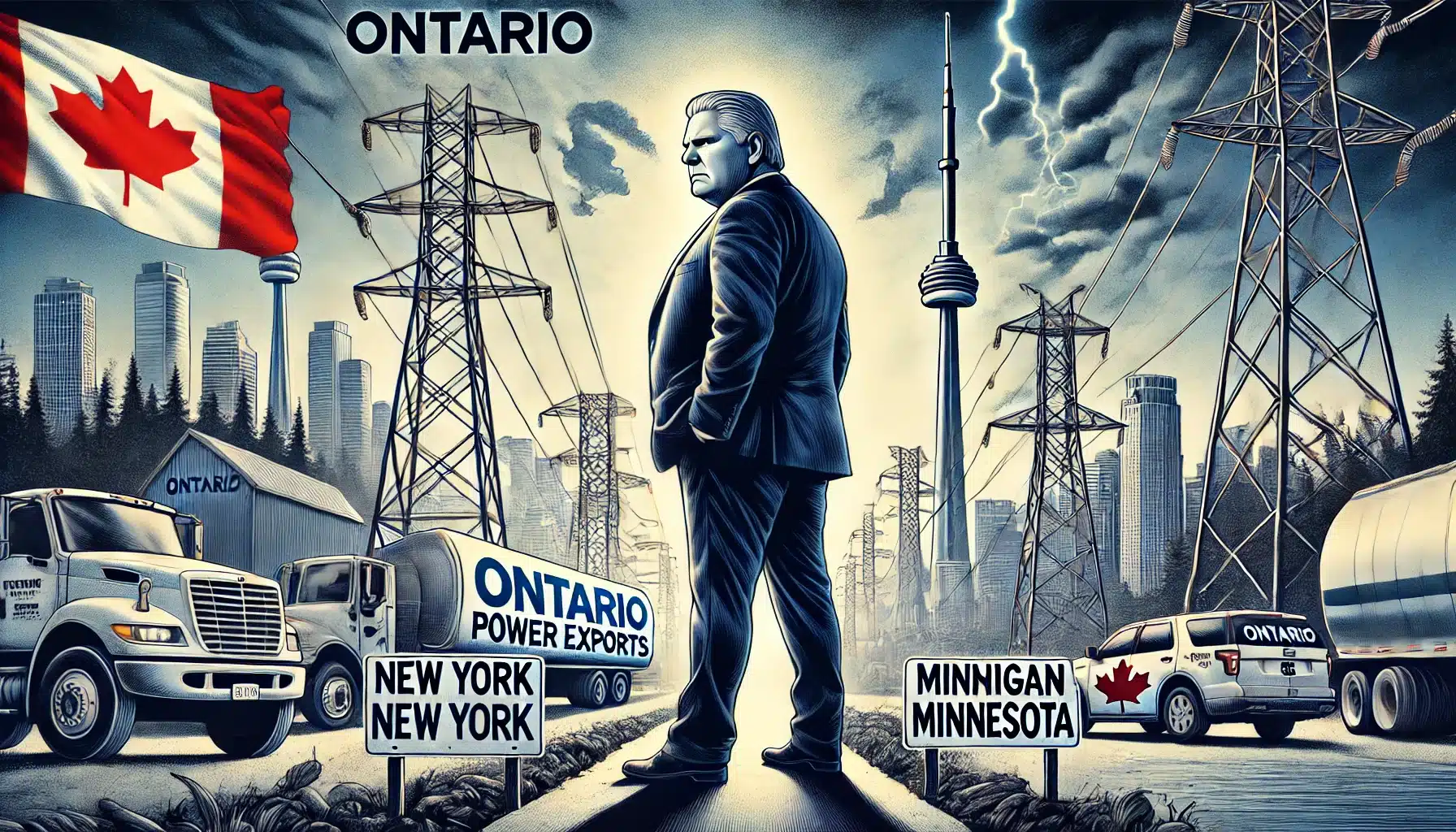
Surprising Revival of a Cross-Border Power Threat
Doug Ford, Ontario’s Conservative Premier, has once again threatened to cut off the province’s electricity exports to the United States. The remark mirrors a threat he first made in 2018 at the height of trade tensions with the Trump administration. So, this is not new a threat.
Though it seemed like political theater rather than practical policy at the time in 2018, Ford’s decision to reiterate it underscores ongoing frustration over trade disputes. Amid these renewed tensions, the potential economic impacts on New York, Michigan, and Minnesota… states that receive part of Ontario’s electricity surplus, loom large, raising very real concerns about the stability of their power supply and the cost of electricity.

Ontario’s Unique Electricity Network
The truth is Ontario’s power system is a fascinating hybrid of publicly owned and private generation. The largest single producer is Ontario Power Generation (OPG), a corporation wholly owned by the provincial government. OPG operates a wide range of facilities, including nuclear stations in Darlington and Pickering, hydroelectric dams along major rivers, and some remaining fossil-fuel plants.
Another key player is Bruce Power, which runs one of the world’s biggest nuclear complexes on the eastern shore of Lake Huron. Alongside these nuclear heavyweights, various independent producers contribute to wind, solar, and smaller hydro projects, adding layers of complexity to the system.
All of these power sources feed into a centrally managed grid. The Independent Electricity System Operator (IESO) group plays a crucial role in this, as it directs power flows to meet provincial demand and also oversees the sale of surplus electricity beyond Ontario’s borders. Hydro One, responsible for most of the high-voltage transmission system, ensures that electricity travels reliably within the province and across interconnections to neighboring regions.
Here’s the thing. Ontario as a whole produces around 140–160 terawatt-hours (TWh) of electricity annually (the exact amount fluctuates year to year based on demand, refurbishment schedules for nuclear plants, water availability for hydro, and so on).
Of that total, Ontario has in recent years exported somewhere around 10–20 TWh to U.S. states—representing perhaps 7–13% of the province’s total generation in an average year. These exports are sold through an integrated wholesale market run by the IESO, which dispatches generation based on cost and availability, then sells surplus power at market prices to neighboring regions like New York, Michigan, or into the MISO market.
But the issue is even more complex. For every economic action, there are, of course, two sides. Yep, supply and demand. If Ford cuts off the exports, he’ll have to find new markets for the surplus. So far so good, right? Well, kind of. While the main power producer OPG is owned by the government… some of the other players are publicly traded companies. These companies face substantial stock values drops if and when Premier Ford shuts down electricity exports.
Exports to Key U.S. States
Ontario’s interconnected grid links to several states in the Northeast and Midwest. New York and Michigan are the two most prominent receivers of Ontario power. Major transmission lines near Niagara Falls and along the St. Lawrence connect Ontario to upstate New York, helping both regions manage seasonal peaks. Meanwhile, lines crossing the Detroit River and running through the Sarnia-Port Huron corridor facilitate transactions with Michigan’s grid.
Though not sharing a direct land border with Ontario, Minnesota can still access Ontario-generated electricity through the Midcontinent Independent System Operator (MISO). Power entering MISO in Michigan or other Midwest states can be routed to Minnesota if local demand and pricing conditions call for it. As a result, Doug Ford’s statement that Ontario helps “keep the lights on” in Minnesota is not purely symbolic. However, the actual pathways are more complex than flipping a simple switch.
The Potential for Disruption
If Ontario were to suddenly halt electricity exports, several serious consequences would emerge. In the short term, the U.S. states that rely on Ontario’s surplus power would feel an immediate pinch in terms of price. Electricity markets balance supply and demand in real-time, so any unexpected drop in available supply tends to drive up rates.
Industrial consumers, such as automotive manufacturing plants in Michigan or large commercial facilities in New York, might see higher operating costs if they had to buy electricity from more expensive sources. This potential for disruption underscores the urgency and seriousness of the situation.
Residential consumers would also notice the impact in the form of pricier utility bills, but an outright blackout is less likely. The regional nature of electricity grids means these states would look elsewhere for generation, tapping additional capacity from neighboring U.S. grids or ramping up local power plants.
Over the longer term, sustained unavailability of Ontario’s power could prompt infrastructure changes in the U.S., such as new transmission lines or generating facilities, to avoid reliance on a potentially volatile neighbor who continues to threaten to cut off your power. In other words, new electricity supply lines would be found and the chance of U.S. states going back to Ontario for power would be doubtful. They would lose the market, possibly forever.
A Tangled Web of Agreements
Despite the drama of Ford’s threat, turning off the power would be far from straightforward. Trade in electricity often involves multi-year contracts, and any abrupt decision to terminate them could spark legal battles and even significant diplomatic fallout.
This could strain Canada-U.S. relations and potentially lead to even more retaliatory measures in other trade areas. System operators on both sides of the border coordinate closely to maintain grid reliability. Further, an unstable, unbalanced grid can lead to voltage fluctuations or blackouts that cross political boundaries.
On top of that, Ontario benefits financially from exporting electricity. When local demand dips and generation remains steady—especially from inflexible sources like nuclear… it makes sense to sell that power to neighbors at a profit rather than waste it. Cutting off exports would mean giving up that revenue stream, increasing the cost burden on Ontario’s own ratepayers. This could lead to increased taxes or reduced public services, creating a disincentive to carry out any threat in practice. Perhaps it would also lead to Ontario voters saying no to Ford’s political future.
Lingering Trade Tensions
The fact that Ford has revived this rhetoric suggests that tensions over trade, particularly where Ontario’s manufacturing base is concerned, have not completely dissipated since 2018. Automakers and steel producers on both sides of the border remain sensitive to tariffs or other disruptions. By invoking the possibility of electricity cutoffs, Ford may be hoping to highlight Ontario’s importance in the integrated Great Lakes economy, sending a political message that the province can wield its energy advantage if it feels cornered.
However, it is telling that, despite his repeated warnings, Ford has taken no formal steps toward any actual cutoff. This gap between political statements and policy action reveals how deeply Canada and the United States rely on cooperation to keep their grids stable. Any unilateral move to sever electricity trade would likely backfire, but would cause major economic damage to both sides.
Complex Reality Behind the Threat
The North American grid is a tightly knit fabric woven of multiple actors and regulatory frameworks. Ford’s latest salvo might make headlines, but the practical barriers to flipping a switch and turning off 1.5 million homes in New York, Michigan, and Minnesota remain high.
While rhetoric about cutting off power can draw attention to legitimate trade grievances, it does not easily translate into actual policy. For now, the lights are almost certain to remain on in every corner of the region, no matter what pronouncements may echo from Ontario’s Ford.