 Print
Print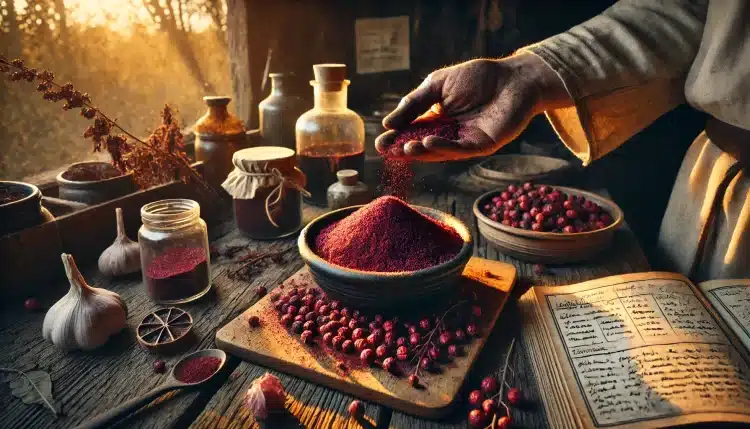
Poor Man’s “Superfood” That Targets Blood Sugar, Cholesterol, And Inflammation
Sumac doesn’t look like much at first glance—just a dusty, deep red powder sitting quietly in a spice jar. Nothing flashy. Nothing high-dollar.
But then again, neither is wood ash… until you realize it can build soil.
And in the same way, this old-world shrub is starting to rattle modern nutrition science in a big way.
Researchers are now digging into the tart crimson berries of Rhus coriaria—a plant used for centuries across the Middle East and Mediterranean—and what they’re finding is hard to ignore. We’re talking about bioactive compounds that can calm inflammation, steady blood sugar, and even push back against microbes in your food… all without a prescription label.
So right away, for families trying to live a little more independent from the medical system and the industrial food chain, sumac starts to look less like a spice—and more like a quiet workhorse.
The kind you want within arm’s reach.
An Ancient Hedgerow Medicine Chest

Long before antioxidants were bottled and sold with glossy labels, people were walking hillsides and hedgerows, gathering clusters of bright red sumac berries by hand.
From Turkey to Iran, villagers dried those berries in the sun, crushed them into a coarse powder, and used them daily—souring stews, brightening meats, and calming the stomach after a heavy meal.
And over time, it became second nature.
Sumac tea for digestion.
Sumac syrup for fevers.
A pinch of powder for infections or upset guts.
Nothing fancy. Just consistent use.
Now, it’s worth saying—this is culinary sumac, Rhus coriaria, part of the cashew family. Not the swamp-dwelling poison sumac (Toxicodendron vernix) that’ll light your skin on fire. Two very different plants.
Properly identified, culinary sumac has a long track record of safe use. And modern lab work backs up what those villagers already knew—this plant is loaded with tannins, anthocyanins, and flavonoids… the same class of compounds that made blueberries and pomegranates famous.
Only this one grows wild on scrubby hillsides.
Antioxidant Firepower in a Toxic Age
Let’s be honest about the world we’re living in.
You don’t need to be in a city to take a daily hit of oxidative stress. It’s in the air, the food, the oils, the water, and the pace of life itself. Diesel exhaust, pesticides, processed fats, chronic stress—it all adds up.
And inside your body, that translates into reactive oxygen species… unstable molecules that damage cell membranes, proteins, and even your DNA.
Now here’s where sumac steps in.
A 2021 pharmacological review pulled together the available lab data and found that sumac shows potent antioxidant capacity across multiple test systems. In plain terms, extracts of the berries:
- Scavenged free radicals
• Protected fats from oxidation
• Boosted the body’s own antioxidant enzymes
And it doesn’t do this with just one compound—it’s a full team effort. Tannins, anthocyanins, flavonoids… all working together to neutralize damage, bind metals that trigger oxidation, and regulate inflammation pathways.
So when you zoom out, this isn’t just lab curiosity.
This is upstream support… right where a lot of modern disease begins.
Blood Sugar, Belly Fat, and the Slow Creep of Metabolic Trouble
Now out on a homestead, people like to think they’re immune to metabolic problems.
But winter tells a different story.
Less movement. More stored food. A few too many refined carbs creeping in. And before long, blood sugar starts drifting upward and that stubborn belly weight shows up.
Quietly. Gradually.
That’s where sumac gets especially interesting.
Several human trials have now looked at what happens when people with metabolic issues take sumac daily. And the results are consistent enough to raise eyebrows.
In one clinical trial involving women with type 2 diabetes, daily sumac powder improved antioxidant status while reducing insulin resistance and fasting blood sugar.
Another study using about 6 grams per day showed similar results—lower fasting insulin and better insulin sensitivity.
And when researchers stepped back and reviewed the bigger picture (2024–2025 data), they found a pattern:
Better blood sugar control.
Improved insulin response.
Healthier lipid metabolism.
Not a miracle fix.
But a steady nudge in the right direction.
Cholesterol, Triglycerides, and Heart Protection
Of course, metabolic trouble doesn’t stop at blood sugar.
It spreads.
High triglycerides.
Low HDL.
Inflamed blood vessels.
The whole system starts to drift off course.
Now here again, sumac shows up as a quiet ally.
A 2025 meta-analysis of randomized controlled trials found that sumac supplementation:
- Lowered total cholesterol
• Reduced LDL (“bad” cholesterol)
• Decreased triglycerides
• In some cases, increased HDL (“good” cholesterol)
Especially when taken consistently for more than eight weeks.
And alongside that, researchers saw reductions in malondialdehyde—a marker of fat oxidation—and increases in protective enzymes like paraoxonase-1.
In simple terms?
Less damage to fats.
Better balance in the bloodstream.
More protection where it counts.
And for folks living miles from a hospital, that kind of slow, steady support matters.
Blood Pressure and the Hidden Fire of Inflammation
Next piece of the puzzle: blood pressure.
Because when that starts creeping up, it rarely travels alone.
In a triple-blinded, placebo-controlled study, participants taking 500 mg of sumac twice daily for six weeks saw a significant drop in systolic blood pressure—along with protection against rising triglycerides.
At the same time, sumac appears to cool something deeper: chronic inflammation.
A 2025 meta-analysis looking at hs-CRP—a key inflammation marker—found consistent reductions in people supplementing with sumac.
Now, the data isn’t perfect. Some inflammatory markers show mixed results.
But the trend is clear enough.
Sumac seems to help dial things down.
And that matters, because low-grade inflammation sits underneath everything—from heart disease to joint pain to metabolic dysfunction.
A Natural Line of Defense for Your Food Supply
Now here’s where things get especially practical for an off-grid lifestyle.
Sumac doesn’t just work inside the body.
It also pushes back against microbes outside it.
Studies on sumac extracts have shown strong antimicrobial effects against a wide range of food-borne bacteria. In some cases, researchers saw 10,000-fold reductions in certain bacterial strains within an hour.
That’s not small.
More recent research has also shown that sumac can disrupt biofilms—those protective layers bacteria build to shield themselves from cleaners and antibiotics.
So what does that mean on a homestead?
It means sumac isn’t just a seasoning.
It’s a tool.
Used in marinades, brines, and ferments, it may add an extra layer of protection to your food. Not a replacement for safe methods—but a reinforcement.
Another quiet advantage.
Safety, Side Notes, and a Little Common Sense
For something this potent, you’d expect some trade-offs.
But overall, sumac’s safety profile is reassuring.
Studies show little to no toxicity at typical dietary levels, and human trials using both small and moderate doses haven’t reported serious side effects.
That said, a few things to keep in mind:
Some folks may get mild digestive upset at higher intakes.
And because it’s related to cashews and mangoes, those with strong allergies should take it slow at first.
Also, if someone is on blood sugar or blood pressure medication, concentrated extracts are worth discussing with a practitioner.
But for everyday kitchen use?
It’s about as safe as it gets.
Bringing Sumac Into the Off-Grid Kitchen
Now here’s the good news—you don’t need capsules, protocols, or a spreadsheet.
You just need a habit.
In traditional kitchens, sumac is used the same way you’d reach for salt or pepper. Sprinkled over eggs. Mixed into yogurt. Rubbed into meat. Tossed onto roasted vegetables.
That tart, lemony bite does something simple but powerful—it wakes food up.
And it lets you rely less on things you might not always have… like fresh lemons or vinegar.
So start there.
Add it to your daily cooking.
Blend it into spice rubs.
Stir it into sauces.
Experiment a little.
Because in the end, this isn’t about chasing some miracle compound.
It’s about stacking small, steady advantages.
Sumac. Garlic. Clean fats. Movement. Sleep.
And over time?
Those quiet choices build something stronger than any quick fix.
They build resilience.
Right there in your own kitchen.