 Print
Print
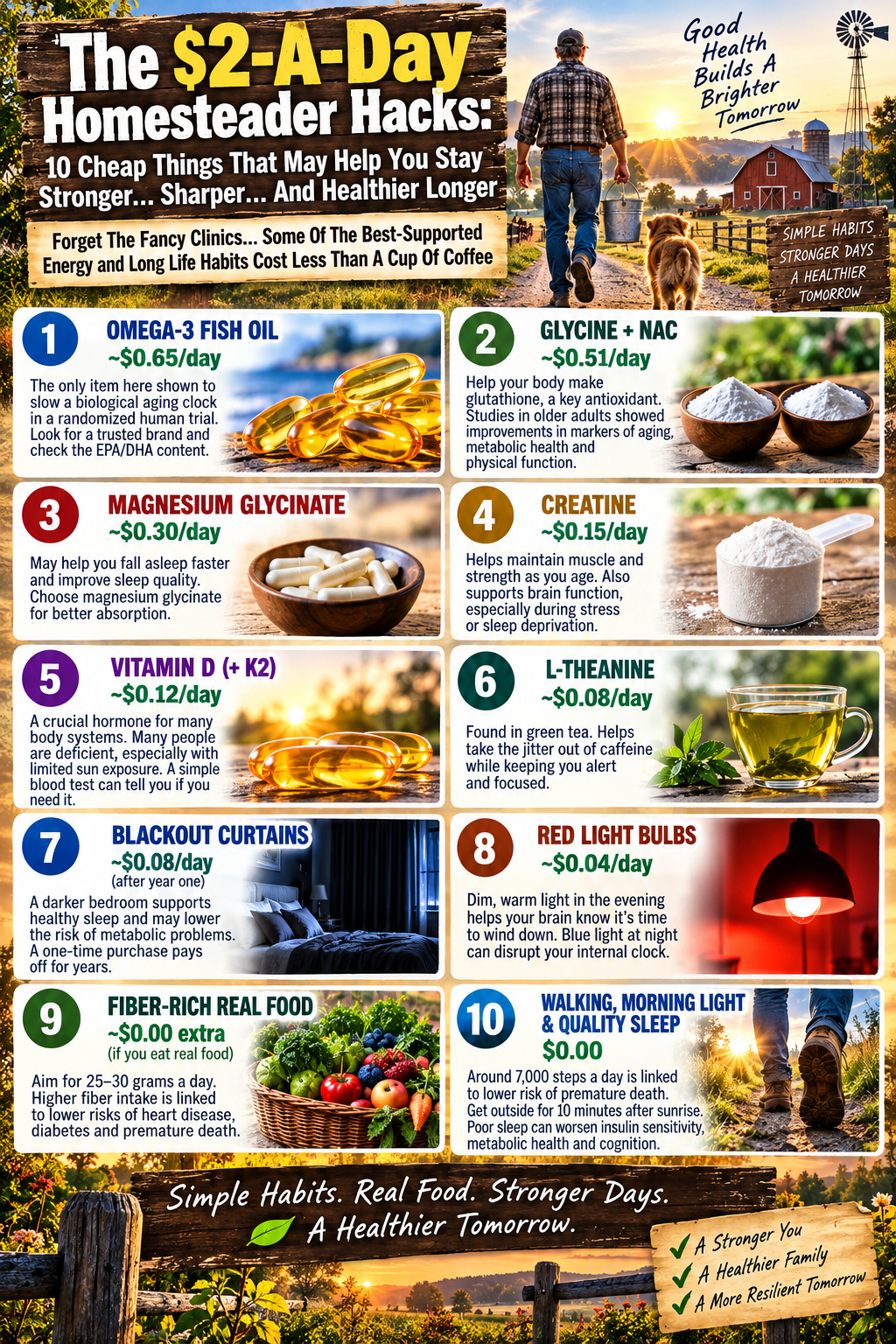
Forget The Fancy Clinics… Some Of The Best-Supported Energy and Long Life Habits Cost Less Than A Cup Of Coffee
Your Grandfather Never Called It “Longevity”… But He Was Doing Half The Right Things Before Breakfast
There’s a strange little lesson hiding inside America’s booming longevity business.
People are spending small fortunes trying to stay young. There are private clinics, exotic treatments, elaborate testing programs, expensive supplements and procedures with price tags that would buy a pretty decent used tractor.
Yet when you dig through the research, something funny happens.
A surprising number of the things with the strongest evidence aren’t expensive at all. Some cost pennies. Others cost absolutely nothing.
And that ought to make a homesteader grin.
Because out here, we’ve always understood something the fancy folks occasionally have to spend a pile of money to rediscover: maintenance usually beats repair.
Keep oil in the tractor. Paint the barn before the boards rot. Fix the little leak before you’re replacing the whole roof.
Turns out the human body may work a little like that, too.
The Poor Man’s Longevity Experiment
Imagine setting one simple rule: build a practical longevity routine for about two bucks a day, using things that have actually been studied in human beings.
No mouse studies dressed up as miracles. No laboratory theory being sold like gospel. And certainly no $900 bottle containing powdered berries harvested by monks during a lunar eclipse.
Just practical stuff.
When you start sorting through the evidence that way, the list gets surprisingly simple: omega-3s, a couple amino acids, magnesium, creatine, vitamin D when needed, fiber, walking, morning light and good sleep.
Even better, some of the strongest items on the list are free.
Let’s start with one of the more interesting ones.
Fish Oil And The Biological Clock
Omega-3 supplements can cost roughly 50 to 70 cents a day depending on the brand and dose, and researchers have been studying them for decades.
One particularly interesting randomized study involving hundreds of older adults looked at omega-3s, vitamin D and exercise over three years. Researchers examined changes in several measures of biological aging based on DNA methylation.
The changes weren’t enormous — we’re talking months, not decades — but some measures of biological aging appeared to slow.
That’s important because longevity research is full of dramatic promises built on much thinner evidence.
Still, there’s a catch when you’re standing in the supplement aisle.
A bottle might scream “1,000 MG FISH OIL” across the front while containing substantially less EPA and DHA — the omega-3 fatty acids you’re actually after. So turn the bottle around and read the little numbers instead of the big ones.
And buy from a reputable company that independently tests its products.
Your nose can sometimes tell you something, too. Fish oil shouldn’t smell like something Ruby dragged up from the creek.
Two Amino Acids That Have Researchers Paying Attention
Next come glycine and N-acetylcysteine, better known as NAC. Bought carefully, particularly with glycine in bulk powder, the combination can cost well under a dollar a day.
This pair has attracted attention because your body uses them to help make glutathione.
Think of glutathione as the barn cat patrolling the feed room.
Your cells are constantly producing energy, and that process creates chemical byproducts that have to be controlled. Glutathione is part of the body’s antioxidant defense system helping keep that cellular mess from getting out of hand.
Unfortunately, glutathione status can change with age.
Small clinical studies in older adults using a combination sometimes called GlyNAC have reported improvements in several markers involving oxidative stress and metabolic health. Some studies have also reported changes in physical function, insulin sensitivity and inflammation.
Now, don’t hitch the wagon too far ahead of the horse.
These studies have generally been fairly small, and more independent research would make the case much stronger. That’s an important distinction between “promising” and “proven.”
Still, considering how inexpensive the ingredients can be, it’s an intriguing corner of longevity research worth watching.
Thirty Cents Toward A Better Night’s Sleep
Then there’s magnesium.
Magnesium glycinate can run roughly 30 cents a day, although prices vary all over the map. And if you’re shopping for it, pay attention to the second word on the bottle.
Glycinate.
Magnesium oxide is cheap and common, but it isn’t the same thing. Different forms of magnesium have different absorption characteristics, and larger amounts of poorly absorbed magnesium can also have a rather memorable laxative effect.
Not exactly the longevity outcome we’re shooting for.
Meanwhile, magnesium has been studied for sleep, particularly in people whose magnesium intake or status is low. The evidence isn’t strong enough to call it a sleeping pill, but some trials suggest supplementation may help certain people with sleep quality or the time it takes to fall asleep.
And sleep is one place where the maintenance analogy really matters.
Nighttime is when the shop closes and the repair crew comes in.
The White Powder Weightlifters Figured Out First
Next comes something most people associate with teenagers grunting beside a weight bench.
Creatine.
Plain creatine monohydrate is dirt cheap when bought in a decent-sized tub, and it’s one of the most extensively studied sports supplements around. But reducing creatine to “stuff for bodybuilders” misses half the story.
As we age, keeping muscle becomes increasingly important.
Muscle helps us keep working, climbing stairs, carrying feed sacks, splitting wood, maintaining balance and getting back up when we stumble. Losing too much strength and muscle with age can turn ordinary life into dangerous territory surprisingly quickly.
Creatine combined with resistance training has evidence supporting improvements in strength and lean mass, particularly in older adults.
Then there’s the brain.
Your brain is an energy hog, and creatine participates in the same basic cellular energy system upstairs that it does in your muscles. Researchers have therefore been investigating whether supplementation can help cognition, particularly during periods of sleep deprivation, stress or in people whose baseline creatine stores may be lower.
So yes, the stuff sitting beside the protein powder may have a place in Grandpa’s cupboard, too.
The Vitamin Your Body Makes Standing In The Yard
Vitamin D is another inexpensive one, often costing only pennies per day.
Unlike most vitamins, your body can manufacture vitamin D when ultraviolet light hits your skin. That sounds perfect until you remember that modern Americans spend enormous portions of their lives indoors — and those of us living through a Northern Illinois winter aren’t exactly standing shirtless beside the barn in January.
Low vitamin D status is common enough that it deserves attention, especially in people with limited sun exposure.
But here’s where we ought to use some old-fashioned common sense.
Vitamin D isn’t something where “more” automatically means “better.” Blood testing can help determine whether you’re actually low, and supplementation can then be discussed with a healthcare professional instead of treating handfuls of pills like chicken feed.
Some people also pair vitamin D with vitamin K2, although the evidence for specific longevity benefits from that combination isn’t nearly as settled as supplement advertising sometimes makes it sound.
The goal isn’t to swallow the biggest dose.
It’s to avoid running deficient.
The Cheapest Bedroom Upgrade Might Be Darkness
Now we leave the supplement shelf entirely.
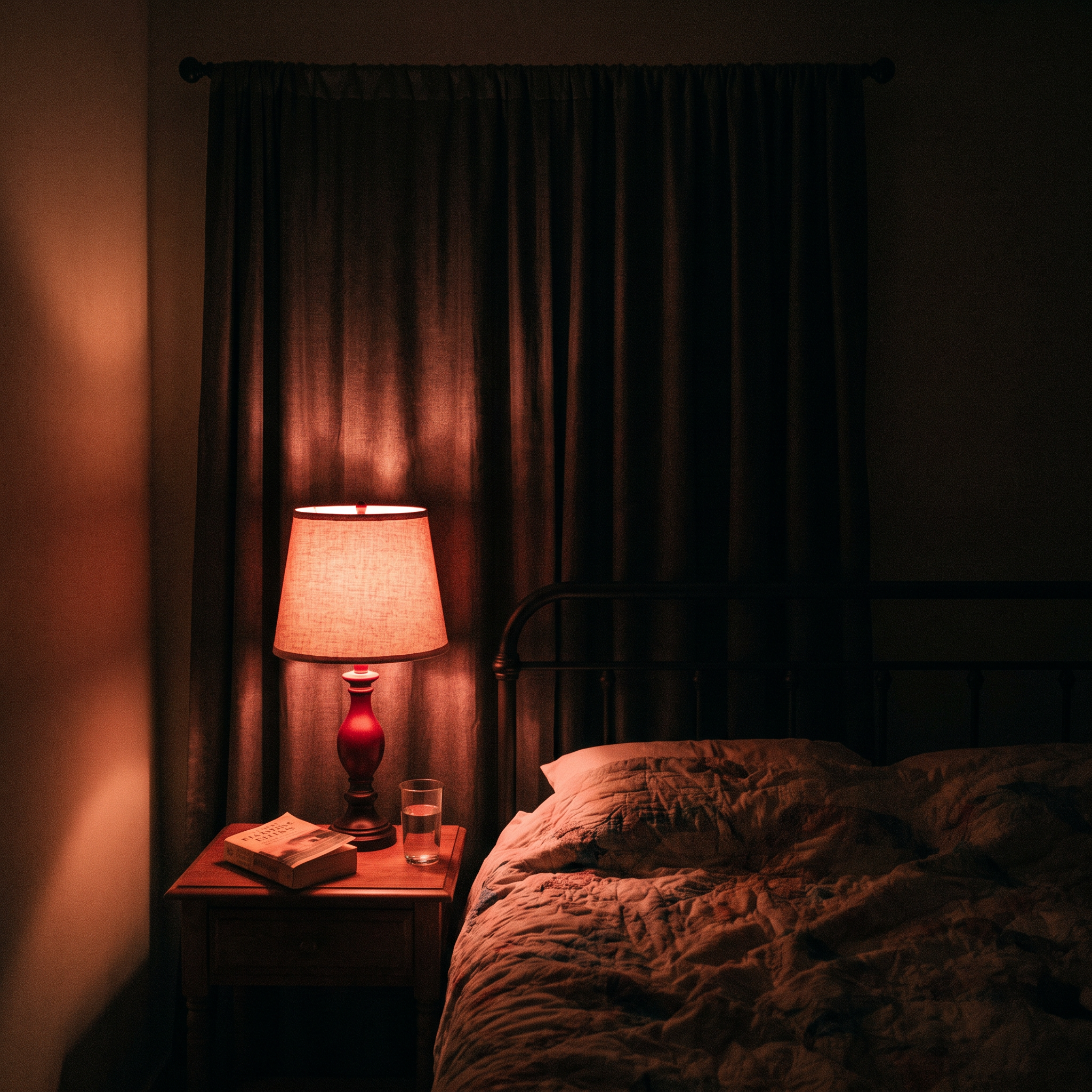
A decent set of blackout curtains might cost $30 or $40, but spread over years of use, the daily cost becomes almost meaningless.
And darkness at night matters.
Large observational studies using wearable light sensors have found associations between greater nighttime light exposure and poorer metabolic outcomes. Researchers have also connected disrupted circadian rhythms with a long list of health problems.
In plain English, your body expects night to look like night.
For most of human history, sunset meant darkness broken by fire, candles, moonlight or stars. It did not mean a glowing television, LED ceiling lights, a phone six inches from your eyeballs and a digital alarm clock bright enough to land airplanes.
So make the bedroom dark.
It’s one of the few health interventions where closing the curtains may actually count as doing something productive.
Turn Down The Artificial Sun After Supper
While you’re fixing the bedroom, take a look at the rest of the house.
Bright, blue-heavy light late at night can interfere with the signals your brain uses to keep its internal clock synchronized. That’s why dimmer, warmer lighting in the evening makes biological sense.
You don’t need to turn the farmhouse into a submarine.
Just stop blasting your eyes with artificial daylight at ten o’clock at night.
Dim the lights. Use warmer bulbs where practical. Put the phone down earlier.
Your great-grandparents didn’t know the phrase “circadian rhythm.”
They just knew nighttime was dark.
The Longevity Medicine Sitting Outside Your Door
Then we reach one of the most powerful things on this entire list.
Walking.
No membership. No machine. No stretchy pants required.
Large studies and meta-analyses consistently find that people who walk more tend to have substantially lower risks of premature death and cardiovascular disease. Benefits appear well before the famous 10,000-step mark, and roughly 7,000 steps a day has emerged in several studies as a useful target associated with meaningful health benefits.
That 10,000-step number wasn’t handed down from a mountain on stone tablets, anyway. Its history traces largely to a Japanese pedometer marketing campaign.
So forget perfection.
Walk to the mailbox. Check the fence line. Circle the pasture. Take the dog down the lane. Walk the garden rows after supper instead of dropping into the recliner.
It all counts.
And here’s the beautiful part.
The body doesn’t care whether you call it “cardio.”
Morning Chores May Be Doing More Than You Think
While you’re outside, look toward the sky.
Morning light is one of the strongest signals your brain receives for setting its internal clock. Bright outdoor light early in the day helps tell your body, “All right, morning has arrived.”
Then, hours later, that signal helps the body understand when nighttime is supposed to begin.
You don’t need a machine for this.
Step outside.
Feed the chickens. Check the garden. Carry coffee to the porch. Walk the dog. Open the barn doors.
Even a short stretch outdoors after sunrise can expose your eyes to far more light than sitting inside a brightly illuminated kitchen.
That one’s free.
Then Feed The Critters Living In Your Gut
Fiber may be the least glamorous thing ever attached to the word “longevity.”
Nobody’s opening a Beverly Hills fiber clinic.
But the evidence behind fiber-rich diets is remarkably consistent. Large reviews involving observational studies and clinical trials have linked higher fiber intake with lower rates of cardiovascular disease, type 2 diabetes, colorectal cancer and premature death.
A practical target for many adults lands somewhere around 25 to 30 grams or more per day, depending on age, sex and overall diet.
And the good news is that this doesn’t require another plastic bottle on the kitchen counter.
Beans. Oats. Vegetables. Berries. Apples. Whole grains. Seeds.
In other words, food.
Better yet, if you’ve got a garden out back, some of the best stuff in the longevity aisle may already be growing in your dirt.
And Don’t Cheat The Repair Crew
Finally, we come to sleep.
This one costs nothing, yet Americans routinely treat it like wasted time.
That’s backwards.
Even short-term sleep restriction can worsen insulin sensitivity and glucose regulation. Chronic poor sleep is also associated with cardiovascular problems, metabolic disease, impaired cognition and a long list of other troubles we’d rather not invite onto the homestead.
Think about it this way.
You wouldn’t run the tractor around the clock, never change the oil, never shut it down and then act surprised when something finally seized.
Yet people do essentially that to themselves for 30 years.
Then they go shopping for a miracle.
Why The Cheap Stuff May Matter Most
That’s the real lesson hiding underneath the longevity craze.
You can spend thousands of dollars chasing exotic treatments, tests and gadgets. Maybe someday some of those things will prove revolutionary.
But none of them changes the basics.
Get enough sleep. Make the bedroom dark. Get outside in the morning. Walk. Keep your muscles working. Eat fiber-rich real food. Correct genuine nutritional deficiencies. And, when supplements have decent evidence behind them, choose simple ones instead of chasing miracle bottles.
That’s not very glamorous.
But neither is greasing a bearing.
The bearing doesn’t care.
And that’s the homesteader’s advantage in all of this. We already understand preventive maintenance because we see what happens when it gets ignored.
Leave one loose shingle through enough storms and eventually you’re replacing plywood. Ignore a little rust long enough and you’re welding steel. Skip maintenance on an engine for years and suddenly you’re standing beside a dead tractor wondering how a $12 problem became a $4,000 problem.
Your body deserves at least the same attention.
So don’t wait until you’re 60 to start trying to buy back what disappeared at 40. Don’t wait until you’re exhausted, weak and metabolically busted before deciding that sleep, walking and decent food might be important.
Do the cheap things while they’re still cheap.
Pull the curtains tonight. Take a walk after supper. Eat the beans. Lift something heavy once in a while. Get outside when the sun comes up.
And tomorrow morning, instead of searching the Internet for the next $500 longevity miracle, grab your coffee and go check the barn.
You might already be holding most of the prescription in your own two hands.