 Print
Print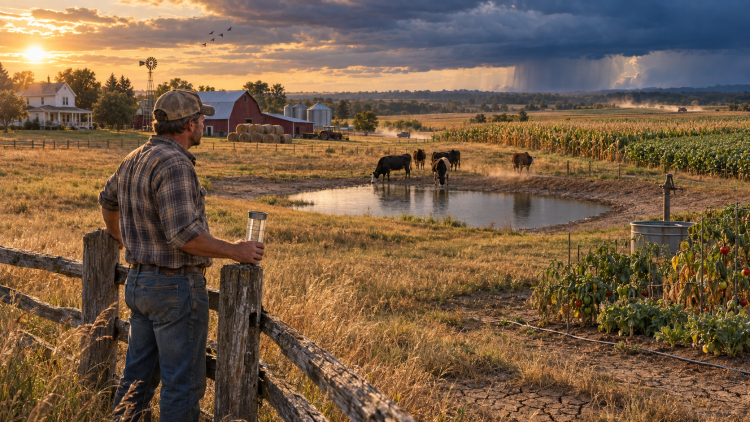
Nearly Half The Country Just Turned A Dangerous Color On This New Drought Map
Drought doesn’t arrive with sirens. It whispers through empty rain gauges, shallow ponds and curling corn.
There are disasters you can see coming on television. A hurricane gets a name, a tornado gets a red box on the weather map and a wildfire produces walls of orange flame that send helicopters and television crews racing toward it.
Drought doesn’t work that way. It arrives quietly, one dry day stacked on top of another, until the rain gauge keeps coming up empty, the creek gets shallower and somebody notices the stock pond doesn’t look quite as deep as it did a month ago.
Then one morning you drive a shovel into the garden and the ground is hard enough to ring.
By then, the disaster may already be well underway.
103.2 Million People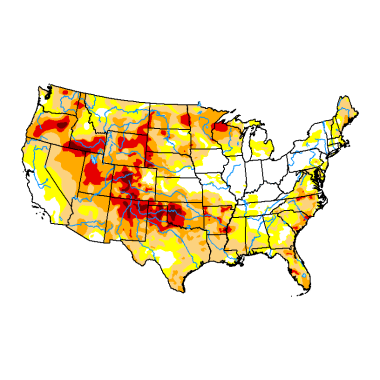
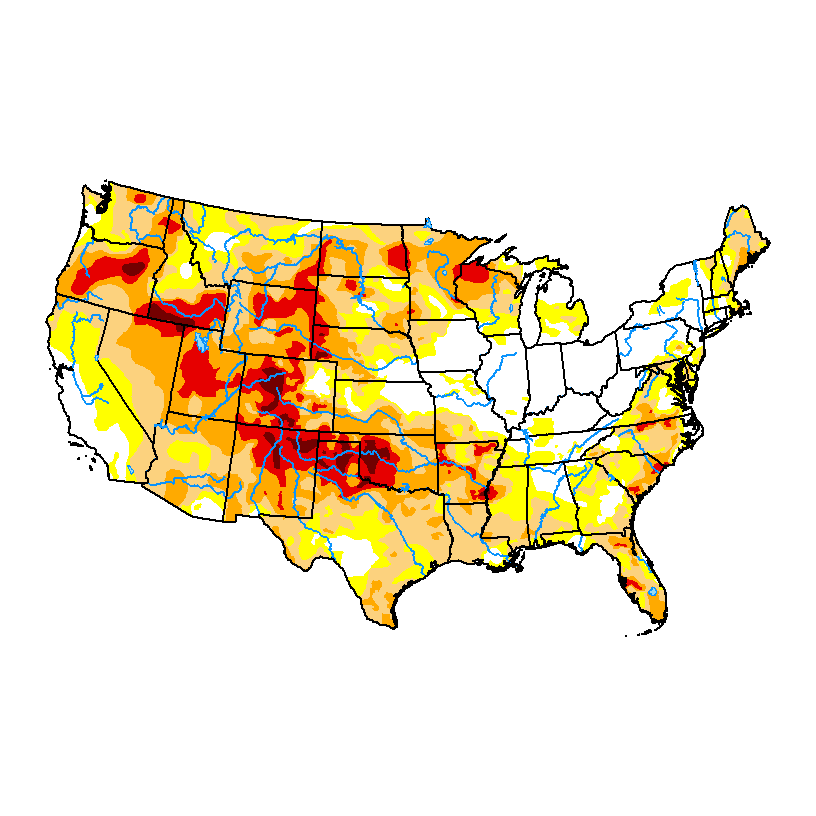
According to the latest Drought.gov national conditions report, 103.2 million Americans were living in areas affected by drought as of September 1. Nearly half — 49.51% — of the United States and Puerto Rico was in drought, while 59.05% of the Lower 48 was affected.
Those numbers moved remarkably fast. National drought coverage increased 4.1 percentage points in a single week and 21.6 percentage points in just one month, which tells you how quickly dry conditions can spread when the weather pattern turns against you.
And this isn’t simply an Arizona, Nevada or California story. The U.S. Drought Monitor shows drought stretching through enormous portions of America’s agricultural heartland, including parts of the Dakotas, Minnesota, Wisconsin, Iowa, Nebraska and Missouri.
That’s farm country. It’s cattle country, corn country and soybean country — the broad middle of America where an awful lot of what eventually lands on your dinner table begins.
Drought Doesn’t Need To Kill A Crop To Hurt You
Here’s where people sometimes misunderstand drought. They picture a cornfield completely burned brown, withered ears hanging from dead stalks and dust blowing across the road like an old photograph from the 1930s.
Certainly that can happen during an extreme drought, but agriculture begins feeling water shortages long before a field looks like something out of the Dust Bowl. Plants don’t have to die to produce less, and pasture doesn’t have to disappear before a cattleman has to start feeding hay that was supposed to carry the herd through winter.
Likewise, a pond doesn’t have to become a cracked mud hole before somebody starts worrying about livestock water. A well doesn’t have to quit pumping before the family living above it begins wondering how much water is actually left beneath their boots.
That’s why drought is so sneaky.
It doesn’t have to destroy everything. It only has to make everything harder.
Walk Out To The Pasture
A cattleman sees drought differently than somebody watching a weather forecast from an apartment. He walks through the gate and looks down.
How much grass is actually there? How quickly is it recovering after the cattle move through, how far has the pond dropped and how many more dry weeks can the pasture handle before he starts feeding hay?
Those questions eventually become money questions. When pasture production falls, stored feed that was supposed to be used months from now can start disappearing today, while water that once came naturally from a pond or creek may have to come from somewhere else.
That’s when drought stops being a colored patch on a government map.
It becomes a bill.
Hay Is Money Standing In A Field
Most people drive past hayfields without giving them much thought. To somebody raising cattle, sheep, goats or horses, those green fields are winter feed standing upright.
When drought reduces pasture growth, livestock may need supplemental feed earlier than planned. If the same dry weather also reduces hay production across a region, producers can find themselves needing more feed precisely when there’s less of it available.
Then simple economics takes over. If everybody needs hay at the same time, prices can rise, hauling distances can increase and producers may have to decide whether keeping every animal through winter still makes financial sense.
Those costs don’t necessarily appear in the grocery store tomorrow morning. But agriculture is a long chain, and eventually pressure somewhere near the beginning of that chain can work its way toward the person standing at the checkout counter.
That’s how a brown pasture hundreds of miles away can eventually become part of somebody else’s grocery bill.
Your Well Is A Tiny Reservoir
For the off-grid and homesteading crowd, there’s another side of this story that’s even closer to home.
The well.
A lot of rural Americans turn on the kitchen faucet and hear the pressure tank click somewhere in the basement. Water comes out, and as long as that keeps happening, we rarely spend much time thinking about what’s happening 50, 100 or 200 feet beneath our boots.
But groundwater isn’t magic. According to the U.S. Geological Survey’s explanation of drought and groundwater, groundwater levels depend partly on precipitation recharging aquifers, along with the amount of water being pumped from them.
During prolonged dry weather, streamflow can decline, lakes and reservoirs can fall and the depth to groundwater can increase. USGS notes that shallow water-table wells can be particularly responsive to a lack of rainfall, although the vulnerability of any individual well depends on its depth, aquifer, recharge and surrounding pumping.
That matters to rural America. The USGS estimates that more than 43 million Americans rely on private domestic wells for drinking water, with homeowners generally responsible for maintaining those systems and monitoring their water quality.
So think about your own place. If the house, garden, chickens, cattle and orchard all drink from the same hole in the ground, water security suddenly looks a whole lot different.
The Garden Usually Warns You First
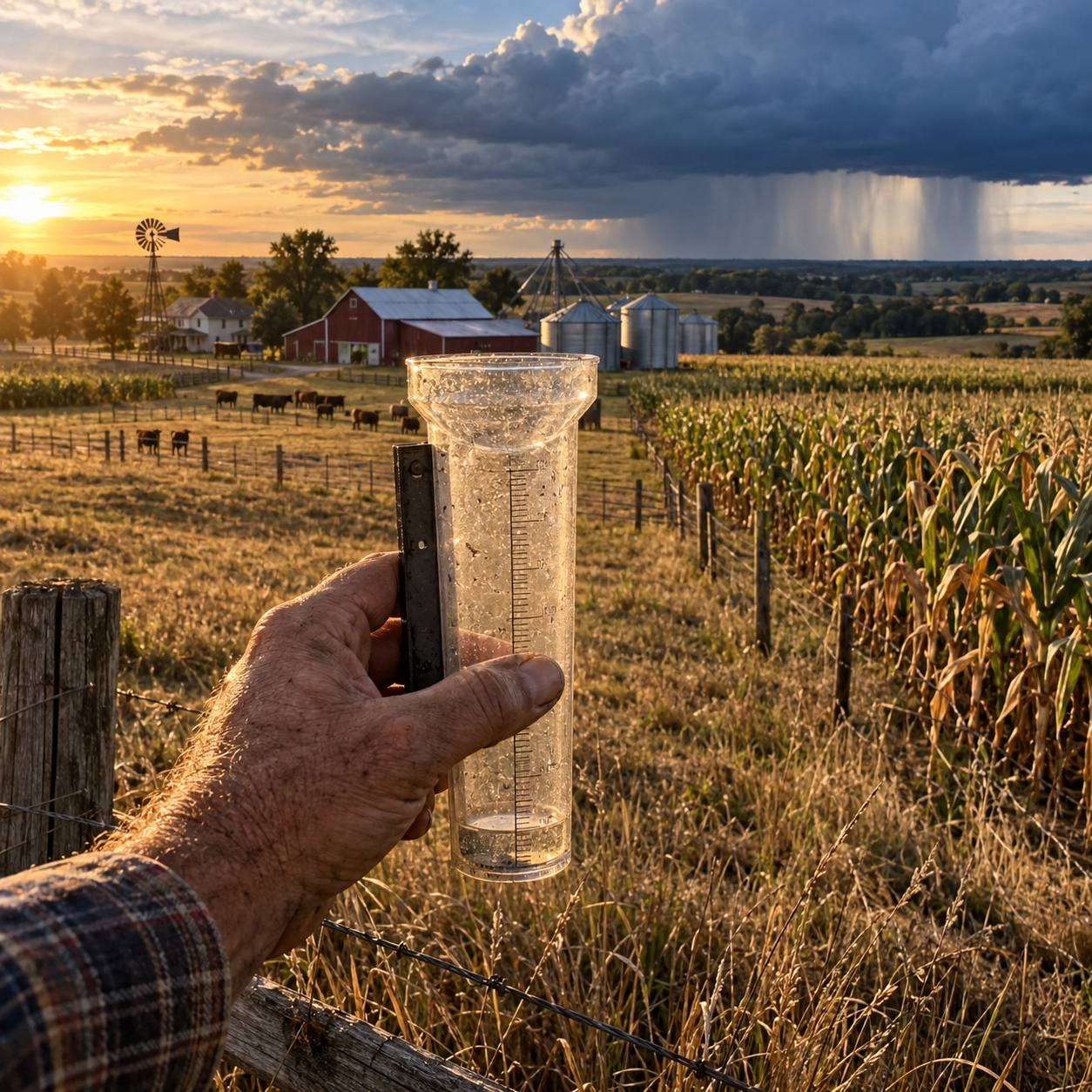
Sometimes your garden tells you what’s happening before you ever look at the drought map. Cucumber leaves wilt during the afternoon, tomatoes need another soaking, sweet corn rolls its leaves tight against the heat and soil that once stayed damp for days turns dusty by tomorrow afternoon.
So you begin watering more. That’s fine when the well is strong, but now multiply that same biological problem across thousands or millions of acres of commercial agriculture.
Corn needs water. Soybeans need water. Pasture, vegetables, fruit trees and livestock all need water, and no amount of clever accounting changes that basic fact.
There is no substitute for water.
You can buy fertilizer and diesel. You can replace a broken tractor part, repair a fence or order another load of feed.
You can’t write a check to the sky.
What Happens Underground Matters Too
One good rain doesn’t necessarily erase a long drought, especially when groundwater has been drawn down. The USGS explains that aquifers recharge as precipitation infiltrates through the ground, but recharge rates differ greatly between aquifers.
If pumping exceeds recharge, groundwater levels can fall and wells can yield less water or, under some circumstances, go dry. Nearby pumping can matter too because several wells may be drawing from the same groundwater system.
That’s an important point for anybody trying to become more self-reliant.
A private well gives you independence from a municipal water system. It doesn’t give you independence from hydrology.
The Grocery Bill Comes Later
This is another reason drought rarely feels like an emergency when it begins. There’s usually a delay between what happens in a pasture or cornfield and what happens inside a supermarket.
A bad pasture today doesn’t necessarily change the price of beef tomorrow morning. A disappointing hay crop doesn’t instantly change the price of milk, and dry soil in September doesn’t immediately empty the vegetable aisle.
America’s agricultural system has buffers. Farmers have stored feed, warehouses have inventories, grain moves between regions, food companies have contracts and processors can sometimes switch suppliers.
That’s good news.
But buffers aren’t the same thing as immunity.
Persistent drought can reduce forage, increase irrigation demands, stress livestock, raise feed expenses, reduce crop yields and force farmers to make decisions they wouldn’t otherwise make. Eventually, somebody pays for those decisions.
Drought Is A Preparedness Test You Can Actually Practice For
The good thing about drought — if there is such a thing — is that it usually gives you some time to prepare. Unlike a tornado coming across the cornfield at 60 miles an hour, drought generally builds slowly enough to let you see trouble developing.
Use that time.
If your family depends on a private well, know something about it before there’s a problem. Learn the well depth if you can, understand where the pressure tank and pump controls are and think through the uncomfortable question of what happens if the pump fails during the hottest, driest week of summer.
Store some drinking water, too. You don’t need enough barrels to float Noah’s Ark, but having a reasonable emergency supply means a failed pump, power outage or temporary water problem doesn’t immediately become a family crisis.
If you keep livestock, think about backup watering before the pond is low enough to make you nervous. If you garden, mulch heavily, build organic matter into the soil, capture rainwater where it’s legal and practical, and water deeply enough to encourage roots downward instead of merely wetting the top inch every afternoon.
And pay attention to what your land is telling you.
The grass knows. The creek knows. The garden knows.
Sometimes they know before we do.
Don’t Waste A Good Rain
When rain finally comes during a drought, there’s a temptation to stand on the porch, smell that wet dirt and assume the problem is over. Sometimes a changing weather pattern really does begin turning things around.
But rainfall and groundwater recovery aren’t always the same thing. The USGS notes that groundwater levels respond to recharge, pumping and aquifer characteristics, which means recovery below ground can lag behind what we see happening on the surface.
That’s why water resilience isn’t simply about stacking cases of bottled water in the basement. It’s about building soil that holds moisture, mulching gardens, protecting water sources, maintaining ponds, managing pasture carefully and having more than one way to water animals.
It’s also about taking advantage of wet periods. Keep gutters working, use rain barrels or larger catchment systems where appropriate, fix leaking hydrants and don’t treat abundant water as though abundance is guaranteed forever.
Our grandparents understood that instinctively because they couldn’t turn a dial and order rain.
Treat water the way they treated firewood: put some away while you’ve got it.
The Disaster Nobody Sees
Now, none of this means 103.2 million Americans are standing beside empty wells or watching dead crops blow across their farms. Saying nearly half the country is experiencing drought does not mean nearly half the country is experiencing catastrophic drought.
The U.S. Drought Monitor uses several categories ranging from Moderate Drought through Severe, Extreme and Exceptional Drought. Conditions can vary enormously from one region — and even one county — to another.
But that’s exactly why this story deserves attention before conditions become catastrophic.
You don’t wait until the pond is empty to think about livestock water, and you don’t wait until the well quits pumping to wonder what your family will drink. You don’t wait until hay prices shoot through the roof to ask whether there’s another way to stretch pasture or store feed.
Preparedness works best while everything still works.
A hurricane announces itself on radar. Tornado sirens scream, wildfires turn the sky orange and floods can come rolling across a road right in front of you.
Drought mostly whispers.
It whispers through dusty soil and shallow ponds, stressed grass and curling corn leaves, low creeks and farmers watching a promising cloud disappear over the horizon without dropping enough rain to settle the dust.
Right now, according to the government’s latest numbers, 103.2 million Americans are living somewhere inside that slow-moving story.
Maybe the smartest thing we can do is listen before the whisper becomes a shout.