 Print
Print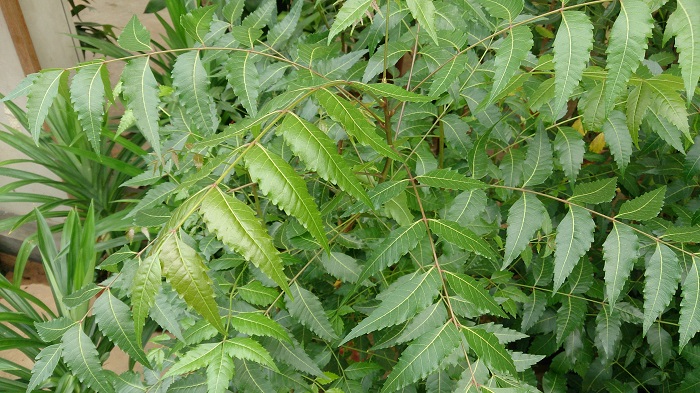
In India and many parts of southern Asia, the neem tree is fondly called “nature’s drug store.” It has been extensively used in traditional Ayurvedic and homeopathic medicine for many centuries, and to this day it remains the go-to herb for treating all kinds of physical ailments among Asian folk.
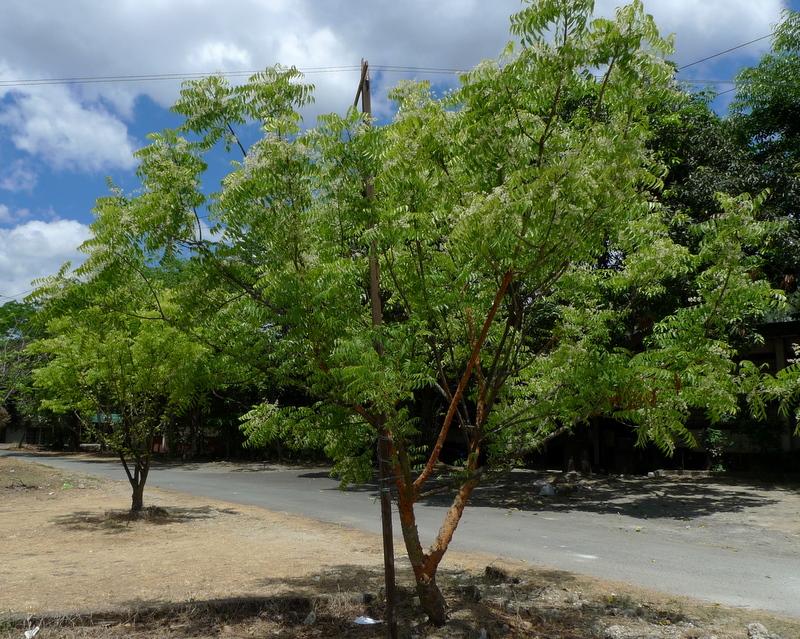
Azadirachta indica, as the neem is scientifically known, is a hardy, fast-growing evergreen tree native to India, Burma, Bangladesh and Pakistan. It has white fragrant flowers and yellowish-white oval fruits that look like olives. Mature neem trees grow up to 60 feet tall, with branches spreading far and wide. They provide lots of shade, and are therefore used to line streets in the hot, humid cities of Asia, Africa, the Middle East and the Caribbean. The neem tree flourishes in the tropics and sub-tropics, yet it can also tolerate the arid, drought-prone climates of Africa and the Middle East.
In the United States, neem grows outdoors in Hawaii and Florida. It can’t tolerate temperatures below 39 degrees Fahrenheit, so in areas where the climate dips below freezing, it has to be planted in a greenhouse or in a big container pot that can be rolled indoors to winter.
The neem also goes by the names Indian lilac, Persian lilac, margosa, holy tree and bead tree. Its Sanskrit name is Arishta, which means “reliever of sickness.” In 1992, its medicinal benefits were publicly recognized in America when the US National Academy of Sciences published a report entitled “Neem: A Tree for Solving Global Problems.” Citing the plant’s medicinal benefits and its potential to reduce soil erosion and deforestation, the report said neem seems to be one of the most promising of all plants and may eventually benefit every person on the planet. (1)
The list of neem’s medicinal benefits is vast: It’s anti-inflammatory, anti-arthritic, antipyretic, hypoglycaemic, antibacterial, antiviral, antifungal, sedative, diuretic, anti-gastric ulcer, anti-tumor, and anti-malarial. (2, 3) It is particularly recognized for its ability to treat skin problems like wounds, scabies, acne, eczema, psoriasis, warts, ringworm, athlete’s foot, dandruff and head lice.
New “Survival Herb Bank” Gives You Access to God’s Amazing Medicine Chest
Each part of the neem has medicinal use.
Leaves and Flowers
In Indian folk medicine, the leaves are used for fever, swollen glands, intestinal parasites, nosebleed, gum disease, bruises, sprains, rheumatism, skin ulcers, leprosy, diabetes, respiratory, cardiovascular and liver problems, and malaria. Oil extracted from the leaves has been shown to have antiseptic, antibiotic, antifungal and antiviral properties.
The quickest way to use neem for external ailments is to pound, grind or boil the leaves, seeds, twigs, bark or roots and apply the extracts to infected areas of the body. For internal problems, the leaves may be chewed and ingested straight, or steeped in water and ingested as tea. They are bitter, though.
In countries where neem doesn’t grow, tea leaves and leaf powder in capsule form can be bought online or at health food stores. These can be taken regularly as herbal supplements to support gastrointestinal health, cleanse the blood and strengthen the body’s immune system.
Neem flowers are used for controlling phlegm, reducing bile and de-worming. Along with the tender young shoots of the tree, flowers are eaten as vegetables in India and some parts of Southeast Asia.
Around the home, neem products can be used as an insect repellent. Leaves are dried and smoked to keep away mosquitoes, and dried leaves and twigs can be placed inside closets, cupboards and food containers to protect clothes and food – especially stored grain – from moths and critters.
Fruit and Seeds
The edible fruit is fibrous and bittersweet. It is used to treat wounds, hemorrhoids, intestinal worms, urinary tract infection, diabetes and leprosy.
Neem oil, which makes up about 25 percent of a seed’s weight, is used for many purposes. Like the leaves, it is antiseptic and antifungal. There are reports of cancer patients benefiting from treatments using neem oil, particularly those with parotid tumor and epidermoid carcinoma, a type of skin cancer. (4)
Don’t Plant Anything But Non-GMO Seeds. Get Them Here …
In hygiene and beauty products, neem oil is widely used for making soaps, creams, balms, shampoos and nail polishes. It is known to soothe, cleanse, moisturize and protect the skin, hair and nails. Neem oil is also mixed into toothpaste and mouthwashes.
Neem “cake,” the pulp that remains after extracting oil from the seeds, is used as animal fodder and fertilizer in homesteads and small-scale farms. All parts of the plant can likewise be used as mulch and compost. For soils with levels of acidity, neem can help neutralize and amend them.
In the US, neem is gaining popularity as an effective non-pesticidal management (NPM) agent in gardening. The seeds are ground into powder, mixed with water and applied on crops to repel birds and insects, and deter pests from laying eggs on leaves. It is also mixed into the soil to protect roots from ants and nematodes. Neem has very low levels of toxicity to humans, plants, animals and beneficial insects.
Twigs and Bark
The twigs are traditionally used as toothbrushes or “chewing sticks” in Southern Asia. One end is chewed to turn it into bristles, and then brushed against the teeth, and the rest is split into two and rubbed against the tongue to clean it. Neem bark is said to be very effective against gingivitis.
Like other parts of the tree, the bark contains the same properties useful in treating skin disease, pain, fever, parasites, gastric ulcers, acid reflux, asthma, jaundice and malaria. The bark secretes a red dye that is rarely used except for tanning goatskins.
Wood
Finally, the wood of the neem tree is valued for its durability and resistance to pests. It is used for making furniture, farm implements, boat paddles, wood carvings and musical instruments. And, like its relative in the Meliaceae family, the mahogany, it can take on a good polish.
Do you use neem? If so, how? Share your advice in the section below: