 Print
Print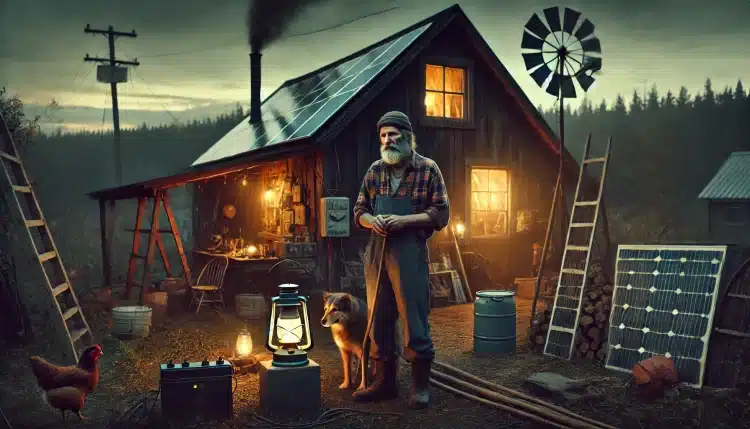
A Single Detonation Could Black Out Half the Country… Here’s How
Late in the morning of April 28, 1958, a U.S. Navy ship drifted quietly in the Pacific, about 70 miles from Bikini Atoll. On deck, the crew of the USS Boxer prepared what looked like just another high-altitude balloon launch.
But this one carried something different.
Instead of instruments or dummy payloads, a 1.7-kiloton nuclear warhead—codenamed Yucca—hung beneath the balloon. Slowly, almost peacefully, it rose to 85,000 feet before detonating high above the Earth.
What followed didn’t shake the ground—it shook the future.
The instruments meant to measure the blast didn’t just spike—they maxed out at five times their limit. The data was so extreme that scientists initially dismissed it as a malfunction.
It wasn’t.
It was the first real glimpse of a high-altitude electromagnetic pulse—an EMP—and what it could do to a modern world built on electronics.
No Boom, No Fire… Just Silence

Now most folks picture nuclear war as mushroom clouds and burning cities. But a high-altitude EMP doesn’t play out like that.
Instead, the detonation happens far above the Earth—100 to 200 miles up—where there’s no blast wave, no fallout, and no visible destruction on the ground. You could be out in your garden and never know it happened.
Until everything stops working.
Within nanoseconds—faster than a blink—the pulse reaches the ground and wipes through anything with circuitry. That’s when preparedness stops being theory and becomes reality.
What’s Actually Happening Up There
So what’s going on behind the curtain? When that device detonates in the upper atmosphere, gamma rays knock electrons loose from atoms and send them spinning.
Then Earth’s magnetic field grabs those electrons and whips them into motion, generating a powerful electromagnetic pulse. Because it happens high above the surface, that pulse spreads out over a massive area.
At the right altitude, a single detonation can affect a region larger than Texas—and potentially a large portion of North America.
One blast. Wide reach.
Three Waves… Three Problems
Now here’s where it gets practical. An EMP doesn’t hit once—it hits in three distinct ways, and each one carries its own kind of trouble.
The first is the E1 pulse, and it’s fast—gone in nanoseconds—but incredibly intense. It acts like a lightning strike spread across the entire electromagnetic spectrum, hitting everything at once.
Any wire, tool, or metal object can act like an antenna, converting that energy into a damaging voltage spike. That’s especially bad news for modern electronics—solar gear, radios, and control systems.
Which means if they’re not protected ahead of time, they may not be there when you need them.
The Hit That Follows
Next comes the E2 pulse, which behaves a lot like lightning. Fortunately, most grid infrastructure is already designed with lightning protection in mind.
But there’s a catch.
If E1 has already knocked out protective systems, E2 lands on a weakened target. That’s how layered failures begin.
The Slow Damage That Breaks the Grid
Then comes E3—and this is where things turn serious.
Unlike the fast strike of E1, E3 unfolds slowly as Earth’s magnetic field is disturbed and then settles back into place. That movement creates long, low-frequency waves across the landscape.
And long power lines—stretching for miles—act like giant antennas.
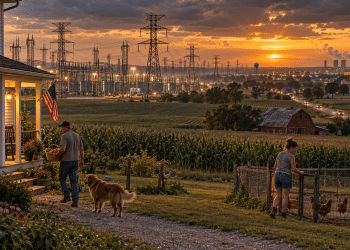
That means massive currents get pushed into the grid, especially into the transformers that keep electricity moving.
The Weak Link Nobody Thinks About
Transformers are the quiet workhorses of the grid. They step voltage up and down so power can travel across states and into your home.
But they’re not built for this kind of stress.
When E3 injects a direct-current-like flow into a system designed for alternating current, it throws everything out of balance. Transformer cores can saturate, overheat, and begin to fail.
And here’s the problem.
They’re not easy to replace.
These are massive, custom-built machines that can take one to three years to manufacture. Most utilities don’t keep spares sitting around.
Which means if enough of them go down… the clock doesn’t reset quickly.
What the Research Really Shows
In 2019, a major engineering study modeled what would happen if a nuclear device detonated about 200 kilometers above Earth. The findings were more nuanced than the Hollywood version—but still sobering.
The fast E1 pulse might disrupt about 5% of transmission line relays. That alone likely wouldn’t collapse the entire grid.
But E3 told a different story.
Regional blackouts—spanning multiple states—were well within the modeled outcomes.
And some experts believe even those results are optimistic.
When the Lights Don’t Come Back
Now bring that down to ground level.
Even if the physical damage isn’t catastrophic everywhere, the scale of disruption is. Communication systems fail. Coordination breaks down. Repairs slow to a crawl.
That’s how a short outage turns into weeks.
And weeks… into months.
Not because everything broke—but because everything depends on everything else.
Where the Homesteader Has the Advantage
This is where the off-grid mindset quietly shines.
If you’ve already stepped back from full dependence on the grid, you’re not scrambling when it stumbles. You’ve already thought through power, water, and food.
And more importantly—you’ve practiced it.
That changes everything.
What Smart Preparation Actually Looks Like
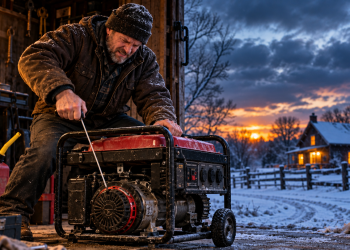
Start with your electronics. Protect critical gear—radios, spare solar components, small inverters—inside a Faraday cage or metal enclosure… so they’re shielded from a pulse.
Then take an honest look at your power setup. If the grid stayed down long-term, could you function—not just get by, but actually live?
Next comes water.
Because when the power stops, so do the pumps.
A hand pump, gravity-fed system, or reliable backup source becomes essential. From there, food storage and the ability to grow and cook without electricity round out your foundation.
This Isn’t About Fear
It’s about reality.
An EMP isn’t science fiction—it’s physics. And while it may not send us back to the Stone Age, a multi-month blackout is well within the realm of possibility.
The ones who come through it best won’t be the ones who react the fastest.
They’ll be the ones who never had to panic in the first place.
Because they were already living like the grid was optional.