Print
Why The Skills And Stories You Pass Along Still Have Work To Do
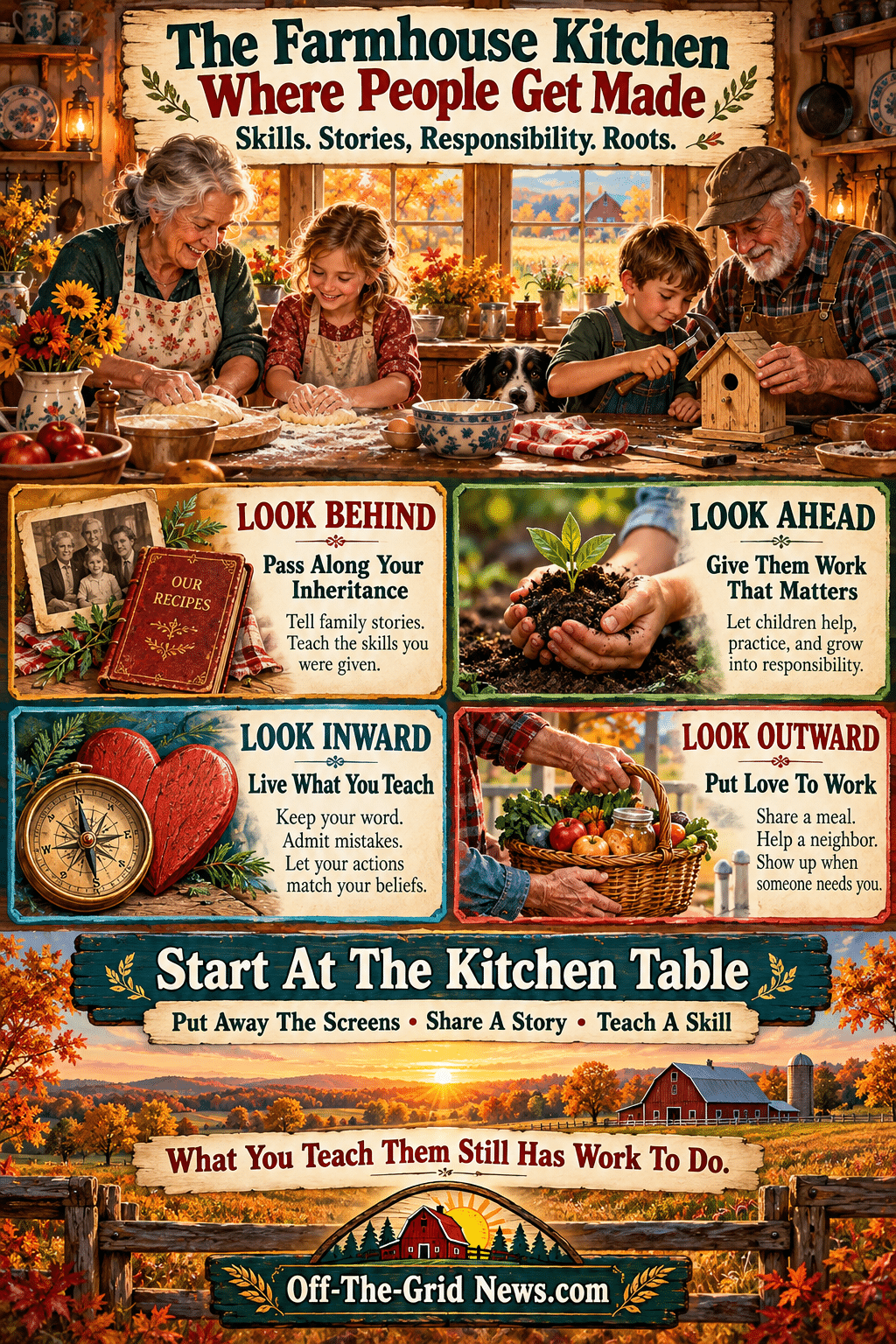
Working The Four Fields: The Farmhouse Kitchen Where People Get Made
Some people live their lives. Others get lived.
Here’s what I mean.
At first, you can hardly tell them apart. Both get up, go to work, pay the bills, and sit down to supper. Both would tell you nobody does their thinking for them.
Then something changes. A job disappears, trouble comes home, or the old routine quits working. One person sizes things up and decides what comes next, while the other waits for somebody to tell him.
That difference matters. A man can spend forty years making a living without getting much practice at deciding how to live. The calendar fills up, the bills get paid, and somebody else keeps choosing what deserves his attention.
Throughout Working The Four Fields, we’ve looked behind us at our inheritance, ahead at possibility, inward at understanding, and outward at action.
But somebody has to walk those fields.
What makes a person capable of doing that? And what happens when the place that used to raise him gets quiet, while the television does all the talking?
A Birth Certificate Doesn’t Finish The Job
Everybody arrives in this world as somebody’s baby. Becoming a mature person takes considerably longer.
It takes years of being loved, corrected, trusted, disappointed, and called upon. Somewhere along the way, you learn that the world needs more from you than your appetite and your opinions.
A grown person can cope with opposites. He can work hard without forgetting how to celebrate, and he can stand his ground without turning every conversation into a fence-line dispute.
When death comes to a neighbor’s house, he knows the jokes can wait. There are chairs to unfold, people to feed, and a family that needs somebody steady.
Think about an ordinary spring day on a homestead. Before breakfast, you’re a mechanic trying to coax life out of an engine. By noon, you’re helping a goat deliver twins, and after lunch, you’re figuring the feed bill.
At supper, a child asks a question that no wrench in the shop can answer.
You have to change gears.
The fellow who can handle machinery but never tenderness has growing left to do. So does the fellow who can discuss everything beautifully but disappears when the shovel comes out.
Grandma’s Kitchen Was Doing More Than Feeding People
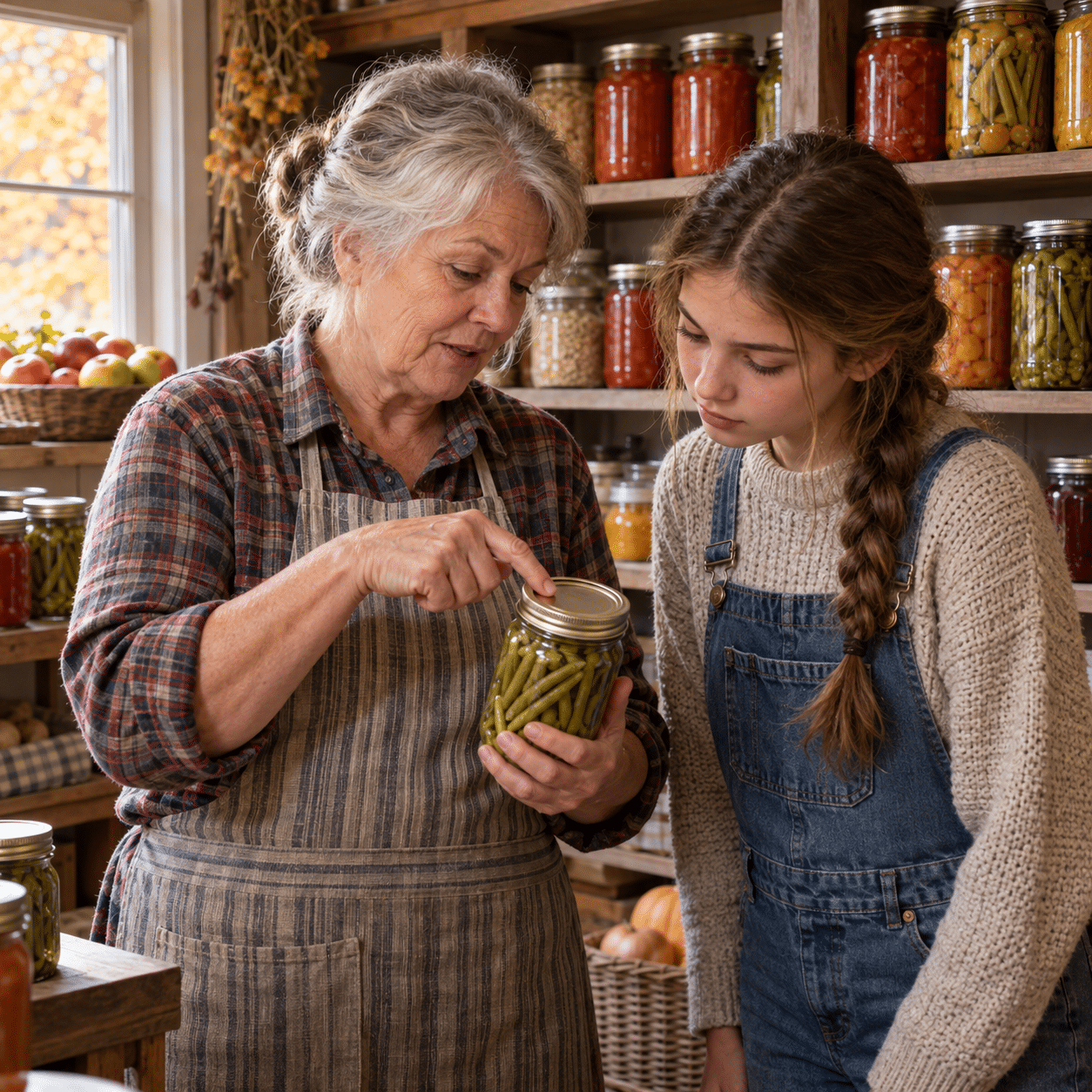
So where do children learn to move between those responsibilities? Around people who already do it.
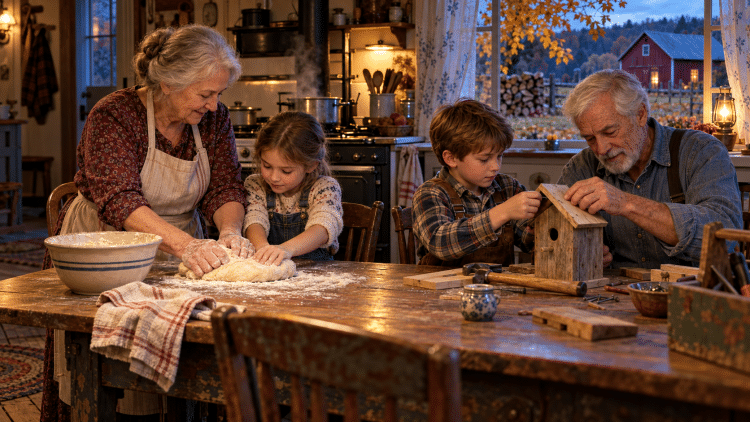
Picture the farmhouse kitchen before Christmas. Grandma has flour on her sleeve, something bubbling on the stove, and firm opinions about which platter belongs on the table.
She remembers the hymn her mother sang, and she knows which neighbor shouldn’t spend the day alone. Somehow, while watching three pots, she notices the child who has gone quiet.
Meanwhile, Dad comes through the door carrying cold air and the smell of chores. The animals are fed, the woodbox needs filling, and somebody small gets asked to help.
The children are learning what celebration costs, what work serves, and how a family makes room for other people. Nobody announces a lesson on character development.
They pass the potatoes.
That kitchen has a quiet rhythm. Work gives way to supper, supper makes room for conversation, and tomorrow’s chores get divided before the dishes are done.
There’s more happening in those exchanges than meets the eye. Harvard’s Center on the Developing Child describes how responsive, back-and-forth interaction with adults helps build children’s developing brains. A child asks, somebody answers, and the conversation grows from there.
Much of that teaching happens so quietly you don’t recognize it until the rhythm disappears. Then supper becomes six people, six screens, and nobody with anything to say.
The children still learn. There’s simply a different teacher at the table.
The American Academy of Pediatrics points out that parents’ own screen habits can get in the way of conversation and interaction with their children. Sometimes the first phone that needs putting away belongs to the grown-up.
“I Don’t Care” Can Become A Way Of Life
Listen to how often people say it. Ask what they’d like to do, and you get “I don’t care.” Ask what they think, and you get “Whatever.”
Now, everybody has moments when choosing supper feels like one decision too many. But indifference can settle into a person like dampness settles into an empty house.
Don’t care too much, don’t get attached, and above all, don’t let anybody see that something matters. That posture can look sophisticated until life asks you to love somebody.
Love a dog, and someday you’ll kneel beside a hole you wish you hadn’t needed to dig. Love a patch of ground, and you’ll watch the sky when hail starts ticking against the window.
Love children, and part of your heart will spend the rest of your life walking around outside your body.
Attachment comes with a bill.
Yet the person determined never to pay it misses much of what makes life worth living. You can protect yourself from plenty of grief by refusing to care, but you’ll shut out plenty of joy with it.
On a homestead, that lesson comes early. You fight all night for a ewe and lose her anyway, or plant fruit trees for the grandchildren and find bark stripped by voles after the snow melts.
You grieve, learn what you can, and plant again. Somewhere in that stubborn return to the work, a person grows.
You Can Sell The Dairy Cows And Still Be Yourself
Of course, attachment raises another question. How do you change without coming apart?
Think about the farmer who sells his dairy herd after forty years. For decades, the milking schedule set the clock for everything from Christmas morning to a trip into town.
Then the barn falls quiet.
His knees are worn, his work has changed, and the neighbors no longer see his milk truck coming down the lane. But the man hasn’t disappeared with the cows.
He can teach a grandson to mend a gate or visit somebody whose own barn has gone quiet. He can discover that being needed takes more than one form.
That brings us back to the fifth field running through the other four: change. You can lay down an old responsibility and take up a new one while keeping your word, your faith, and your love for the people entrusted to you.
The roots hold while the branches grow.
Some Decisions Need To Ripen Before You Pick Them
Next comes a skill our noisy age makes harder: knowing when to speak. Some decisions need time before they’re ready for company.
Suppose you’re thinking about leaving a job. There’s a difference between quietly working through that decision and announcing it before you know your own mind.
Once you’ve told everybody, pride can start doing your thinking. Now you feel obliged to defend something you hadn’t finished considering.
Country people ought to understand this. You don’t dig the garlic because you’re tired of waiting, and you don’t announce at church that you’re selling the farm before you’ve settled the matter with your wife.
You don’t confuse a strong feeling on Tuesday with a settled conviction on Friday, either. Some thoughts need prayer, conversation, and another night’s sleep.
Waiting can take more backbone than talking, especially when talking earns attention and waiting leaves you alone with the responsibility.
Let the decision ripen. Then pick it.
A Gate That Won’t Latch Isn’t Open-Minded
Still, waiting cannot become a permanent address. Sooner or later, a person has to decide what he believes and put some weight on it.
You’ve probably met the fellow who keeps one set of convictions for speaking and another for earning his supper. He sells something he wouldn’t let his own family use, or praises responsibility while handing his obligations to everybody within reach.
Eventually, people notice the gap.
Changing your mind honestly is part of growing. Admitting you were wrong may be the strongest thing you do all week, but keeping two convenient minds leaves a man divided against himself.
An open mind ought to let you examine a thing carefully. After examination comes judgment, because some things deserve a place in your life and some deserve to be shown the gate.
A gate that won’t latch isn’t open-minded. It’s broken.
Grandpa’s Stories Have Work Left In Them
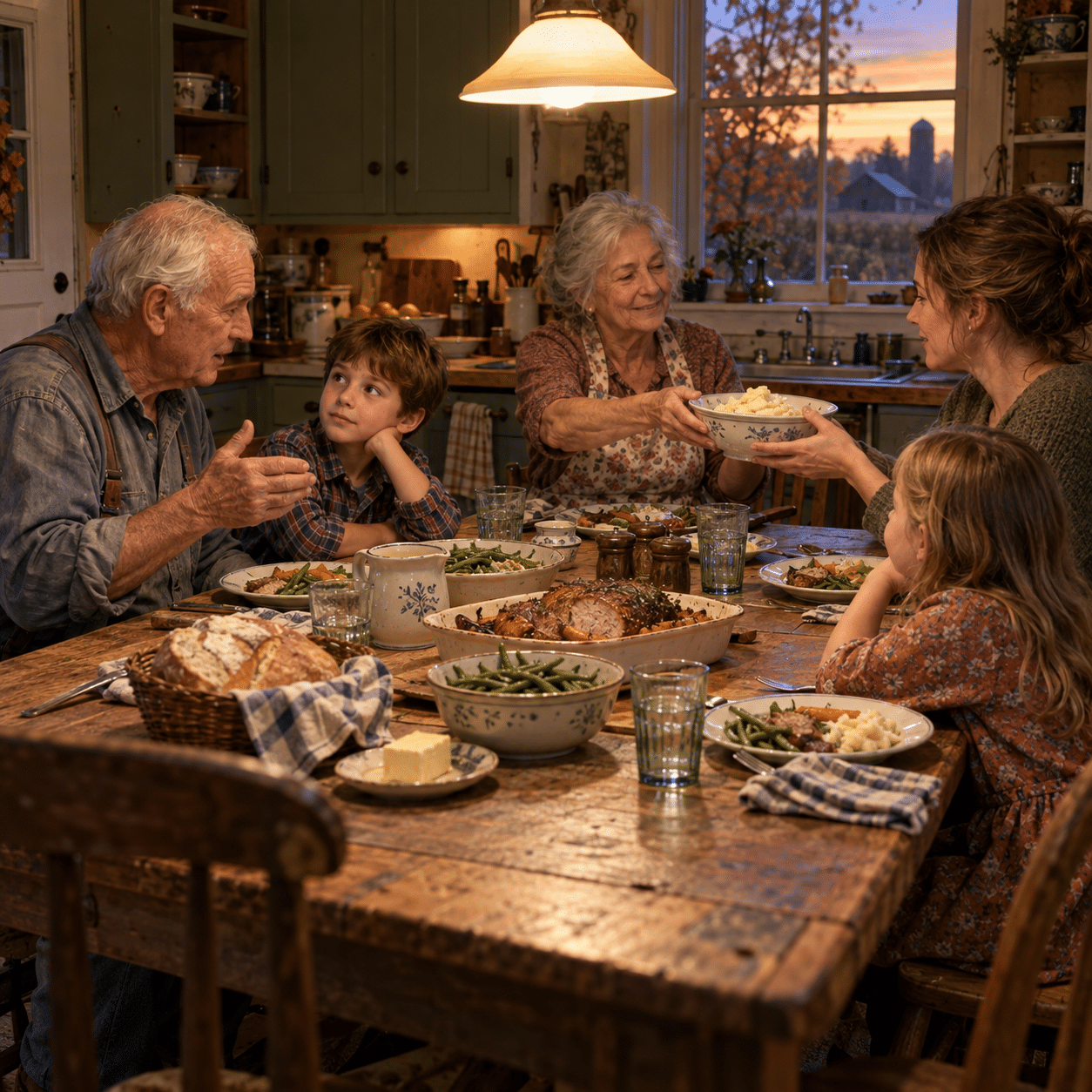
Now look behind you. When Grandpa tells how the family got through a hard winter, you may hear a story you’ve heard seventeen times.
He may be handing you a tool.
Listen for what held the household together. Who shared food, what had been stored, and which skill suddenly mattered? What foolishness made the trouble worse?
Researchers at Emory University have explored how family stories help children understand their place in something larger and weather difficult times. Stories about hardship belong in that inheritance, too, especially when children hear how people stayed together and carried on.
The same passing of knowledge happens when you teach a granddaughter to recognize good canning seals or show a grandson how to sharpen an edge. Your hands are doing today’s job, but the lesson reaches beyond today.
Someday, you won’t be standing beside them. The knowledge can be.
That gives inheritance its weight. We receive something, put it to use, and pass it along in a condition fit for somebody else’s hands.
Who’s Being Made Around Your Table?
Tonight, take another walk through the four fields. This time, pay attention to the people growing on your place.
Look behind you. What did the people who raised you put into your hands and your habits? Which gift have you used for years without stopping to say thank you?
Look ahead. What are the children learning from the way your household actually runs? They notice who keeps promises, who does the dirty work, and what happens when somebody needs help.
Then look inward. Where are your words and your conduct pulling in different directions? What have you refused to love because loving it might hurt?
Finally, look outward. Where have you handed over a decision that belongs to you?
You don’t have to repair the whole place tonight.
Start in the kitchen.
Turn off the screen and pull up a chair. Give a child a real job and stay long enough to help him learn it; ordinary household chores give children practice at responsibility and self-reliance. Ask an older person a question worth answering, then let him finish.
There may be dishes in the sink and mud beside the door. The table may carry scratches from three generations of elbows.
Good.
There’s still room around it for another person to grow. And there’s still somebody there who knows how to help.