 Print
Print
Real Science Research Says Ivermectin Might Fight Cancer—But There’s a Big Pharma Money Catch
A growing body of scientific research is shining a spotlight on a surprising candidate in the fight against cancer: ivermectin. Once known primarily as an antiparasitic drug, ivermectin is now being studied for its potential anti-cancer properties.
Dr. William Mackus, in a recent interview, discusses the remarkable findings in the preclinical research and asks the question many are now wondering: Why isn’t this being explored further in human trials?
An Unexpected Discovery
Dr. Mackus explains that his curiosity about ivermectin and cancer began when he came across a surprisingly large number of studies linking the drug to cancer treatment.
A PubMed search revealed more than 300 peer-reviewed papers… an unusually high number for a drug known mainly for treating parasitic infections. These studies spanned a wide range of cancers, from blood to solid tumors. They highlighted ivermectin’s impact on different cancer pathways.
How Ivermectin Works Against Cancer
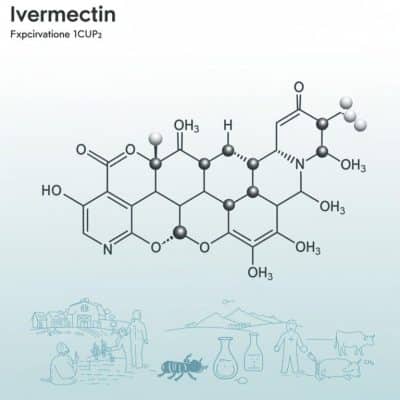
What makes ivermectin especially intriguing is its diverse range of mechanisms for attacking cancer. Unlike chemotherapy, which typically targets rapidly dividing cells, ivermectin appears to act on cancer stem cells… cells that are slower to divide but can lead to metastasis and recurrence down the line. These stem cells often evade traditional treatments, making them a key player in treatment resistance and long-term prognosis.
Ivermectin has shown the ability to overcome multidrug resistance in cancer cells, which can otherwise render chemotherapy ineffective. It also sensitizes cancer cells to both chemotherapy and radiation therapy, potentially making standard treatments more effective when used together.
Beyond these functions, ivermectin has been shown to inhibit angiogenesis—the process by which tumors create new blood vessels to sustain their growth. It also blocks enzymes like matrix metalloproteinases, which help cancer cells detach from the original tumor and spread throughout the body.
Why Haven’t Human Trials Followed?
With such a robust preclinical record, the next logical question is: Where are the human trials? Despite hundreds of laboratory studies and a few isolated case reports—including a small series involving leukemia patients… there are currently no large-scale randomized control trials investigating ivermectin as a human cancer treatment.
One of the key reasons is economic. Ivermectin’s patent expired in the 1990s, making it a low-cost, generic medication. Without the profit potential, pharmaceutical companies have little incentive to invest in expensive human trials.
As Dr. Mackus points out, research often follows the money in oncology… as in many areas of medicine. When that financial incentive disappears, promising avenues like ivermectin are frequently overlooked.
The Bigger Picture in Drug Repurposing
Ivermectin isn’t the only older drug to show potential in fighting cancer. Other repurposed medications have faced similar hurdles in moving from preclinical promise to clinical testing. The lack of financial gain can mean the difference between a potentially life-saving treatment reaching patients or being relegated to academic journals and laboratory experiments.
This raises broader questions about how we approach medical research. Should the profitability of a drug determine whether it gets studied for new uses? Or should public health institutions step in to fund research into low-cost, high-potential treatments like ivermectin?
What Comes Next?
The data is clear: ivermectin shows significant potential as a multi-targeted anti-cancer agent. The science is both compelling and credible, from killing cancer stem cells and reversing chemotherapy resistance to inhibiting tumor growth and metastasis. This potential offers a ray of hope in the fight against cancer. But without human trials, none of this can be translated into standard medical care.
Dr. Mackus’s message is not one of false hope but of a pressing need for action. The preclinical evidence demands immediate attention and further investigation. Suppose ivermectin… or other repurposed drugs…can offer real benefits to cancer patients. In that case, the medical community owes it to those patients to explore every possibility, regardless of profit margins.
As more people learn about this research, the need for public funding for trials that otherwise wouldn’t happen becomes increasingly apparent. For now, the story of ivermectin and cancer remains one of scientific curiosity, untapped potential, and a system that often overlooks affordable answers hiding in plain sight. Your support can change this narrative. Share this story, share the video.