Trash Talk: Survival Sanitation
Aug 2nd, 2010 | By Mike | Category: Misc | Print This Article
It’s one of those pesky realities that rears its ugly head wherever life goes on—getting rid of the trash. In a long-term survival situation, it’s not going to magically disappear every Thursday morning, so it’s best to be prepared.
For the best way to get along on your own, just remember the four “Bs” of survival sanitation: Bag, Burn, Bury, and Compost. Okay, it’s three Bs and a C, but that didn’t sound as good, so I rounded it off to the nearest whole letter!
Ain’t Too Proud to Bag
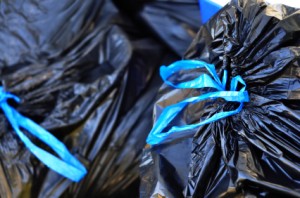
For short-term situations (and unexpected circumstances that could be short or long) it’s a good idea to keep around a lot of plastic bags of many sizes and a good rubber garbage can or two with lids that snap on tight. Even for long-term situations, you are going to want to be able to keep some trash around safely and sanitarily for a while between major hauls or burnings.
Remember, when you’re in survival mode, a lot of critters might be in survival mode too, especially if it’s a flood or natural disaster. You don’t want bears and raccoons knocking on your door or your tent to find a snack, so keep the trash at a distance. Bag your trash and seal it tightly to keep odors from escaping, both to keep your air fresh and to keep animals from finding it. Bags are easily torn, and squirrels and other animals will have your trash strewn everywhere, so snap it tightly into a good garbage can that you set off at a distance, and tie the garbage can to a tree so they can’t knock it over. If you have the option, keep it inside a garage or shed for a few days until you’re ready to deal with it. You’ll want to bag your food and organic waste separately from your dry waste, because you are going to compost it. We’ll get to that in a minute.
Your Trash Ain’t Nothin’ But Ash
The best way to get rid of the bulk of your trash is to burn it, if that is possible and legal in your situation and setting. Be sure to use safety precautions. Don’t burn on windy days, and get as far from trees and structures as possible. If you have some chicken wire or heavy screen to put over the fire or fire barrel, these are helpful in stopping floating sparks from escaping and setting the grass or trees on fire. If you have a good water supply, you should wet down the grass and any shrubs that are downwind of the fire. If you’re in an urban or suburban setting, keep in mind that the smell of a fire travels a long distance, and the smoke is readily visible, so it’s not a good way to keep a low profile, particularly if there is a burning ban in your area. Make sure you start with dry trash, burn your trash completely, and bury anything that doesn’t turn to ash. It’s a good idea to burn your cans too, as it gets rid of the labels and residual contents, and it makes them easier to flatten and bury later. It also reduces the time it takes them to decompose.
Trash & Bury
If you can’t burn your garbage, the next best option is to bury it. And you can’t burn everything anyway. If there is a place you can take your trash for burning away from your living area, that would be best. But these are the main factors to consider:
• Bury it deep enough so that animals will not dig it up.
• Avoid sites that may contaminate ground water or surface water.
• Keep it away from your living area.
• Flatten all boxes and cans first.
• Don’t bury trash in plastic bags unless they are biodegradable.
Compost, or Be Grossed
There are two solutions for disposing of food and organic waste— a well-managed compost heap or an unsightly pile of maggots, pestilence, stench, and vermin. We recommend the former. Composting is nature’s technique for recycling organic material back into new soil. It is great for topping off your garden soil or around trees and shrubs, and is rich in the nutrients that plants need. You will want to keep your “compost- in-progress” away from structures and at a bit of a distance. With just a little effort, it will be an integral and welcome part of your adventure in survival sanitation.
Other articles in this issue:

Aluminum cans can be made into life-time shingles..1File or grind the top and bottom off each can,2then take a pair of tin snips and cut down the side.3Then overlap them on your roof to make a life time shingled roof..4Make sure when you over lap them to cover the nail heads at the top of each shingle to make your roof water proof…Start at the bottom all the way across the roof working your way toward the top and stagger each shingle so the water will run down on the next shingle..Glass bottles and plastic bottles can be filled with sand and cap, then lay them down on top of each other making walls for a dog house..Put a piece of scrap plywood for a roof and shingle it..NewsPaper is nothing more than wood with soybean ink on them.Newspapers ,cardboard and other paper can be shredded up ,wetted down by the next rain in a compost pile then in 6 months tilled in your garden as wood compost..
Great Information !!
Thanks Dr.D,,After transplanting your small tomato plants or other vegtable plants take newspaper about 10 sheets and slit or tear them half way ,then slide them around your plants and wet them down putting a little sand or dirt on each corner..This will help prevent weeds also leaves mulch for your plant to thrive on..The paper is wood organic and most ink on paper is from soybeans….Want free mulch? Wait till this fall when several people in town bag up their leaves and set them on the side of the road for trash pick up….Ask them if they will let you haul off their bags for free,most reasonable people will let you have the bagged leaves or won’t say anything if you just stop and load them up on your trailor..This helps the land owner get rid of leaves and an eye sore and it helps the city by not having to haul off the bags and clutter the landfills..Take the leaves home,till your garden in the late fall,then open the bags and dump the leaves out in your garden or compost pile..Sometimes the workers will bag up pecans that are in the leaves giving you a bonus..The bags can be saved to the point where you’ll never half to buy large plastic bags again..Then after several rains through the winter the leaves will start decomposing and then in Feduary till your garden again just before planting your spring crop..Your garden will thank you by giving you plenty of fresh vegetables for the compost you put there next growing season..Want large cabbage heads?..In the early spring Dig a 6 or 8 inch hole and put half a shovel full of chicken manure in the hole and put 4 inches of dirt on top then put the cabbage plant on top and water in..I’ve grown huge heads like this..Cabbage needs alot of fertilizer..You can buy chicken manure already composted from your feed store or if you raise chickens like I do then its free..You can also put your free mulch ”leaves” around your plants after planting..Put the leaves at least 4 inches thick around plants to help keep down weeds..Alfalpha put in a wood shreader makes excellent soil-compost for your garden..
ben from tx i couldnt find your email mine is rdnkrfnk@yahoo.com
my uncle used to rake up big piles of leaves into mounds and cover with dirt then plant his potatoes in the mounds it makes for easier harvesting of the potatoes and they help decompose the leaves each year he would move his potatoes to the next row in the garden to keep up his soil that along with his regular composting brought a nice garden in every yr
Hello rdnkrfnk,sorry about you not finding my email address,they must have deleted the older stories that I left it on..Here it is…sagary@netscape.com…Thats a good idea about potatoes grown in leaves,hay works good also with a little dirt mixed in it..We have a mole and gofer problem her and they love potatoes..Growing them in leaves or hay almost stops them fr being eaten by the moles and gofers..Here’s a trick I’ve read about but I have never tried it..Take a old tire and fill it with dirt and hay or leaves then put you potato seed cuttings in the tire and potatoes are suppose to grow inside the rim of the tire.water as needed..This protects the potatoes from the critters i’ve mentioned..I’m in the process of starting a fall garden that will grow and thrive in east Texas winter..Cabbage,turnips,mustard greens,onions all grow through the winter here.They will all be ready to eat in Feb or march..Then I’ll start my spring garden..God Bless,I’ll email you..
Trash should have ”DEPOSITS ” put on each bottle,plastic,or glass,and tin cans plus paper..Most trash should be recycled,the rest could be burned for steam to run a generator..Our underground water is being contaminated by trash..People will pick it up off highways if it has value and most people would not throw it out if it was worth a nickle…No deposit no return is the most waste-full practice ever started..Stores should be required to accept their used products that they sell to the public..Say when you change your oil,if you return the used oil and used filter you would get 2 dollars off the purchase of your next 5 quart and filter ..They want your used oil now but they don’t want to pay you for it..Just like some cities that require to separate your trash so it can be recycled,they make money off of recycling and charge you more to pick up the trash..It should be the other way around..