 Print
Print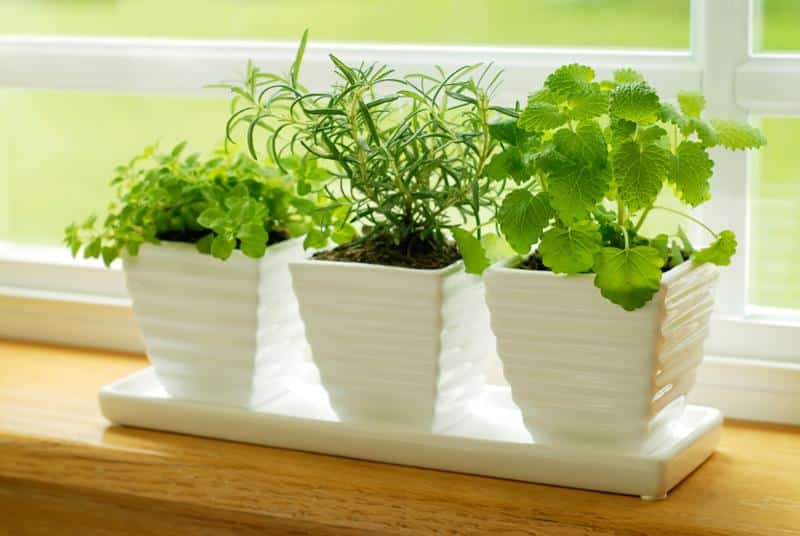
Stuck inside for the cooler months and need to get your gardening fix? Growing herbs indoors on a sunny windowsill can provide you with a quick gardening fix as well as give you lots of fresh herbs to enjoy all winter long. Beginning gardeners find this project easy and there’s no fancy equipment or greenhouse required. All you need is a container, some potting mix, some herb seeds or plants … and a sunny window.
Choosing your herbs
If you want to be successful at growing herbs indoors, you need to pick the right ones to grow. Some of the best herbs for indoor growing include basil, cilantro, dill, oregano, mint, rosemary, sage and parsley. (That should be plenty to get you started.) You can start your herbs from seed or you can purchase them as small plants. Most annual herbs, like basil, cilantro and dill are easy to start from seed. Perennial herbs like rosemary, oregano and sage are a little more difficult – they take longer to germinate and grow from seed.
Want a no-fail indoor herb to grow? Try growing dill in a sunny south-facing window. It’s almost impossible NOT to grow! Mint is another good option for no-fail indoor growing.
Choose your containers
When choosing your containers, you want to think about what will work best with your sunny windowsill location. Find pots that will drain well, yet won’t drip and cause a mess in your kitchen or growing spot. Choose containers that have drainage holes and waterproof saucers.
New “Survival Herb Bank” Gives You Access to God’s Amazing Medicine Chest
It’s typically best to use individual pots for each herb to avoid competition and allow each herb plenty of growing space. For instance, oregano doesn’t like to share soil with other plants. For most indoor windowsill herb gardens, a medium to large pot between 6 and 10 inches for each herb should work best.
Potting mixture & sowing seeds
If you’re starting seeds, you should use a soilless seed-starting mix or use plain potting soil without added fertilizer. For indoor winter gardening success, I would suggest you not skimp on the potting soil and choose a good quality brand. Your plants need every advantage possible when they are being grown indoors. Likewise, cheap garden soil may be too heavy for indoor use, and is often lacking nutrients.
Herbs grow best in light, well-drained, soil mixes. If the potting mix is too dry when removed from the package, gently moisten it before planting your herbs. Sow your seeds. Do not heavily cover your seeds with soil. Keep seeds lightly moist, not soaking wet.
Light
A sunny, south-facing window will provide the best natural light for sun-loving herbs. In general, your herbs will need at least five to six hours of direct sunlight each day.
The amount of sun you can give your plants will dictate what kinds of herbs you can grow indoors. In a sunny, south- or southwest-facing window, you can grow just about any herb, including more “difficult” ones like sage, rosemary and thyme. West-facing windows will give less light but will work for growing herbs like mint and parsley.
If you don’t have enough natural sunlight available, you can also use supplemental fluorescent light.
Temperature
Even though your plants are safely indoors, do not allow the plants or foliage to touch cold windows. You risk freezing your leaves and killing your plants. Make sure windows are closed and drafts are not a potential problem. Herbs can withstand indoor temperatures of about 55 degrees at night, but will need indoor temperatures around 65-70 degrees during the day.
Watering & humidity
Always follow the golden rule of watering – water enough to keep the soil most, but don’t let the roots get soggy. Herbs are sensitive to overwatering. Best practice is to check the moisture by pushing your finger into the top inch of soil. If it feels dry, lightly water. If it feels damp or wet, do not water yet. As you are watering your herbs, stop when the water begins to drain from the bottom of the pot.
Herbs grow better indoors when there is some humidity in the air. During winter this can be hard to maintain since our forced-air heating systems can rob the air of needed humidity. The overly dry air not only dries-out our skin, it can also dry out our houseplants and herbs. Once a week or so, you can place your herb pots (and other houseplants) in a steamy bathroom while the shower is running for a humidity boost.
Fertilizing
Feed your herbs every 3-4 weeks with a quality natural liquid fertilizer, like ProtoGrow. Giving your herbs a regular feeding of fertilizer will help them perform well indoors.
Cooking
Don’t just grow the herbs to admire and look at – use them! Cook with your herbs all winter long as they grow. Herbs bring a welcome hint of spring and summer when they’re enjoyed in your food. Add sprigs of fresh herbs like rosemary or sage to chicken or fish. Use mint to garnish your tea or a dessert.