 Print
Print
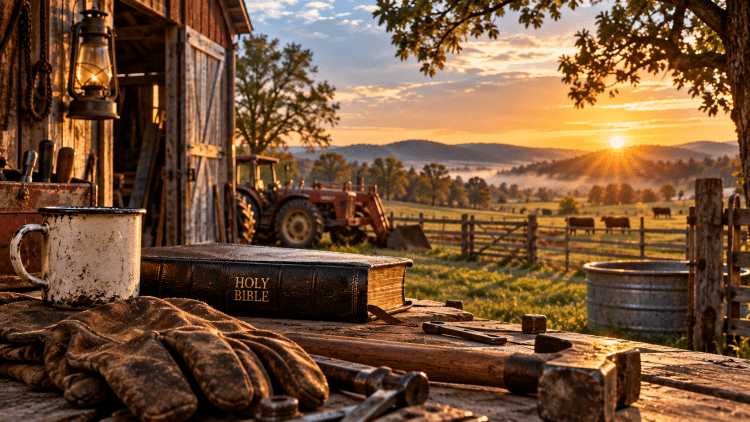
Why Your Barn… Your Field… And Your Workbench Are Just As Much Of A Calling As A Preacher’s Pulpit
Why Luther Believed The Farmer… Carpenter… And A Mother At Home Were Doing Holy Work Too
Somewhere along the way, a lot of Christians were handed a quiet little lie. Nobody necessarily preached it from the pulpit. It just hung in the air like woodsmoke in a closed room.
The lie goes something like this: if you’re a really serious Christian—a young man who loves God and wants to give his life to something important—you ought to go into “the ministry.”
Because that’s where the important work happens.
The pastor’s study is holy ground. The mission field is holy ground. The church office is holy ground. But the barn, the machine shop, the classroom, the kitchen, the construction site and the back forty?
Well, those are where ordinary Christians work.
That sounds spiritual.
It just isn’t biblical.
If you’ve ever wondered whether mucking out a stall, repairing a well pump, raising a child, planting corn, keeping books, welding a gate or teaching your kids around the kitchen table somehow counts less than “real ministry,” you may want to keep reading.
Because the Bible begins its story of human work long before there was a pulpit.
And long before there was sin.
God Put Adam To Work Before Anything Went Wrong
Go all the way back to the beginning. Before the serpent slithered into the garden, before Adam hid from God and before the first thorn ever punched through the soil, God gave mankind a job.
Genesis 1:27–28 says God created mankind in His image, blessed them and commanded them to “be fruitful, and multiply, and replenish the earth, and subdue it” and to exercise dominion over the creatures He had made.
Then Genesis 2:15 gets even more specific. God put Adam in the Garden of Eden “to dress it and to keep it.”
In other words, Adam had chores to do.
He wasn’t floating around Eden singing hymns all day. There were things to cultivate, develop, guard, name and bring into order. God created a world bursting with possibility and then told the creature made in His image to get his hands into it.
Work wasn’t the punishment. Work was part of paradise.
That’s worth remembering because Christians sometimes get Genesis exactly backwards. They say work came from the Fall, when what actually came from the Fall was the frustration attached to work.
After Adam sinned, the ground produced thorns and thistles. Work became painful. Sweat ran down the man’s face, weeds invaded the field and creation stopped cooperating the way it once had.
Every farmer understands Genesis 3.
You can plant the seed perfectly and get no rain. You can spend years building a herd and have disease show up. You can finally get the garden looking beautiful and watch a July hailstorm beat it into green confetti in ten minutes.
That’s the curse.
The work itself isn’t.
The First Man Was A Gardener… Not A Preacher

There’s another detail in Genesis that we’ve mostly walked right past. The first occupation specifically given to mankind wasn’t priest, preacher or missionary.
It was something much closer to gardener, caretaker and cultivator.
God created raw materials to work with. Man was supposed to do something faithful with them. Trees become tables. Iron becomes tools. Soil becomes gardens. Wheat becomes bread. Sheep become wool. Empty ground becomes a home where children can grow up.
That’s stewardship.
And stewardship isn’t stomping around barking orders at creation. Biblical stewardship means exercising responsible authority… under the authority of the One who owns the place.
That’s why Psalm 24 begins with the reminder that “the earth is the LORD’S, and the fulness thereof.”
The Christian farmer doesn’t ultimately own his farm. The Christian businessman doesn’t ultimately own his company. The Christian father doesn’t even ultimately own his household.
We’re stewards.
And one day the Owner asks what we did with what He put in our hands.
Proverbs Sounds Suspiciously Like A Farm Manual
Spend enough time in Proverbs, and you’ll notice something funny. For a book famous for teaching wisdom, it talks an awful lot about getting out of bed and doing your work.
“The hand of the diligent shall bear rule: but the slothful shall be under tribute” (Proverbs 12:24).
Then comes one of the great vocational verses in Scripture: “Seest thou a man diligent in his business? he shall stand before kings; he shall not stand before mean men” (Proverbs 22:29).
Notice what Proverbs doesn’t say.
It doesn’t say, “Do something religious enough, and God will finally care about it.”
Instead, Scripture repeatedly praises diligence, craftsmanship, foresight, honest weights, productive households, wise management, and people who actually finish what they start.
Proverbs 31 gives us perhaps the clearest picture. The virtuous woman buys a field, plants a vineyard, makes goods, sells them, manages a household and looks ahead so her family isn’t terrified when winter arrives.
That woman isn’t escaping the world to become holy.
She’s being holy right in the middle of it.
“Honey, We’ve Shrunk The Concept Of Ministry”
Here’s where things get uncomfortable.
Somewhere in Christian history, we started using the word “ministry” as though it described a professional class of Christians. Ministers minister. Everybody else apparently funds them.
But the New Testament refuses to leave ordinary work outside the fence.
Paul tells the Colossians, “And whatsoever ye do, do it heartily, as to the Lord, and not unto men” (Colossians 3:23). Notice the size of that word: whatsoever.
That includes preaching.
But it also includes milking the cow before sunrise.
It includes changing diapers, repairing transmissions, balancing a company’s books, caring for an aging parent, teaching algebra, splitting firewood, designing a bridge and showing a 15-year-old how to replace a broken fence post without smashing his thumb.
The question isn’t simply, “Is this church work?”
The better question is, “Can I do this faithfully before God?”
That changes everything.
The Carpenter From Nazareth Should Have Settled This
There’s also an obvious problem with treating ordinary work as second-class Christian service.
Jesus spent most of His earthly life doing it.
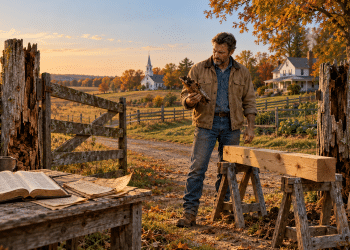
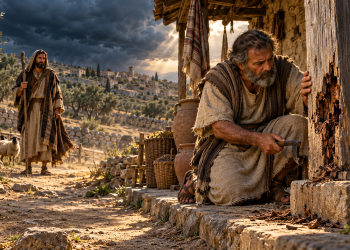
Before the crowds, miracles, and public teaching, Jesus was known in Nazareth as “the carpenter” (Mark 6:3). Depending on how broadly you translate the Greek word tekton, the term can describe a craftsman or builder who worked with wood, stone ,or both.
Think about that.
The Son of God spent years making useful things for ordinary people.
We don’t know exactly what came out of that workshop. Tables? Doors? Roof beams? Farm implements? Repairs? Scripture doesn’t tell us.
But it tells us enough.
Apparently God did not consider decades spent at a workbench beneath the dignity of His Son.
Maybe we shouldn’t either.
Your Workbench Isn’t The Cheap Seats Of Christianity
That doesn’t make pastors unimportant. Scripture clearly establishes elders, teachers and shepherds, and those callings carry enormous responsibility.
But responsibility isn’t the same thing as spiritual rank.
The Christian farmer isn’t a lesser Christian than the pastor. Neither is the welder, nurse, truck driver, electrician, carpenter, homeschooling mother, mechanic or fellow repairing small engines in a drafty shed behind his house.
Your vocation isn’t merely the thing you endure so you can make enough money to support “real ministry.”
It may be one of the primary places where your obedience to God becomes visible.
If you’re a mechanic, honesty matters when a customer doesn’t know enough about engines to catch you cheating him. If you’re a farmer, stewardship matters when nobody is watching what you do with the soil. If you’re a businessman, righteousness matters when fudging the numbers would put another ten grand in your pocket.
And if you’re raising children, you’d better believe that work matters.
Civilizations are built there.
Christianity Doesn’t Call You Away From The World
There’s a strange version of Christianity that makes holiness sound like withdrawing from ordinary life.
But Scripture keeps sending God’s people right back into it.
Build houses. Plant gardens. Raise children. Practice hospitality. Feed people. Work with your hands. Care for widows. Conduct business honestly. Pay workers fairly. Make useful things. Teach children wisdom. Help your neighbor.
Paul even tells the Thessalonians to “study to be quiet, and to do your own business, and to work with your own hands” (1 Thessalonians 4:11).
That’s not exactly the stuff of retreats and buzz-fed church conferences.
But it builds civilizations.
And perhaps that’s part of why we’ve overlooked it.
Why Everybody Wants To Escape Work
Here’s the strange thing about modern life. We have machines doing jobs our great-grandparents would have considered miracles, yet we’ve become increasingly obsessed with escaping work altogether.
The dream isn’t better work anymore.
It’s no work.
Get rich enough to retire at 42. Hit the lottery. Find passive income. Automate everything. Get somebody else to mow the grass, fix the sink, cook the meal, raise the food, and deliver it to your doorstep while you stare at a glowing rectangle.
Now, there’s nothing wrong with saving labor. Your grandfather bought a tractor because he didn’t particularly enjoy walking behind a mule all day.
But there’s a difference between eliminating unnecessary drudgery and treating productive responsibility as an enemy.
Scripture never promises liberation from meaningful responsibility.
It teaches faithfulness through it.
The Fence Doesn’t Care About Your Feelings
Homesteaders understand this better than most because life close to the land has a nasty habit of grading your homework immediately.
A fence either holds cattle or it doesn’t.
A roof either sheds water or it doesn’t. A garden either produces food or it doesn’t. A woodstove either draws properly or fills the house with smoke.
Reality is wonderfully rude that way.
You can’t convince a broken well pump that you’re a good person. You can’t explain to hungry chickens that you were busy building your personal brand. And a February wind doesn’t care how many followers you have.
Useful work forces us out of appearances and into reality.
That’s one reason it can be so good for us.
There’s Something Good About Going To Bed Tired
There’s a peculiar satisfaction that comes from ending a day physically tired because something real got accomplished.
The stalls are clean. The wood is stacked. The broken hinge works again. The potatoes are dug. The children learned something. The customer got what you promised him.
Not every day feels like that, of course.
Some days you spend six hours fixing something that should have taken 45 minutes, make three trips to the hardware store and discover at 8:30 that the fitting you bought is the wrong size anyway.
Welcome to Genesis 3.
But even frustrating work teaches us something. It humbles us, disciplines us and reminds us that we’re creatures operating in a world we didn’t make and don’t completely control.
Sometimes the broken bolt is a theological lesson.
Here’s The Part You Probably Won’t Hear On Sunday
The Kingdom of God isn’t confined to what happens inside a church building.
Christ doesn’t become Lord at 10:30 Sunday morning and then hand the world back to somebody else after the closing hymn.
“The earth is the LORD’S.”
All of it.
That means Christ has something to say about the pulpit, certainly. But He also has something to say about the courthouse, classroom, dinner table, marketplace, workshop and field.
He has something to say about how you raise chickens and how you raise children.
He cares whether the pastor tells the truth from the pulpit, and He cares whether the mechanic tells the truth about your transmission.
Different callings.
Same Lord.
And That’s Where Things Get Really Interesting
Once you understand vocation this way, the sacred-versus-secular wall starts falling apart.
A sermon can glorify God.
So can a straight fence.
A missionary can serve his neighbor by carrying the Gospel across an ocean. A plumber can serve his neighbor by keeping sewage from backing up into the man’s basement.
Those aren’t identical jobs, obviously.
But both can be acts of love performed faithfully before God.
Martin Luther famously pushed this idea during the Reformation. The Christian calling wasn’t restricted to monks, priests, and nuns. Ordinary Christians serving their neighbors through ordinary occupations were living out genuine vocations before God.
That was a revolutionary idea.
Maybe it needs another revolution.
Your Calling Is Not Second Class
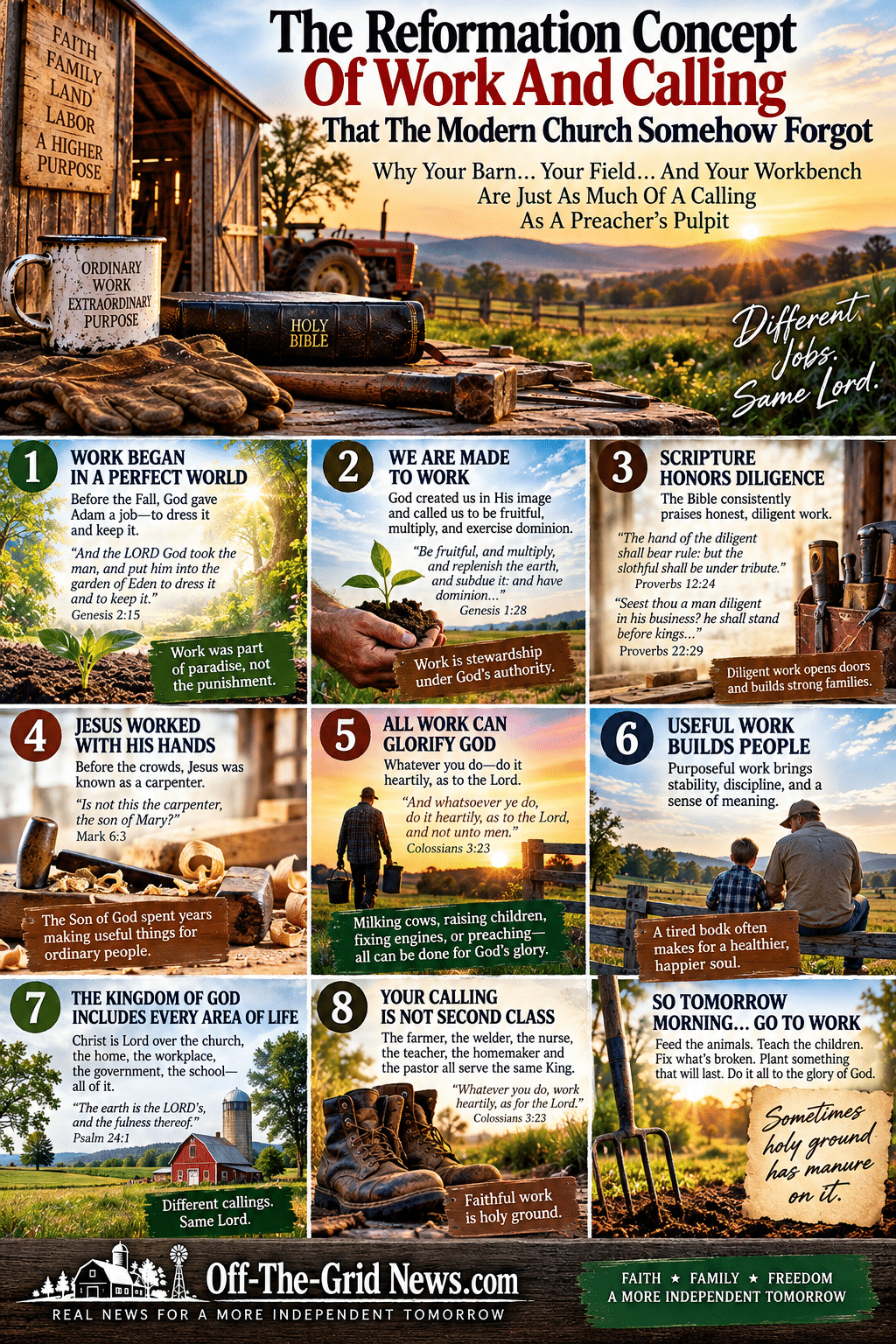
So tomorrow morning, when you pull on your boots and walk out toward the barn, don’t imagine you’re leaving the important Christian stuff behind.
You may be walking straight into it.
When you teach your child, repair something broken, produce something useful, protect something entrusted to you, keep your word to a customer, care for an animal, or coax another crop out of stubborn ground, you’re doing something deeply human.
You’re taking part in the work mankind was given at the beginning.
Of course, you can do any of those things badly. Work itself doesn’t automatically make a man righteous. A crooked businessman is still crooked, and a lazy farmer doesn’t become holy merely because he owns overalls.
The point is different.
Ordinary work can be offered to God.
So Tomorrow Morning… Go To Work
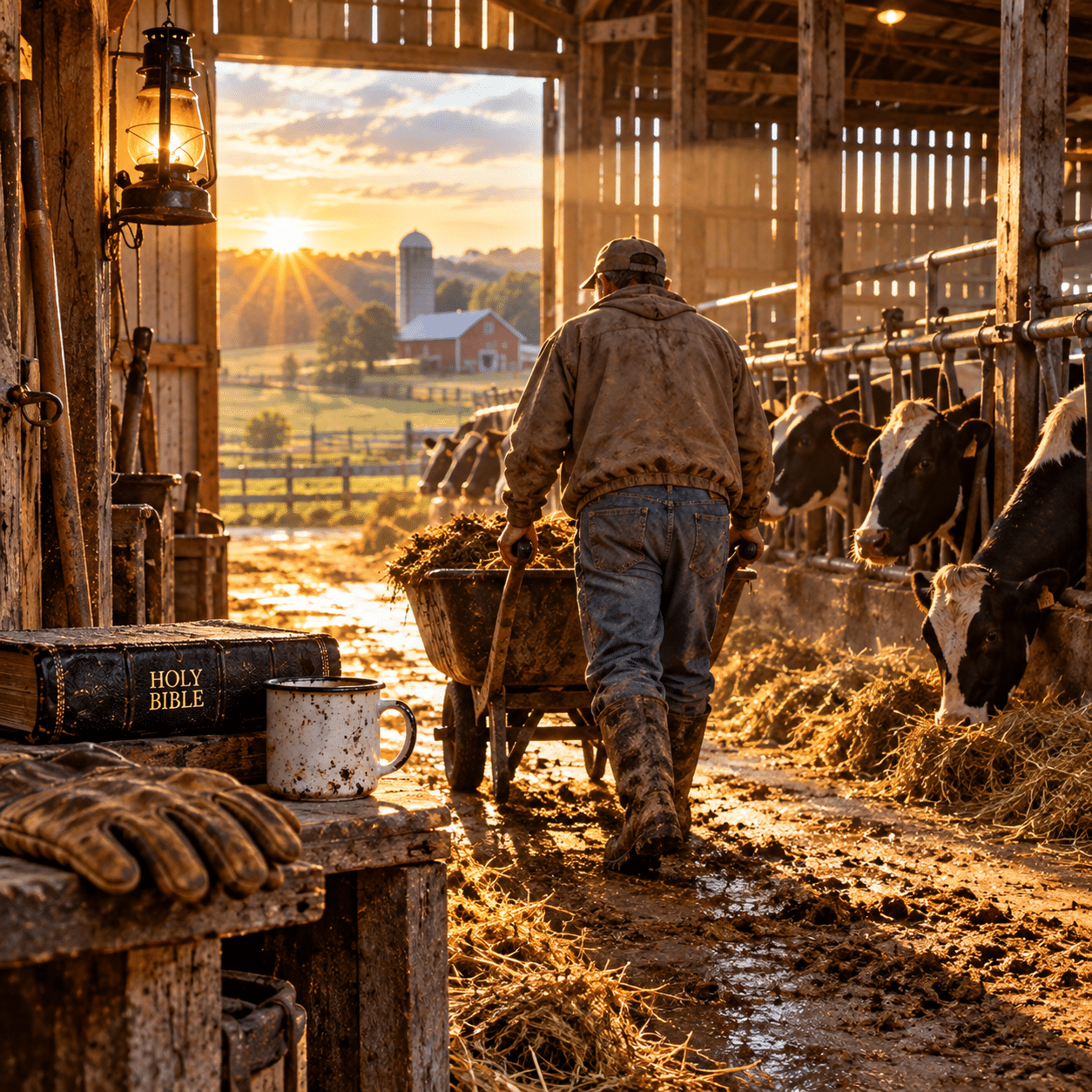
The next time somebody talks as though serious Christians ought to leave ordinary vocations behind for something “more spiritual,” remember the Bible’s opening scene.
God made a man.
God gave him a garden.
And God told him to work it.
Then remember Jesus of Nazareth, spending years in a workshop before anybody gathered on a hillside to hear Him preach.
Maybe the barn isn’t a distraction from your calling.
Maybe the kitchen table isn’t either.
Maybe that field, workshop, classroom, office, garden and noisy little house full of children aren’t places where you’re waiting to do something important for God someday.
Maybe that’s where He put you.
So sharpen the chain.
Feed the animals.
Teach the children.
Fix what’s broken.
Plant something that will still be producing after you’re gone.
And whatever your hand finds to do, do it faithfully.
Because holy ground isn’t always found beneath a pulpit.
Sometimes it’s got manure on it.