Print
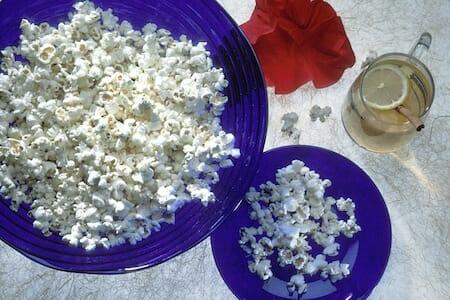
Popcorn was being eaten on this continent before the first pilgrims landed. In fact, Columbus “discovered” it when he landed on the Caribbean island called San Salvador. Today you can buy it in any grocery store or gourmet market in the country and in a multitude of varieties – even some that are still on the cob.
 Selecting Seed – Popcorn has more than 100 strains that vary in flavor, tenderness, presence, color, shape, and hulls. Regardless of the color of the kernel, once popped, all corn is white – don’t let commercial cheese or colorings fool you. There are two strains of corn most often chosen for popping—mushroom and snowflake. Mushroom pops small and round and is preferred by companies that make caramel corn. Snowflake pops up large and fluffy. It is served at the movies and sold for home use. It is the most tender of these two and is readily available for the home gardener.
Planting – You will need a plot of ground that gets full sun six to eight hours daily and drains well. You can usually plant anytime after Mother’s Day and before July 4th, although in colder regions you may want to wait until after June 1st. Plant the kernels two inches deep, two to a hole, in short blocks rather than rows for more successful pollination. When the plants are six inches tall, thin them out to stand ten to twelve inches apart and three feet between the blocks. If you are growing sweet corn varieties as well, plant them no closer than 100 feet apart, or stagger the planting by at least two weeks, as cross-pollination could ruin both crops.
Care – Popcorn needs two inches of water a week during the growing season – approximately 100 days. Watering is most important from the time the silk appears for the kernels to develop. Add organic, nitrogen-rich fertilizer as a side dressing at planting time, when the stalks are knee high, and again when tassels appear on the top of the ears. If the older leaves turn yellow or the younger leaves are pale green after tasseling, add fertilizer as a side dressing again.
Keep the weeds pulled from the corn bed or mulch heavily around the plants to deter them from growing. Corn can’t produce well-formed ears or good yields when in competition with weeds. If you don’t get rainfall of 1-2 inches weekly, water the plot by flooding rather than raised sprinklers to keep from washing away the pollen.
There are two insect enemies of corn—borers and earworms. Earworms typically attack the ear tips when the stalks begin to tassel. Sprinkle the tip of each ear with rotenone, Bacillus thuringiensis (BT), or pyrethrins before the silk begins to wither and turn brown. After the silk turns brown, apply a drop or two of mineral oil to their tips. Borers attack the stalks by kicking “sawdust” out of small holes they have bored in them. If you find one at work, destroy it by squeezing the stalk; otherwise apply biological pesticides like rotenone or BT.
Corn also has two animal pests that like to eat it as much as we do—crows and raccoons. Crows like to pull up the sprouts as quickly as they pop above the ground. To deter them you can put up a scarecrow. Raccoons prefer to eat the ears just before they ripen. If you have raccoon troubles, you can slow them down by applying ground red pepper to the tip of each ear. Keeping them out of your corn will require putting an electric fence around your patch.
Pollination – Each cornstalk will usually grow one or two ears, but they will only develop fully if they are pollinated. Every plant has both male and female flowers on it; the male flowers are the tassels at the top of each stalk, and the female flowers are the ears. Each pollinated strand of silk represents one kernel of corn. When the tassels open to display their yellow pollen, walk through the field on a calm morning and shake the stalks to make the tassels release the pollen and make it fall on the tops of the ears. If you want a more precise method, remove pollen form several tassels into a large paper bag. Transfer the pollen to a smaller bag and sprinkle it on each ear. Repeat this process on three different days to ensure pollination.
Harvest – When weather permits, let the ears dry on the stalks until the husks have turned brown and partially dried. Popcorn is ready for storage when the kernels can be rubbed or twisted from the cob. If wet weather threatens or when frost approaches, bring ears in and dry them by stripping back the husks and tying them together in bunches of three or four.
Removing kernels can be hard on the hands, so some prefer to twist the cobs to loosen the kernels. Others use their thumbs to rub them off starting with the large end of the ear and working toward the tip. Still others rub two ears together to break them loose. Whatever method you choose, you want to discard the immature kernels near the tip.
Closing – Following these directions will bring a good crop of sweet corn as well as popcorn. But remember to grow them at least 100 feet apart or stagger their planting time by at least two weeks. Happy gardening!
———————————————————————————-
 ———————————————————————————-