 Print
Print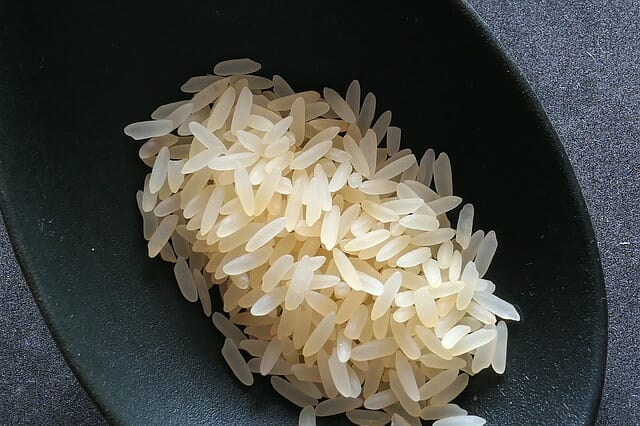
In the western part of the world when people consider growing their own staple grains, they generally think of wheat or oats. Rice is predominantly grown in eastern countries, but that’s largely due to historical preference. Rice can be easily grown on a small homestead, even in cold climates.
While rice is typically thought of as a tropical plant, there are actually two sub-species, one of which is hardy in cold climates. Long-grain rice varieties such as jasmine or basmati can only be grown in warm southern regions. Some varieties of short-grain rice, however, are cold tolerant and can be grown in short-season cold areas, all the way up to zone 4. It’s currently grown in cold climates such as northern Japan, Romania and the Ukraine.
Cold-climate rice strains thrive where average summer temperatures are as low as 68 degrees, though it’s ideal is 68 to 86 degrees. Still, farmers in areas where the average summer temperatures only hits the low 60s are having some success and harvesting adequate crops, even in the northernmost parts of New England.
This New All-Natural Fertilizer Doubles Garden Production!
Farmers in the Northeastern United States are beginning to cultivate rice on a small scale, and selecting for cold-tolerant strains. At this point, the primary selection criteria are quick maturity and disease resistance. As more strains become available, farmers will eventually have the option to select for high yields and better taste.
To aid the plants’ survival, a few cold-climate adaptations have been developed, and cold-climate rice producers must take extra steps to ensure a harvest. Rice is soaked to stimulate germination before being started in greenhouse flats well before the last frost date. At four weeks before the last frost, the rice is transplanted outside into paddies. Water levels are kept high during times of increased frost risk to provide extra protection for the plants.
While rice is grown semi-submerged in patties, it cannot be successfully grown in wetlands. Wetlands are protected areas in most places, and not available for cultivation. Beyond that, the water level needs to be carefully controlled, which is generally not an option in a wetland. The ideal soil is poorly drained, but not an actual wetland, like a soil that has a clay hardpan under layer that prevents full drainage. From there, runoff is controlled and a series of ponds are created to help manage water levels.
Before the water gets to the paddy, it flows through a series of warming ponds that are shallow, dark bottomed and exposed to the sun. This pre-heated water prevents cold snow melt and rain runoff from cooling the growing ponds and helps accelerate the growth of the plants while at the same time buffering them for cold nighttime temperatures.
Quarter-Acre Patch Equals 1,000 Pounds Of Rice
Rice grown in marginal poorly drained agricultural soils that currently grow second-class hay can yield as much as two tons per acre. A small homestead quarter-acre patch could yield as much as 1,000 pounds of rice in a good year, or enough rice to supply a family of four with about half of their calories in a year.
In many parts of the world, rice is still tended and harvested by hand, making it ideal for a small homestead without specialized equipment. For harvest, the rice is cut and bundled by hand, and then threshed against logs to dislodge the grains.
Rice paddies also can be beneficial in other ways, by preventing flooding and managing runoff. With a series of ponds, water is held on the land, which prevents erosion, rather than quickly running off and damaging the topsoil.
Ducks are often incorporated into rice paddies to increase yields and add a harvest of meat and eggs from the same land. Ducks cannot consume rice or rice plants because they have too much silica for the ducks to digest. Ducks can, however, consume insects that infest the rice and weeds that compete with it in the paddy. Their droppings help to enrich the paddy and add fertility.
Most duck species are capable of feeding themselves and raising young independently in this environment, even without supplemental feed. By adding ducks to the operation, most farmers reduce their workload, increase their rice yields and add meat and eggs to their table. Ducks tend to fare better than chickens in cold climates, which is an added bonus.
If you want to grow rice on your land, try starting with a series of plants in 5-gallon buckets. This will allow you to monitor the progress of your rice and test viability before investing in creating a series of ponds and patties.
Have you ever grown rice? What advice would you add? Share it in the section below: