 Print
Print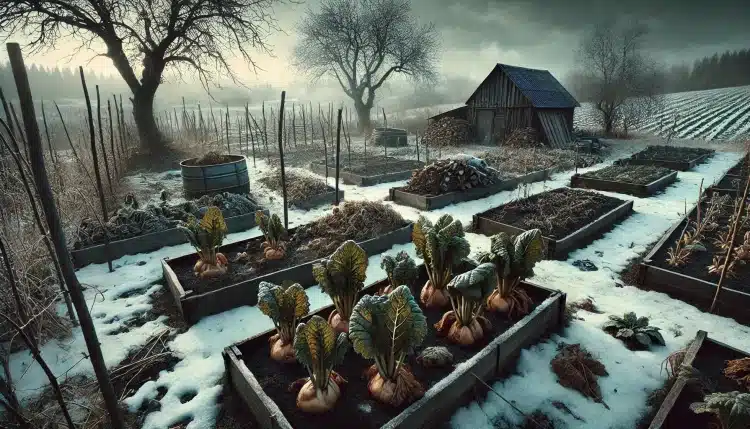
This Ugly Perennial Can Feed Your Garden for 20 Years (And No One Sells It Anymore)
Even though the fields up here are locked in ice and the garden beds look like a graveyard right now, winter is actually the perfect season to make one quiet, life-changing decision for your soil.
Long before seed catalogs turn into muddy boots and aching backs, you can decide whether next spring you’ll plant the one crop that can almost eliminate fertilizer purchases for the rest of your life.
That crop is comfrey.

While the modern world lines up to buy brightly colored bags of synthetic N-P-K—made from natural gas, mined minerals, and shipped halfway across the continent—this rough, broad-leafed perennial offers a different deal entirely. It asks for a little space, a little patience, and almost nothing else. In return, it quietly feeds your soil year after year in a way that’s nearly free, deeply resilient, and very hard to monetize in a boardroom.
It doesn’t look impressive in winter. In fact, it looks like nothing at all. But beneath the frost, comfrey is already waiting.
The Plant That Shouldn’t Be Possible
Back in the mid-1900s, British agricultural trials started reporting numbers that sounded more like folklore than science. Selected strains of Russian comfrey were producing as much as 100 tons of leafy biomass per acre in a single growing season. Not once—but repeatedly.
The same plants were cut to the ground, again and again, and still bounced back to full size in about four weeks. Bare soil turned into chest-high green walls in the time it takes most vegetables just to sprout and decide whether they like their spot.
Yet even that wasn’t the strangest part.
After cutting, most green manures and cover crops sit around sulking in compost piles for weeks before they really break down. Comfrey doesn’t wait. Its leaves are soft, low in tough fiber, and loaded with nitrogen-rich compounds that microbes love. Gardeners began using it as a compost activator, watching piles heat up fast and collapse into dark, crumbly humus in record time.
That behavior is exactly why Victorian growers once treated comfrey like an insurance policy against hunger. And it’s why modern permaculture designers still call it a “nutrient pump”—a plant that doesn’t just grow food, but actively heals soil and feeds everything around it.
Deep Roots and Free Fertility
So what’s actually happening beneath the surface?
Even while your garden sleeps under snow and frost, comfrey reminds you that the real action in agriculture has always been underground. Its roots plunge several feet deep—far deeper than tomatoes, lettuces, or most annual crops will ever dare.
Along the way, those roots punch through clay, loosen compacted soil, and tap mineral layers that shallow-rooted plants can’t touch. Potassium. Calcium. Phosphorus. Trace minerals pulled from ancient subsoil and hauled upward, leaf by leaf.
The result is foliage loaded with nutrients—often containing more potassium than farmyard manure, along with generous amounts of calcium and phosphorus. Then comes the magic trick.
When you chop those leaves and drop them on the surface—around fruit trees, beneath tomatoes, along berry rows—you’re literally lifting deep-earth nutrition into the topsoil where your crops can finally reach it.
Done right, a ring of comfrey around an orchard or garden bed becomes a living conveyor belt of fertility. Roots go down. Nutrients come up. Leaves fall and feed the soil like slow-release fertilizer. No measuring. No spreading schedules. No receipts.
That kind of system doesn’t fit well on a pallet at the farm store. And that’s exactly why it works so well.
The Bocking 14 Breakthrough
Of course, people didn’t just stumble into comfrey’s potential and stop there. Over the last century, serious growers worked to refine it.
In Britain, horticulturist Lawrence D. Hills took up the task with almost obsessive care. He grew 21 different comfrey strains side by side, tracking yield, nutrient content, disease resistance, and manageability. Out of that long experiment came a clear winner: Bocking 14.
Bocking 14 is a hybrid Russian comfrey clone that doesn’t set viable seed. That detail matters. Instead of spreading uncontrollably by seed, it only propagates through root pieces or crown division—meaning you decide where it lives.
It’s also more productive and more nutrient-dense than common wild comfrey. Hills and others documented enormous leaf yields from Bocking 14, harvested multiple times per season, year after year.
For large farms, it meant acres of feedstock and compost material. For homesteaders, it means something even better: a few humble clumps along a fence line that quietly crank out armloads of fertilizer every few weeks for decades.
Why Comfrey Makes Corporations Nervous
While comfrey was proving itself in gardens and fields, industrial agriculture took a very different turn.
In the early 1900s, when traditional fertilizer sources started running short, chemists developed the Haber-Bosch process—a way to pull nitrogen from the air and convert it into ammonia using massive amounts of fossil fuel energy. The process helped prevent famine, but it also locked the global food system into a permanent cycle of buying synthetic nitrogen, phosphorus, and potassium inputs year after year.
Today, that cycle is worth hundreds of billions of dollars worldwide.
Comfrey doesn’t care about any of that.
Once established, it shrugs off pests, tolerates abuse, and keeps sending up leaves without you buying anything beyond a shovel and maybe a little mulch. Plant it once, and you can spend the next 10, 20, or even 50 years cutting your own high-potash mulch and compost feedstock.
That quietly undermines the idea that soil fertility must arrive in brightly printed bags, paid for with natural gas and delivered by truck. For anyone serious about supply-chain independence, comfrey isn’t just a plant—it’s a small rebellion.
The 2001 “Toxic” Label
Still, comfrey didn’t only rattle the fertilizer world. For years, it was also sold as an herbal remedy—until 2001, when the hammer came down.
That summer, the U.S. Food and Drug Administration sent warning letters to supplement manufacturers, explaining that comfrey contains pyrrolizidine alkaloids (PAs)—compounds linked to serious liver damage, veno-occlusive disease, and cancer when ingested over time. The FDA urged companies to pull oral comfrey products from shelves and warned consumers to stop taking it internally.
From a safety standpoint, the warning made sense. Chronic ingestion of these alkaloids can be dangerous, especially in teas, capsules, and tinctures.
But the headlines blurred the details.
Many people walked away thinking comfrey itself was too dangerous to grow or even touch—never hearing the crucial distinction between internal medicinal use and external agricultural use. Garden centers quietly dropped it. Nurseries stopped propagating it. And a plant once promoted across continents slipped out of mainstream culture.
What the Warnings Don’t Change
What the FDA warnings never said is just as important as what they did say.
They never claimed comfrey was dangerous as a mulch, compost ingredient, or soil-building plant. The concern was about long-term ingestion, not about tossing leaves under tomatoes.
In soil, those alkaloids break down as microbes do their work—just like countless other plant compounds that would be toxic in the wrong context. Modern surveys of comfrey growers consistently show the same thing: most people grow it for fertilizer, mulch, and compost acceleration, not for daily consumption.
Meanwhile, Bocking 14 keeps doing what it’s always done. Deep roots. Fast regrowth. High-potash leaves. Decades of productivity from a single planting.
Homesteaders still swap root cuttings quietly. Small farms tuck comfrey along pasture edges and chicken runs. Permaculture designers still slot it into guilds as a classic dynamic accumulator. For the people who know, the plant never lost its value—it just went underground.
Winter Planning, Spring Abundance
Right now, as snow piles up on fence posts and garden beds sit silent, it’s tempting to think fertility is a problem for “future you” to solve with a spring shopping trip.
But winter is when the long game is won.
This is the season to look at your land and ask where a plant like comfrey could work quietly for the next 20 years. Around a future orchard. Downhill from a chicken coop to catch nutrient runoff. Beside the compost pile where leaves can be cut and dropped in seconds.
So as you sit by the woodstove flipping through seed catalogs, consider adding comfrey root cuttings to the list. Come spring, a few stubby chunks of Bocking 14 pressed into thawed soil can become the backbone of a fertility system that doesn’t care about fertilizer shortages, price spikes, or trucks that never show up.
Winter feels like scarcity. But it’s also the season when you decide what kind of abundance you’ll be living on five, ten, or twenty years from now.
And comfrey is one of the few plants that can actually keep that promise.