 Print
Print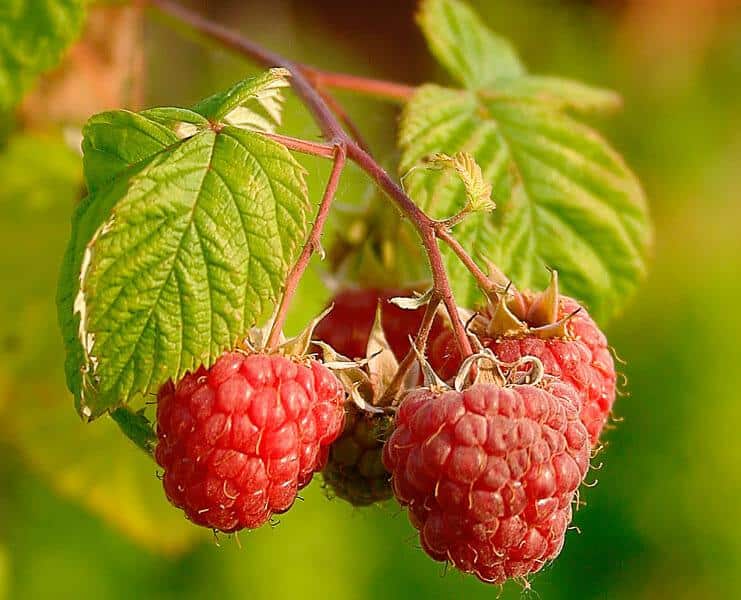
 Raspberries are a versatile, small fruit that can be used fresh, baked in pies and pastries, and canned for winter use as jams and preserves. These beautiful little gems can be grown at elevations as high as 7,000 feet, although it may be necessary to protect your canes from the rigors of winter if you live in a cold, blustery climate.
Varieties –Raspberries come in four colors: red, black, purple, and yellow. Purple raspberries are a cross between red and black raspberries and behave much like the black half of their parentage. Most yellow raspberries behave similarly to red raspberries and should be care for in like manner.
These colorful varieties have two distinct fruiting habits—summerbearing, which produces only one crop per year, and everbearing, which produces a spring crop and a summer crop.
There are many different cultivars to choose from, with more summerbearing choices than everbearing. Both fruiting habits have early, mid, and late season berries. Red raspberries tend to withstand cold better than black or purple berries. Yellow berries have been cultivated on a trial basis, but not on a large scale.
Brandywine and Royalty – summerbearing – are large, red, tart berries that are great for jams and preserves. Heritage and Redwing – everbearing – are medium-sized, firm, red berries great for freezing and have a high yield. Check with your local agricultural extension agency for varieties that will be hardy in your area.
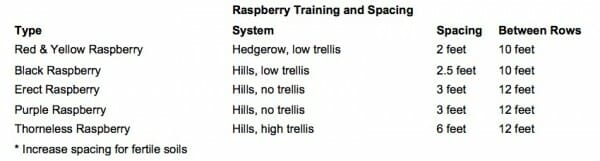
Growing – Raspberries will grow in just about any soil available, but they enjoy a sandy loam with lots of plant matter added for nutrition. You will need an area that drains well; raised beds are suggested when drainage is a problem. Raspberries require six to eight hours of sunlight daily for maximum fruit production. You will also want to avoid any areas that is close to wild raspberries or blackberries or any plot where tomatoes, potatoes, or eggplant has been previously grown, as they are counterproductive to a good raspberry harvest. Planting in early spring is preferable to fall planting, so plant as soon as there is no threat from frost and the soil can be worked. Leave plenty of area between your canes, as planting too close can result in undesirable competition between the plants. Your berries need to be kept free of weeds, watered when needed, fertilized and pruned regularly, and supported by a trellis, if necessary. See chart below for spacing and training info.
Feeding – When adding fertilizer, find an organic option that is a 10-10-10 ratio. You will want to add some ten days after planting and again forty days after planting the first year. In succeeding years, you will add fertilizer in spring before growing begins – usually March and again in May. It will take two to three pounds per hundred feet of row for each application.
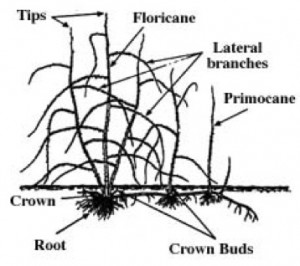 Pruning – When caring for your raspberry canes, you need to know the parts of your plants and how to recognize them. There are two types of canes on your raspberries—primocanes, or first-year canes, and floricanes, or second year, fruiting canes.
Summerbearing red raspberries should be pruned twice a year, in spring and immediately after harvest. Spring pruning is to remove weak canes and to cut back canes that are too tall (over five feet high). The second pruning is to remove those canes that have produced fruit after harvesting.
Everbearing red raspberries can be pruned once or twice yearly. You may follow the instructions for summerbearing raspberries. Some gardeners prefer to mow down the whole patch early each spring – March or April – for simplicity. If you choose to mow them down, your everbearing canes will only bear one crop per year. The Heritage cultivar will usually bear in early to mid-August when cared for in this manner.
Purple and black raspberries should be pruned three times yearly: spring, summer and after harvest. Spring pruning is done in mid-March by cutting the lateral branches to eight to ten inches long. Second pruning – called tipping – is done when the canes are twenty-four to thirty inches tall. This is done be removing the top two to three inches of the cane tips. The third or final pruning is done right after harvest to remove all canes that have born fruit.
Diseases and Pests – The insects is that will most often attack your berry patch are raspberry cane borers, raspberry fruit worms, red-necked cane borers, and the Japanese beetle. Diseases common to raspberries are mosaic virus, orange rust, anthracnose, cane blight, spur blight, crown or cane gall, and verticillium wilt. Your local agriculture extension agency will know which of these are common to your area and how to treat them.
Trellis Supports – Some varieties of raspberries will benefit from being supported on a trellis. Your trellis can be built with posts at fifteen to twenty foot intervals with cross arms twenty-four to twenty-eight inches apart and thirty-six inches high for red raspberries. Black and purple berries should be forty inches high.