 Print
Print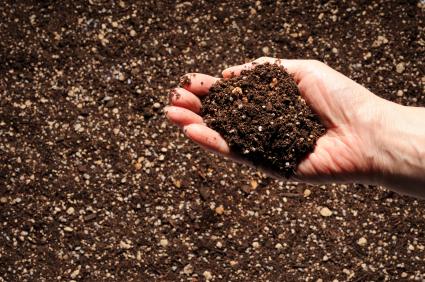
Many beginning gardeners make the mistake of placing too little emphasis on soil. Your plants grow in the soil, stretch their roots through it, and take up nutrients and water from it. The quality, quantity, and other properties of your soil are essential to growing healthy and productive plants. When you neglect the dirt in your garden or your pots, you are not making the most of your garden.
 Depending upon the plants that you are growing, there are many things about soil that you need to consider. Plants need to have certain nutrients like nitrogen, phosphorous, potassium, magnesium, and many others. The pH – that is, the acidity and alkalinity – of the soil is important to consider. Healthy soil is also important, as diseases, pests, and fungi can linger in soils and attack your plants for years to come.
If you are planning a large garden, you will need to consider additions to the soil that will make the conditions just right for plant growth. For container gardening or for starting seeds indoors, you need to use potting soil. Most people purchase potting soil at a gardening store. It comes in large bags, and you can usually select from a few different types to get the conditions you need. But instead of heading to the store for your soil, why not think about making your own mix?
More On How To Work Collaboratively With The Complex Natural Systems Of The Environment…
Why make your own?
It’s easy, if you live nearby, to just run to the gardening center or local hardware store and pick up a few bags of potting soil. So why should you consider making a mix for your containers rather than purchasing potting soil? One very good reason is cost. Bags of potting soil are not cheap, and you can go through them very quickly. Another reason is to get exactly what you want. Your choices at the garden store will be minimal. If you make your own potting mix, you can create just the right blend, and you will know exactly what is going into it.
Making your own mix requires a bit of effort in the beginning. However, once you get going and have created a steady supply of potting soil, your efforts will be repaid in convenience. You will not need to take a trip to the store when you start a new pot or some seedlings. Creating your own soil is also good for the environment. An awful lot of energy and resulting environmental degradation goes into the production of those bags of soil you find at the store.
What is potting soil?
Potting soil is different from the soil in your garden. It is intended to be used in container gardening. The soil in your garden contains the seeds of numerous weeds, which is why you have to get down on hands and knees to pull them throughout the growing season. Because your potted plants are in a restricted environment, you don’t want weeds in with them, competing for water and nutrients. The soil in your garden also compacts too much for container gardening. For containers, you need a looser soil that can absorb more water.
Commercial potting soil is made from a combination of peat moss, vermiculite, and perlite. Most peat moss in these soils comes from wetlands in either Canada or Michigan and is not sustainable. Vermiculite is a mineral that is mined from deposits in South Carolina. Previous deposits in Montana and Virginia were found to contain asbestos and no longer provide this mineral for potting soils. This is another non-renewable resource. Perlite is also mined and comes from sources in the mountains in the western United States. Perlite makes soil mixes lighter in texture and improves the drainage capabilities. All three of these ingredients have plenty of possible substitutes that you should be able to find on your property or very nearby.
Substitutes
The first ingredient in homemade potting soil should be compost. If you have been composting for a couple of years, you should have a good supply to start with. If you do not compost, you might consider purchasing some from another local gardener. Approach a neighbor or fellow homesteader and ask if you can buy or trade for some of their compost.
In addition to compost, you will need elements that provide the same effects that peat moss, vermiculite, and perlite do. Certain types of compost mimic peat moss, such as composted tree bark or wood chips, leaf mold, and rotted sawdust. You will need about two years to turn chopped up leaves into leaf mold in a composter. One option is to start making one of these types of compost now and purchase specialized compost for use in the mean time. You can find organic peat substitutes on the market, such as RePeet made and sold by Organix.
Rotted sawdust and leaf mold, or a peat substitute, also make good substitutes for vermiculite. Both vermiculite and perlite are used in potting soil to break it up, make it lighter, and to improve the absorption and retention of water. Untreated sawdust can be used like vermiculite. It should, however, be left out in the open for a couple of months first. Sand is another substitute, as it can lighten the soil and open up pathways for water.
The Recipe
There is no single recipe for mixing in the different potting soil ingredients. If you research it, you will find many, many possibilities. You will also find recipes that contain additional ingredients like kelp, bone meal, greensand, and other additives that provide nutrients. If you are just starting out in the business of making your own potting mixture, avoid these complicated recipes. Start with the basics, and if you have good compost, you should not have to include any unusual additives.
A good place to start is to make a mixture in thirds. Use one-third compost, one-third peat moss substitute, and one-third perlite or vermiculite substitute. You can always change your mixture from season to season until you find the ratio that works the best for your needs.
Sanitizing Your Soil
Before you use your mixture, you must pasteurize it. One of the advantages of using store-bought potting soil, is that it is sterile. It does not contain diseases or pests that could infect your plants. Because your mix contains ingredients from your compost pile and from your own soil, it is not sterile. To get it there, you need to heat your mixture to a certain temperature for a certain period of time to ensure that you kill all the harmful microorganisms and diseases. You can use your oven to achieve clean soil:
- Preheat your oven to 200 degrees.
- Moisten about three to four quarts of your potting soil by mixing it with water in a bucket.
- Spread the moistened soil in a glass or metal baking dish. Do not pack it down because air needs to circulate through it.
- Cover the dish tightly with aluminum foil. Insert a meat thermometer into the soil through a small hole in the foil.
- Put the pan in the preheated oven and check its temperature every ten minutes or so. When you read 50 degrees, turn off the oven.
- Continue to check the temperature. If it rises above 180 degrees, leave the oven door slightly open to vent.
- Leave the soil in the oven for another 30 minutes.
- Remove the pan from the oven and wrap it in dry towels to allow it to cool slowly. This ensures the pasteurization process is complete.
- Once the soil is cool, you can store it in a closed container. Be sure the storage container is very clean first.
Another option for sterilizing your soil is to use a solar cooker. A well-made cooker can clean your soil within a few hours in the sun.
Once you have a clean, sterilized, and cool potting soil mix, you are ready to start your containers or your seedlings. Use your soil in pots or in trays for starting seeds indoors. Create large batches of potting soil for storage. You can use it for years to come and your initial efforts will reward you in the future.
©2012 Off the Grid News