 Print
Print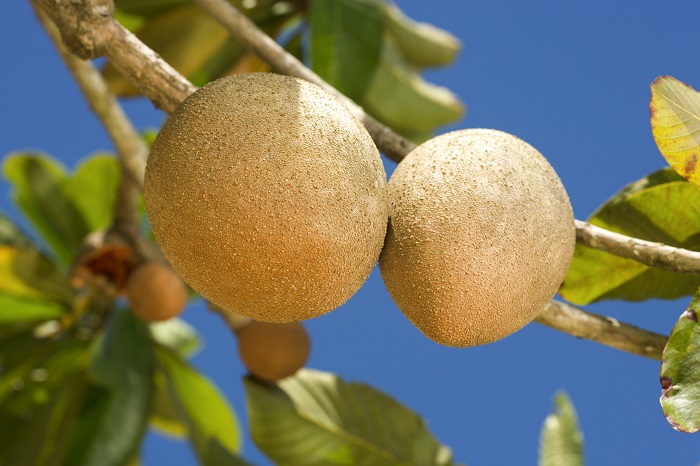
Off-the-grid homesteaders who grow their own food and who live in the hot and frost-free parts of the country have many more options than their northern counterparts.
These benefits include the ability to grow an amazing array of tropical fruits and vegetables outdoors that can’t withstand frost.
There are many interesting fruit trees that can be grown in the southern climate – and in the northern climate if you’re adventurous and want to try growing them indoors. (All three here can be grown indoors, but do your research first.) While oranges and bananas may come to mind, there are other trees that produce unique fruits uncommon to most Americans. Plant one of these trees this fall, and add some new flavors and variety to your diet. (Note: The outdoor planting directions refer to warm-weather climates.)
1. Mamey sapote
Mamey sapote are oblong-shaped fruit ranging from one to four pounds in weight. The fruit’s skin has a rough texture and is dark brown. The sweet and creamy flesh is orange or red. Its flavor has been variously described as a mix between cherry and almonds, while another description is that it tastes like pumpkin pie.
The Best Source For Non-GMO Heirloom Seeds Is Right Here!
The mamey sapote tree is native to Central America, ranging from southern Mexico to southern Costa Rica. However, today it is cultivated in Florida and the Caribbean as well.
The tree is a tall ornamental evergreen, ranging from 60 to 140 feet in height, and thrives in full sun and plentiful rainfall.
To harvest, ensure that the mamey sapote is fully mature. It’s difficult to tell maturity just by looking at the fruit. Instead, make a small cut through the skin and look at the flesh. If it’s orange or red, the fruit is ready for harvest. If the color is light green, it’s not ready for harvest. After the mamey sapote has been harvested, it needs to cure for several days. It’s ready to eat when the starches have converted to sugars. This is indicated when the fruit softens. If you press your finger to make a slight depression, the fruit is ready for consumption if the depression remains.
Typically, the mamey sapote is eaten by itself as a sweet but nutritious snack. However, it also works well in milk shakes. Mamey sapote can be preserved as a jam as well.
2. Sapodilla
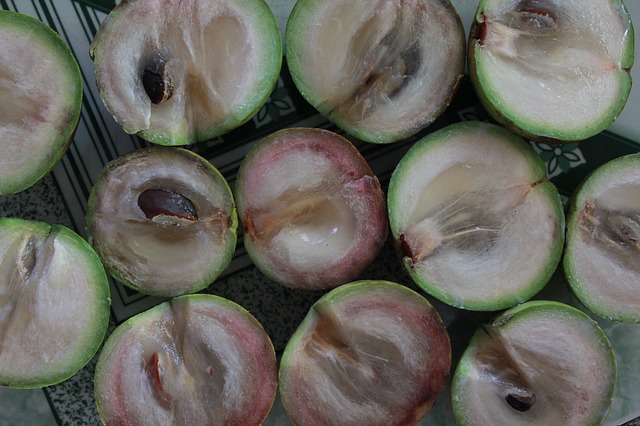
Sapodilla fruits are three to six inches wide, with a juicy yellow-brown flesh. They taste like a pear but are sweeter, reminiscent of brown sugar. The tree is a long-living evergreen tree that grows to about 40 feet tall, with a spread of 35 to 45 feet. It requires full sunlight and grows in most typical soils, as long as they are well-drained. The sapodilla tree is drought-tolerant and salt-tolerant. Fruit flies can be a problem, and the trees can become invasive if not tended. It takes five to eight years for a tree to mature. Once mature, it yields fruits twice a year but produces small, white flowers all year.
Although native to Mexico, Central America and the Caribbean, it was exported to the Philippines by the Spaniards during colonization, and is widely grown today throughout Southeast Asia, Malaysia and India.
The Cheap Way To Re-mineralize Your Soil
Sapodillas are harvested when they are mature, but the starches have not yet converted to sugars. A few days after harvest, the fruit softens (it feels like a peach) and is ready for consumption. Sapodillas can be eaten raw, but the skin and seeds need to be removed.
Sapodilla can be used like bananas in a smoothie, or mashed and sweetened to be enjoyed as a pie.
3. Caimito
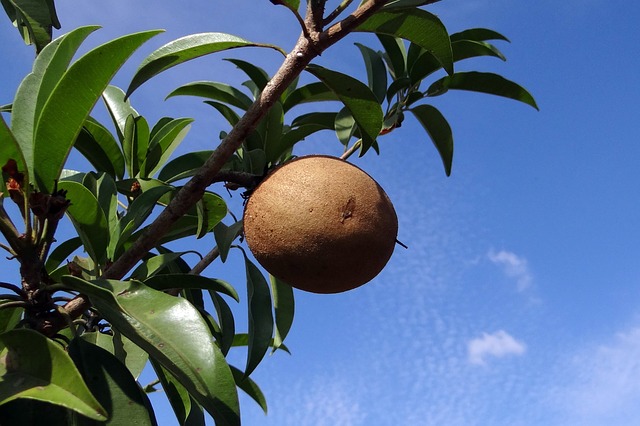
Caimito, also known as the star apple, is a tropical fruit that originated in the West Indies and South America. In the 1500s, the Spaniards noticed the fruit and exported it. Today, it grows in the Americas, Australia, Southeast Asia and Africa.
Caimito fruits are ellipsoid in shape, two to four inches in diameter and weigh eight ounces or more. They are either purple or pale green. When the fruit is cut transversely, the flesh surrounding the seeds looks like a star. Caimito fruit has a sweet flavor enhanced by chilling.
The fruit tree grows anywhere from 25 to 100 feet tall, with a round canopy. It takes five to 10 years for a tree to yield mature fruit. Caimito trees like fertile, well-drained soils and tolerate a range of pH.
In North America, from August to October, greenish-yellow or purplish-white flowers bloom, with the fruit maturing between February and May. Fruits are harvested when they are mature, and then should be left to soften at room temperature for a few days. The resulting fruits are slightly wrinkled and soft like a ripe peach.
The easiest way to eat a fresh caimito is to cut it in half transversely, and scoop out the flesh with a spoon. The skin, rind and seeds are inedible.
Caimito can be substituted for more common fruits in your favorite recipe. They can replace strawberries in strawberries and cream, or can act as a substitute for a number of fruits in a sherbet.
Those off-the-gridders living in a frost-free part of the nation have the opportunity to grow many fruits that can’t survive elsewhere in the country. If you’re fortunate enough to live in this climate, give one of these exotic and tasty fruits a try today.
Do you have any advice for growing these three fruit trees? What would you add to the list? Share your thoughts in the section below:
Discover The Trick To Saving Thousands At The Grocery Store. Read More Here.