 Print
Print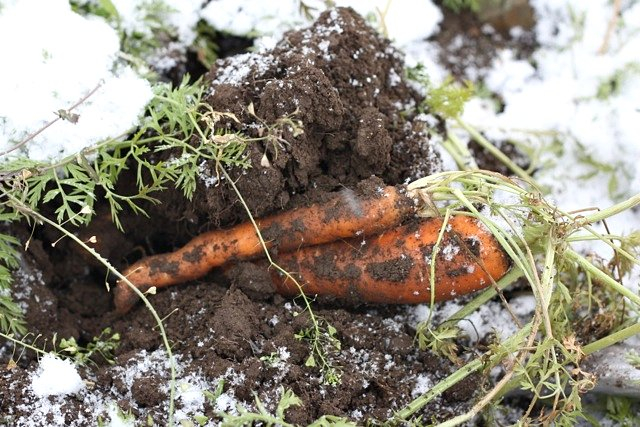
A vegetable grower’s poem around the time of harvest is often something along the lines of, “How do I store thee? Let me count the ways.” As a gardener myself, I mutter something about the depth and breadth and height of the vegetables coming at me. And I resolve to store as much as I am able, in as many different methods as I can muster.
By the end of September, I’m usually thinking that there has to be an easier way to enjoy my vegetables in the off seasons, even here in the far north. And it turns out that there is. Turns out a few types of vegetables can stay in the garden for the winter.
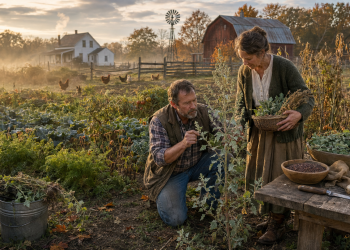
At our farm in rural Maine, my husband and I routinely leave parsnips in the ground all winter with excellent results. We cut the foliage off in late fall, leaving it just three or four inches tall. That’s if we don’t get to it before the leaves die off on their own, which is all right too.
Some people mulch their parsnips at that point, covering the bed with a thick layer of dry leaves – several inches to a foot in depth – and topping it off with row cover fabric. It is said that doing so will allow the roots to be harvested throughout the winter. That could work, but there are a lot of variables.
Overwintering? Get Your Non-GMO Heirloom Seeds Right Here!
One thing we like to do is pound in tall stakes around the edges of the bed, just to identify the area as a no-travel zone. It’s easy to tell the garden from the lawn (and walking path) when the vegetation is all visible, or even when it is covered with a few inches of snow. But under a foot or more of snow, the landscape looks vastly different and all bets are off. Better to install a few stakes than to discover in spring that the snowshoe trail has left your parsnips packed in a hard, icy ridge.
We dig up our parsnips as soon as the ground thaws enough to do so, usually around April in our growing zone. It is wonderful to have something freshly harvested to eat at that time of year, and the cold winter has rendered the roots sweet and delectable.
It is possible to do the same thing with carrots, and many people enjoy great success with them. That has not been our experience, however. One year, we mulched the carrot patch heavily, and were disappointed when we dug them up in the spring to find that underground rodents had feasted upon them all winter.
The next time we tried using less mulch, but our carrots were tough and woody. We had failed to take into account that carrots typically have a much shorter growing season than parsnips. With the latter, we can plant them early in the year and forget them. They grow all summer and fall and are just right by April. With carrots, however, we needed to take care to plant them later in the season so that winter would land upon them just as they were becoming mature.
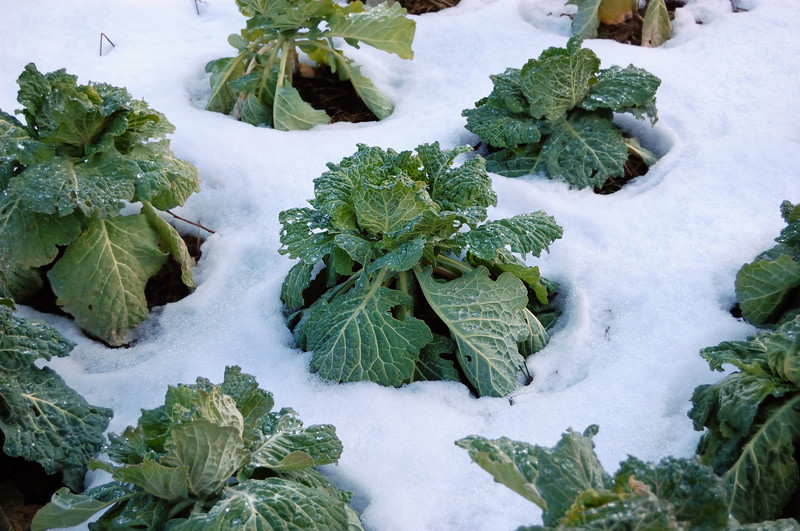
Some people also overwinter cold-weather brassicas like cabbage and kale. Cabbage needs to be well mulched, and kale protected from a heavy snow load. It is possible to store beets in this way as well, if the conditions are exactly right.
Garlic and two-year onions – often called “walking onions” because the heads of the stalks fall over and take root for next year’s crop – are certainly among the vegetables that can be stored in the ground for the winter, but these are a little different. Rather than storing the ready-to-eat vegetable for harvest during winter and spring, garlic and other members of the allium family are sown in fall and rest over the cold months, ready to sprout as the ground thaws and be harvested the following summer.
This New All-Natural Fertilizer Doubles Garden Production!
Other vegetables can be stored in the ground for all or part of a northern winter, too. But here come those variables I warned you about earlier. First of all, latitude and altitude matter. A Pennsylvania river valley and a notch in the mountains of Idaho are both considered northern climates, but there is a vast difference in the kind of winters they experience. And both climates can vary greatly year-to-year, making some winters more suitable for outdoor vegetable storage than others.
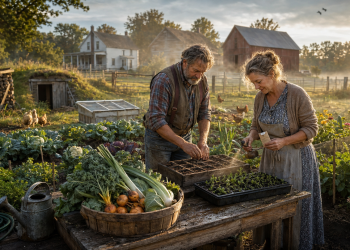
It depends how you prepare them, too. Covered and mulched, or even planted in a cold frame – a box covered with glass that draws light and warmth towards the plants – will allow a much wider variety of plants to do better in colder weather. Spinach, collard greens and Swiss chard can do well for much of the winter season if properly protected.
One word of caution, though. Be careful with mulching. To use this technique is to walk a fine line. You want enough mulch to insulate your plants from freezing and keep the ground pliable enough to allow harvesting in winter. But you don’t want to create a nice cozy home for mice and other varmints that would love to feast on your vegetables all winter.
In the end, overwintering vegetables in a northern climate is like most other aspects of growing food. It requires a little skill, a touch of artfulness, a lot of luck, and unlimited perseverance and optimism. If you aren’t sure it’s for you, I encourage you to give it a try. Harvest a portion of your crop to make sure you have some to fall back on and overwinter the rest. It can make your vegetable preservation tasks easier, and with any luck you will be singing a happy tune by the time you wrap up your garden in the fall.
What vegetables would you add to this list? What overwintering advice would you add? Share your tips in the section below:
Learn Dozens Of All-Natural Gardening Secrets. Read More Here.