 Print
Print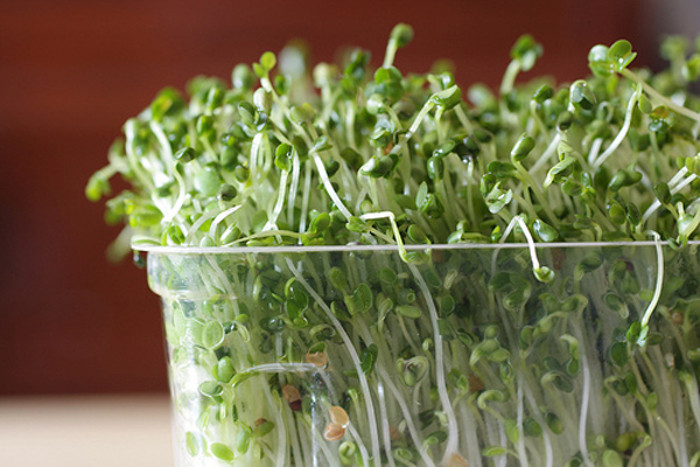
It would be a stretch to call it “gardening,” but there is a very easy and practical way to grow your own food at home without getting your hands dirty – or even going outside for that matter. I’m talking about sprouting.
What is sprouting? Sprouting is simply the process of taking a seed (grain, nut or legume) and starting the germination process. What you really have is a baby plant.
The length of time that it takes for a seed to become a sprout depends on what kind of seed you are sprouting, but generally it takes between a couple of days and two weeks.
Why Sprout?
If you’ve ever developed a taste for Chinese food, you are no doubt familiar with the mung bean sprout (though you probably know them as just “bean sprouts”). But whether they are from the Chinese takeout down the street or from your local grocery store, these colorless – and, let’s be honest — flavorless vegetables are no match for the ones that you could be growing yourself.
Sprouted mung beans – when they are fresh – have a delicate, fresh flavor. They are absolutely beautiful in a salad or even on their own with a bit of homemade vinaigrette.
Without A Doubt The Best Kept Secret In Self-Reliance Gardening…
Other types of sprouts are delicious, too. Cress – affectionately nicknamed “poor man’s pepper” – adds a nice sharpness to a sandwich. Sunflower sprouts taste much like the seeds, only in “vegetable” form. Common vegetables such as radishes, peas, broccoli and even corn can also be rediscovered as sprouts.
Not only are sprouts a tasty treat, but there are some real health benefits to them as well. The germination process of sprouting increases vital nutrients such as many of the B vitamins as well as vitamin C. In fact, the Chinese once carried mung beans with them on journeys to sea and used them to prevent scurvy by sprouting and eating them.
Sprouting also neutralizes an anti-nutrient called phytic acid. Phytic acid interferes with your body’s absorption of minerals such as calcium, iron and zinc. Certain legumes are high in phytic acid and through the process of sprouting, they become easier to digest.
The process of soaking the seeds also helps to reduce some of the fat content and helps with the conversion of more dense vegetable protein into simpler amino acids. This, too, makes for easier digestion.
Finally, converting seeds into sprouts makes them more alkalizing to the body. Most North Americans today eat a diet that is too high in acid-forming foods. By sprouting, seeds, grains and legumes become more similar in nature to vegetables than seeds.
I’m convinced! How do I get started with sprouting?
Sprouting can be done in a number of ways, the most common being through the use of a sprouting tray or with a mason jar. But some seeds are so easy to sprout that it can even be done using a wet paper towel.
The Tray Method
Sprouting trays are flat bottomed wire mesh trays that are made to sit inside another tray or flat bowl. The bottom tray or bowl is filled with water just to the point where the water barely touches the wire mesh. Seeds are then spread out evenly over the wire mesh.
New “Survival Herb Bank” Gives You Access to God’s Amazing Medicine Chest
A dome-shaped lid is usually placed over the entire bowl and tray in order to keep the condensation in. Replace the water approximately once every 24 hours until your seeds have germinated.
The Jar Method
This method is cheaper as there is no special equipment to buy. However, it is slightly more labor-intensive. Just fill a mason jar about one-third full with your seed of choice and then cover with water. You will need to drain the jar of water once a day (same as you do with the tray method) but because your sprouts are literally sitting in the water, you will also have to rinse them about twice a day. Overall, still pretty simple.
Story continues below video
Wet Paper Towel
Using a wet paper towel is not practical for most seeds because it dries out too quickly. But there are some seeds – cress, for example – that will work well with the method. Simply wet a paper towel and spread the seeds on top!
Some people say you should not eat raw sprouts. And in fact, some legume sprouts can be toxic when raw and need to be cooked. Other common sprouts such as vegetable sprouts should be fine, though.
Also, you should use the principles of good sense and food safety when sprouting. Make sure that your jar or sprouting tray is clean before you begin and if something looks, smells or tastes bad, don’t eat it.
If you’ve never tried sprouting, you really should! It is an easy and affordable way to grow great-tasting nutritious food at home and, if you’re like me it may just mean the end of purchasing store-bought sprouts!
What are your sprouting tips? Leave your reply in the section below:
Get $600 Worth Of Survival Blueprints … Absolutely Free!