 Print
Print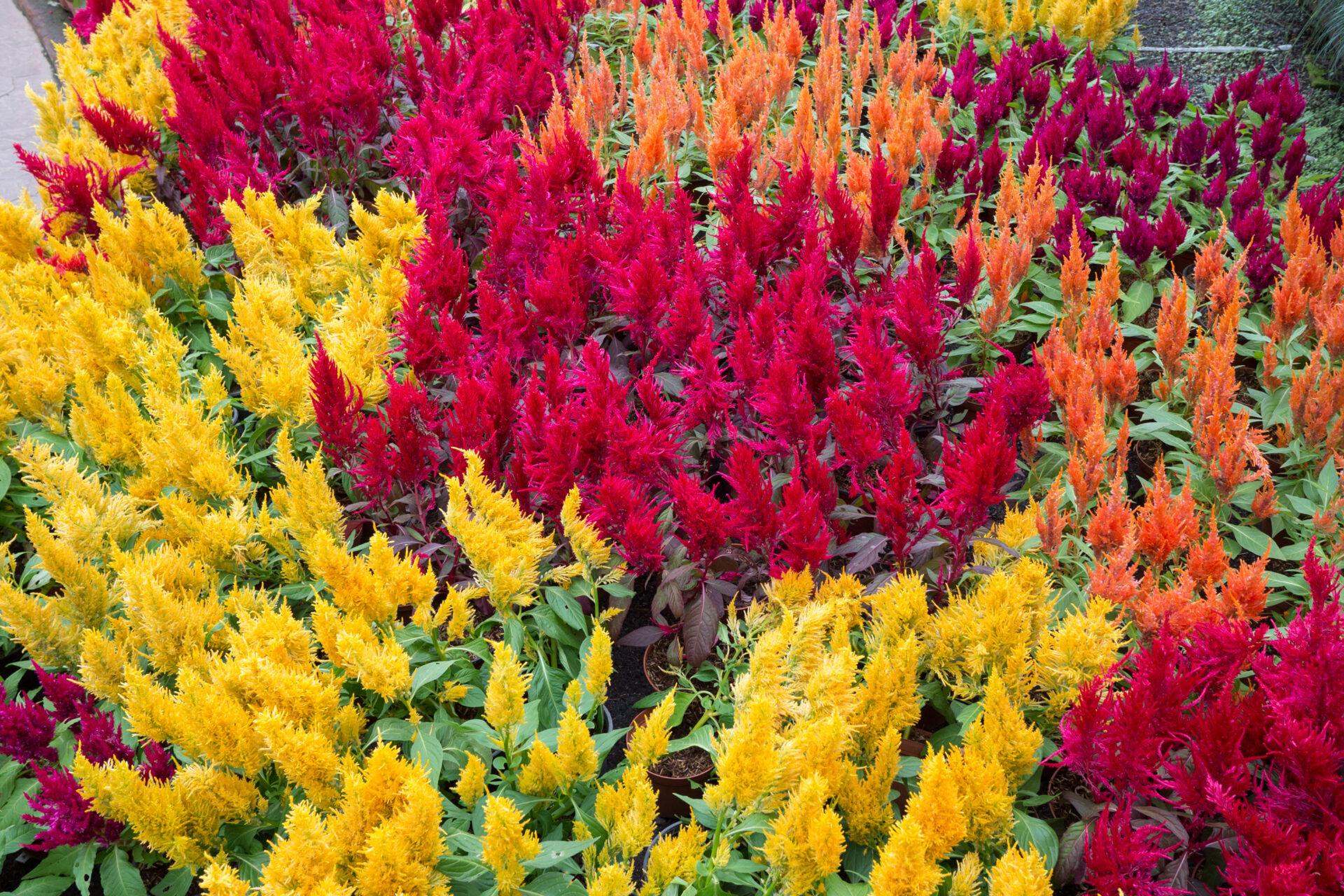
Whether they’re of the crested, plume, or spike types, celosia flowers are quite striking. All are vividly colored, but crested celosia, with its unique shape, has given the flowers their common name: cockscomb. Crested celosia flowers are wavy and fan-like and, when they form into a globe shape, they resemble a brain. When they develop flatter and narrower, the flowers look like a rooster’s (or cock’s) comb.
Although no one is sure where celosia originated, it’s a tropical plant that grows widely throughout Africa, Indonesia, and Asia. It was introduced into England in 1570 and by the early 1700s, it was noted growing in Carolina.
Both George Washington and Thomas Jefferson grew cockscomb at their estates. By the middle of the 19th century, it was “almost universally grown” in America’s flower gardens. In the 1920s and ‘30s, cockscomb was often included in agricultural exhibitions at county and state fairs, with gardeners competing to see who could grow the biggest crest on the smallest plant.
As a member of the amaranth family, common cockscomb is edible. While most American gardeners grow cockscomb as an ornamental plant only, it is collected from the wild as a food source in Asia, South America, Africa, and the West Indies. Like other leafy greens, cockscomb is a good source of protein and also provides vitamin A, vitamin C, iron, calcium, and phosphorus.
All parts of the plant are edible, including the stem, leaves, and flower. That said, the stem and leaves are more tender before the plant starts to bloom. Young leaves are similar to basil in texture, comparable to spinach in flavor and can be used in place of spinach in cooked recipes. In cultures where cockscomb is eaten, its leaves are usually added to soups and stews. However, in Mexico, the leaves are served as a side dish after being cooked with hot peppers, red palm, garlic, and lime. Cockscomb stems can be chopped up and added to stir-fries, and the flowers work beautifully as a garnish.
Cockscomb is also highly regarded for its medicinal properties. Anecdotally, it’s used to treat a wide variety of issues including diarrhea, gastroenteritis, and dysentery. It’s used in Asia, in particular, as a parasiticide for tapeworms and other parasites. Additionally, the leaves are pounded and applied as a poultice for various types of skin sores and wounds. Notwithstanding, please consult a medical professional if you’re considering using cockscomb to treat a medical issue.
Celosia is a worthwhile addition to any garden, and it’s readily available as a bedding plant at most garden centers in the spring. It can also be grown from seed, though it’s best started indoors about 6-8 weeks before the last frost. Since it doesn’t like its roots disturbed, it’s best to start seeds in peat pots or other compostable pots that can be directly planted into the garden after the last risk of frost. Celosia is incredibly easy to grow, as long it’s planted in full sun with well-drained soil. It’s prone to root rot if its roots stay wet too long but otherwise requires little care, being drought-tolerant and immune to most pests and diseases. Best of all, celosia does well as an annual almost everywhere, beginning in hardiness Zone 2. In Zones 10 and above, it should overwinter nicely.
Well, what are you waiting for? With so many stunning varieties and colors, not to mention “off-the-grid” uses, why not start planting your own celosia varieties for 2018?