 Print
Print
Why Smart Homesteaders Let This “Weed” Take Over A Corner Of The Yard
This Powerful Herb Is Worth A Second Look
Out at the ragged edges of most homesteads, right where the soil is rich with old manure and the ground stays a little damp, you’ll often find a stand of nettles. They look plain enough. Just another pushy weed. But once you’ve been stung a few times, you remember where they grow.
Yet nettle isn’t just a plant that bites. In older stories, it’s the plant that breaks curses and brings people back to life, slow and steady, one day at a time. And if you’re living a hard‑working, off‑grid life that leaves you worn down, that old story starts to sound pretty practical.
Because on a small farm or homestead, the real enemy usually isn’t a single crisis. It’s the slow grind of exhaustion, mineral loss, and stress that builds up until you hardly remember what “vital” feels like anymore.
That’s where nettle really shines.
A Fairy Tale Every Homesteader Should Know

Long before lab tests and supplement aisles, people told stories to remember what plants could do. One of those old tales, “The Wild Swans,” puts nettle front and center as the plant that breaks an enchantment.
In the story, a young girl named Eliza has eleven brothers. A wicked stepmother turns the boys into swans and tosses Eliza out of the palace. She grows up with peasants, living close to the land, far from comfort and ease. One night she dreams of a fairy‑woman who gives her a hard job and one slim chance. If she wants to free her brothers, she must gather nettle, break those stinging stalks by hand, spin them into thread, and sew eleven shirts. All in silence. No talking, no laughing, no complaining, no matter how much it hurts.
So she does what a lot of us have had to do in our own way. She puts her head down and works. Her hands blister and bleed from the sting. Her feet burn from trampling fresh nettle so she can soften the fibers. But she keeps going because love demands it and there’s really no other way out.
In the end, right as she’s about to be executed as a witch, the swans swoop down. She throws the nettle shirts over them, and those cursed birds turn back into men. One brother keeps a swan’s wing where the last sleeve was unfinished, a reminder that healing work is often messy and rarely perfect.
It’s a fairy tale, sure. But if you’ve ever dragged yourself through a season of burnout, illness, or postpartum depletion out on the land, the deeper message hits home.
Nettle As The Enchantment Breaker
On paper, nettle is a nourishing herb, loaded with minerals and vitamins. But in real life, when you work with it day after day, it starts to feel like that hex‑breaker from the story. Not a quick fix. Not a magic pill. More like a daily quiet force that slowly rebuilds you from the inside out.
For a lot of herbalists, nettle is the “gateway herb.” It’s the one they fall hard for when they finally commit to drinking strong infusions, not just pretty tea bags. Over months, and then years, they notice something simple but profound: their energy doesn’t crash as often, their nerves feel steadier, and their sense of “being in their body” comes back.
One herbalist tells how she resisted nettle for years. She thought it wasn’t “her plant.” Then her life caught up with her. She hit serious depletion, low iron, the whole picture many homesteaders know too well. After a bad reaction to a supplement, she finally turned to strong nettle infusions. She drank them daily for months, then years. Little by little, she felt like herself again.
Looking back, she found an old dream note from years earlier. In the dream, she was in a warm river at night with the people she loved. At the end, the words “Urtica dioica” — nettle’s Latin name — appeared clearly. She’d written it down and then forgotten it. Only later did she see how the plant had been “calling” her long before she was ready to listen.
That’s the thing about nettle. It shows up on the edges. In dreams. In blends other people make for you. In the ditch by your garden. It waits until you’re ready to do the slow work.
A Daily Off‑Grid Tonic That Feels Like Coming Home
Out on rural land, there’s a special comfort in knowing that your “vitamin and mineral supplement” can come from a jar in your pantry, not a trucked‑in bottle with a barcode. That’s exactly how many herbalists treat nettle: as a daily home‑made multivitamin.
Modern lab and clinical work backs up what old‑timers have seen in the field: nettle is rich in vitamins A, C, and K, and delivers meaningful amounts of minerals like iron, calcium, and magnesium, along with antioxidant and anti‑inflammatory compounds that researchers describe as “nutritionally and pharmacologically important.”
A 2022 scientific review of stinging nettle summarizes evidence that its leaves can supply significant micronutrients while also showing anti‑inflammatory and metabolic effects in cell and animal models, with early human data suggesting possible benefits for conditions like arthritis and metabolic syndrome, though the authors stress we still need larger, better‑designed trials.
Other small human studies and clinical summaries hint that nettle teas and extracts may ease joint pain, improve urinary symptoms in benign prostatic hyperplasia, and modestly support blood sugar control, but major medical centers still frame nettle as a complementary herb, not a stand‑alone cure, and recommend using it alongside — not instead of — standard care.
One simple homestead‑style tonic looks like this: strong dried nettle, oat straw, rose hips, and maybe a bit of licorice root if you like it sweet. Nettle brings a heavy load of minerals and plant iron. Oat straw lends more minerals and a gentle, soothing effect on frayed nerves, perfect for end‑of‑the‑day tension. Rose hips add vitamin C and that velvet feel in the mouth, and they help your body actually use the iron in the nettle. Licorice, used lightly, rounds out the taste.
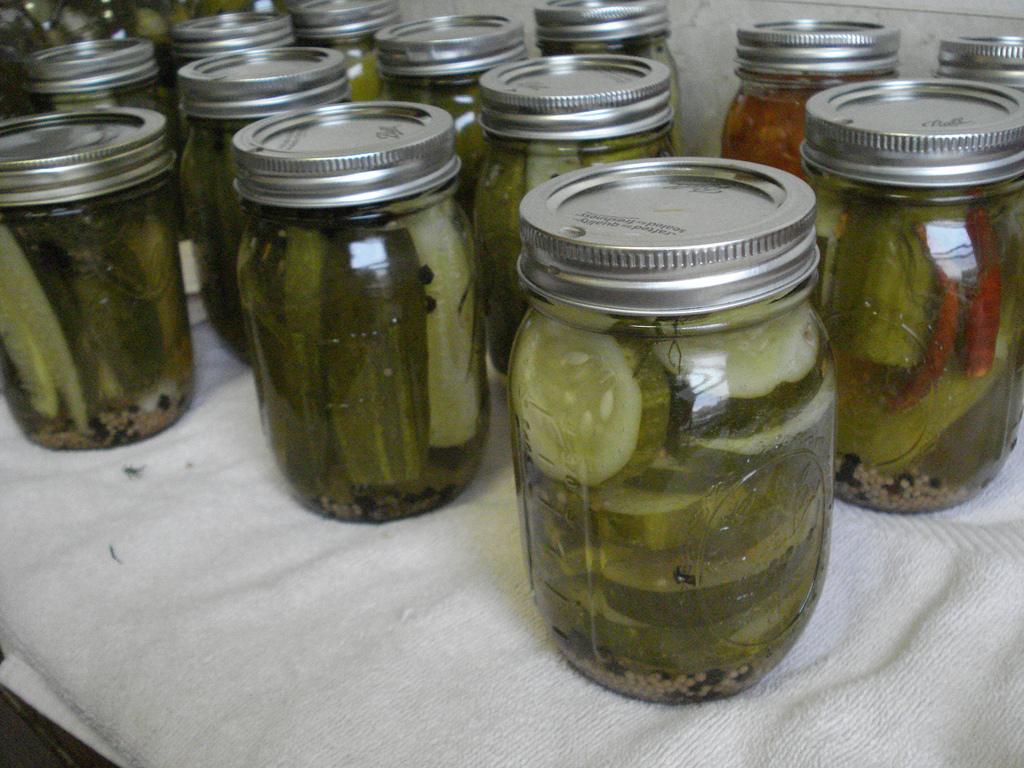
The method is old‑fashioned and easy. You throw a generous handful of dried herbs into a jar. You pour boiling water over them. Then you put a lid on, let it sit four to eight hours, strain, and tuck the jar in the fridge. Many people like to drink it cold the next morning, first thing after they wake up and say their prayers or do their quiet time.
Over time, this simple drink becomes ritual. You start the day by pouring something green and earthy that you made yourself from plants you either grew or sourced from farmers you trust. You feel it moving through you, washing fatigue out of old corners. And because you drink it daily, not “whenever you remember,” that slow enchantment‑breaking work can really begin.
When Nettle Shows Up Everywhere
The more you pay attention, the more you’ll notice that nettle doesn’t just heal the body. It has a way of weaving itself into your life story. It shows up in fairy tales. It appears in dreams. It slips into custom herbal blends even when you didn’t ask for it. It grows wherever the soil is rich and a little wild.
One very smart herbalist described how nettle kept sneaking into her life. It appeared in a flower essence blend a teacher made for her. It showed up in that dream. Then, once she finally said yes and started drinking it daily, it pulled her back from the edge of long‑term depletion.
Another described nettle infusions as a “rite of passage” in the herbal world. Put a hundred grassroots herbalists in a room and ask how many fell in love with long, strong nettle infusions at some point, and most hands would probably go up.
For off‑grid folk, that lines up with another truth: at some point, if you stay on the land long enough, you pass your own rites of passage. The first winter you make it through when the solar system barely keeps up. The first medical scare you ride out with a mix of herbal knowledge and a cautious trip to town. The first time you realize your body needs deep rebuilding, not another caffeine hit.
Nettle belongs in that story.
Teaching The Next Generation To See Their Green Allies
Living rural, it’s easy for kids to see plants as background scenery. Grass. Trees. “Weeds.” Yet if you start them young, they’ll learn something most city kids never do: the green world is full of friends.
One herbalist mom wrote a children’s book called The Girl Whose Garden Comes Alive after watching her little daughter grow up on the land. The girl knew plantain and yarrow as “bee sting medicine” before she could read. She gave mini plant consults to classmates in kindergarten. She carried that easy, natural trust in the plants that many adults have to fight to get back.
For homesteaders raising kids far from town, that kind of story fits right into daily life. A bee sting in the yard becomes a lesson in plantain. An anxious night becomes a chance to meet lemon balm. A scraped knee turns into a quiet visit with yarrow.
And even though nettle didn’t fit into that particular children’s book—too many plants, not enough pages—it still hovers nearby, waiting for the right time to be introduced. Maybe that moment is when a teen is tired all the time. Maybe it’s when a new mom feels like the life has been wrung right out of her. Either way, nettle can step in and start its slow work.
Never Alone On The Land
Once you start recognizing plants, your whole view of the land changes. The green wall of “brush” becomes a crowd of familiar faces. Hawthorn, mugwort, red clover, yarrow, mullein, nettle. Traveling, you might step into a foreign field, feel alone for a moment, then spot one of your old plant friends and feel your nervous system melt. You realize you’re not a stranger here after all.
Out on your homestead, far from the nearest clinic or store, that realization matters.
You’re not just a lone human fighting the elements. You’re part of a living community. The plants were there long before you arrived, and many of them are ready to help… if you’re willing to learn their names and give them your time.
So next time you’re walking the back edge of your place, and you feel that sharp sting on your calf, pause. Look down. Notice where nettle has taken root, rich and green, right where water and nutrients gather.
Then maybe, instead of just cussing it and reaching for gloves, you’ll give it a second look.