 Print
Print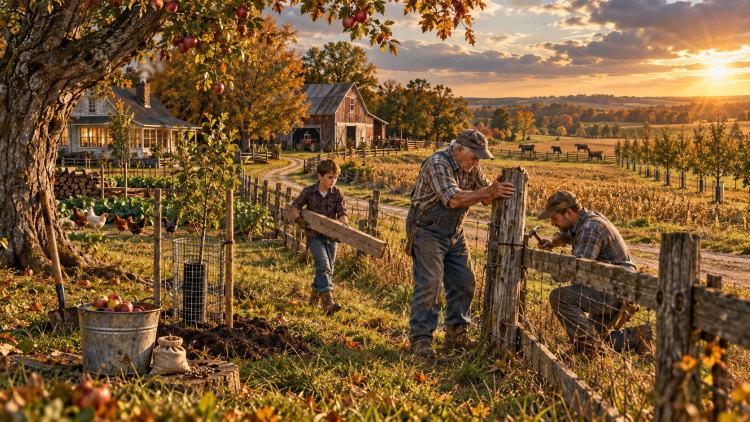
What You Inherited… What You Believe… What You Do… And What You Leave Behind
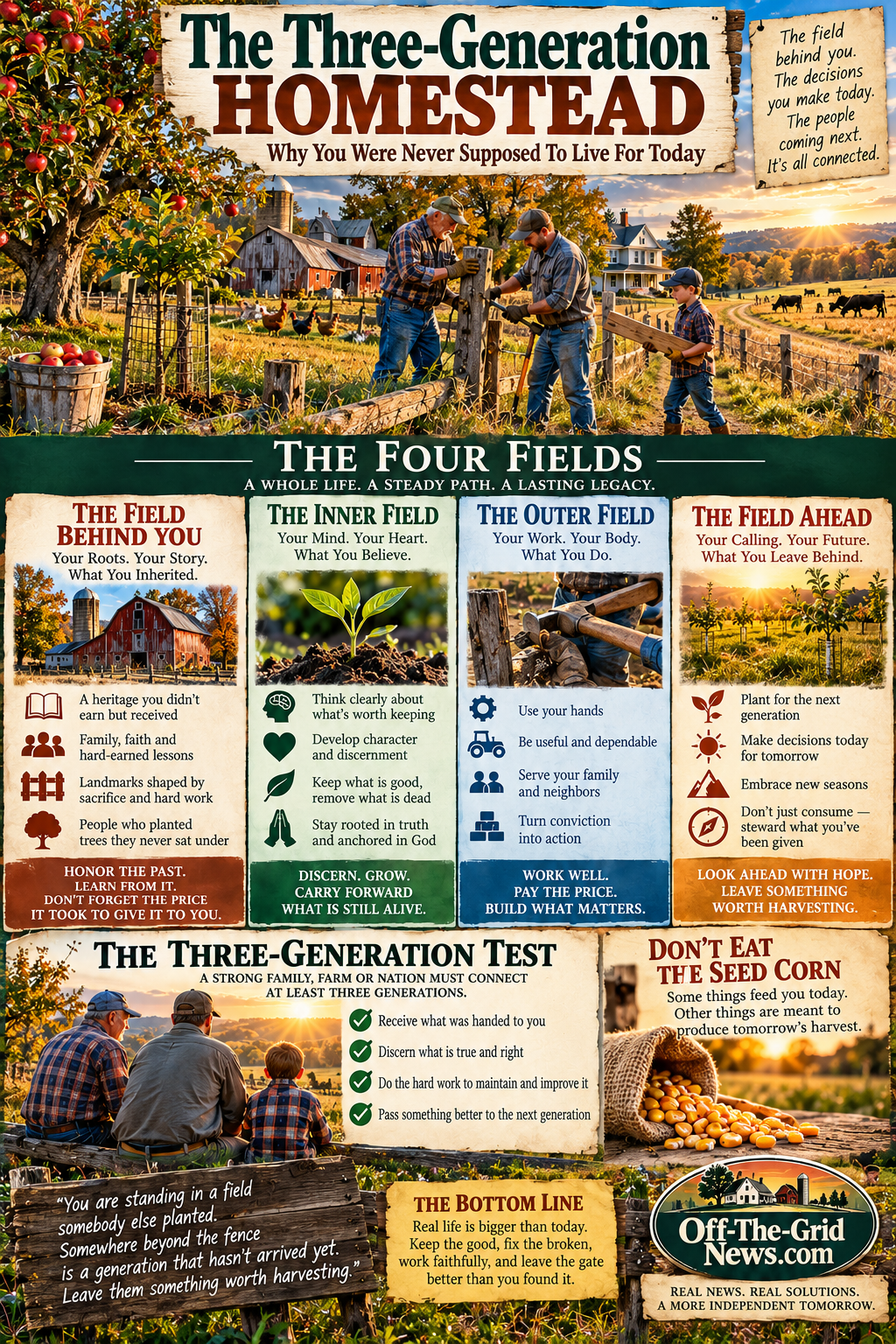
The Three-Generation Homestead
Walk around an old farm sometime and look closely. Not at the shiny tractor, the new pole barn or the solar panels somebody put up last summer. Look at the things nobody notices anymore.
Look at the old maple somebody planted beside the house 70 years ago. Look at the hand-dug drainage ditch running along the lower pasture, the stones somebody hauled out of that field one wagonload at a time, or the old fence line disappearing into a row of trees.
Somebody did that work.
And chances are, whoever did it never met you. Yet there you stand, enjoying the shade, walking the cleared field and benefiting from work done by hands that have been still for decades.
That’s one of the strangest truths about a homestead… and maybe about life itself.
Most of the good things we enjoy were paid for before we arrived.
And if we’re doing our job, some of the best things we do won’t pay off until after we’re gone.
Welcome back to the Four Fields.
The Field Behind You: Somebody Already Broke The Ground
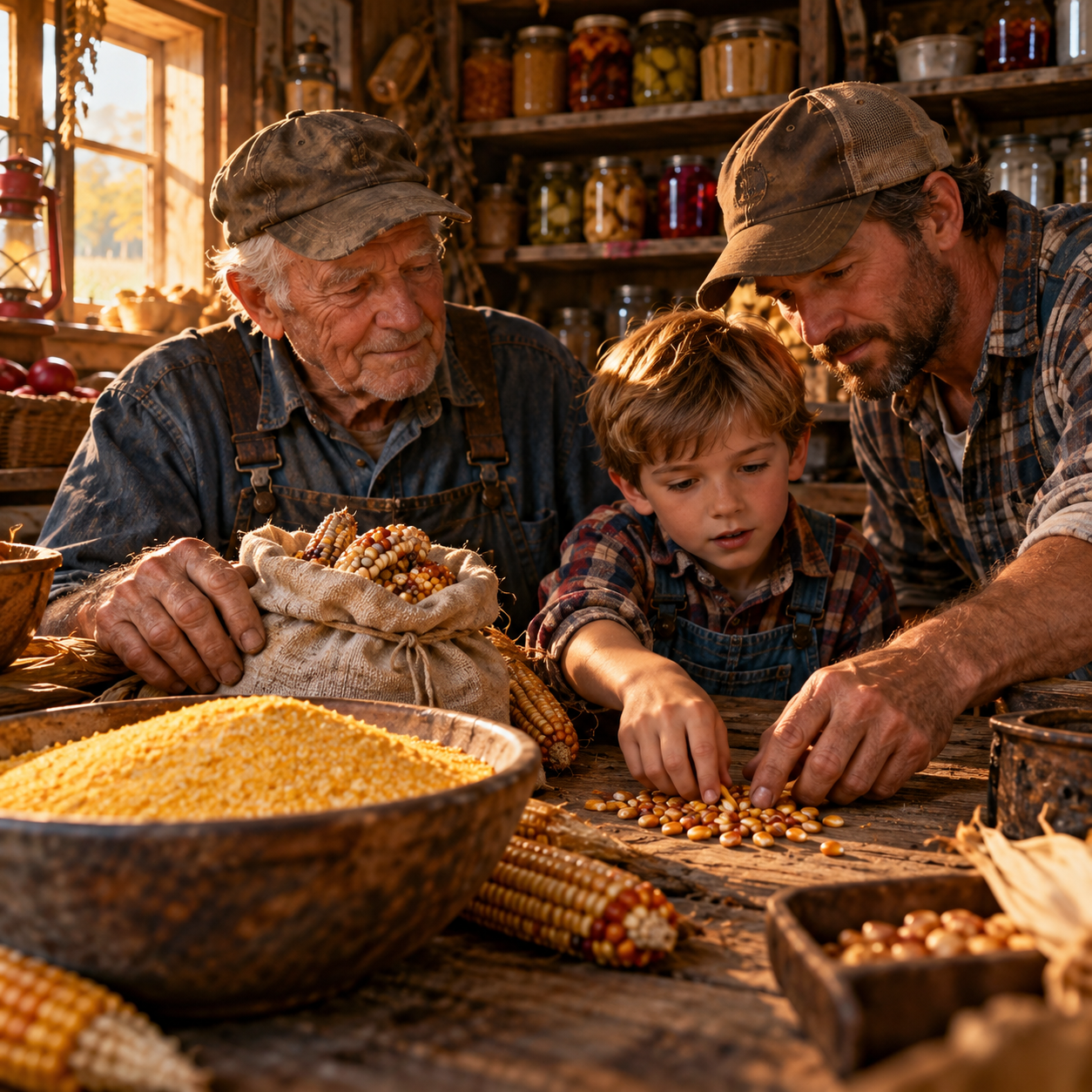
Modern life encourages us to imagine that we arrived here carrying our own toolbox. We didn’t.
You inherited a language you didn’t invent, roads you didn’t build, knowledge you didn’t discover, and institutions you didn’t create. Somebody taught your grandfather how to frame a wall, somebody taught your grandmother how to put up beans, and somebody taught the person who eventually taught you.
Don’t miss this profound point: peaceful, ordinary life is often experienced as a gift. People inherit an order built through sacrifices they didn’t personally make, and after enough years pass, they can forget there ever was a price.
A homesteader should understand this instinctively. Buy an established farm, and you may inherit a well; turn the faucet and water comes out.
Easy.
Except somebody had to decide where to drill. Somebody paid for the casing, ran the pipe, buried the line, wired the pump, and probably stood outside cussing at the thing at least once when it quit working in January.
You experience the water as something that’s simply there.
But it really isn’t.
The same goes for that windbreak protecting the house in January. Those trees didn’t spring out of the ground 35 feet tall; somebody planted little sticks knowing he might be an old man before they became the wall against the northwest wind he imagined.
That’s the field behind you.
It contains more than memories. It contains a lot of sacrifices.
The Dangerous Words: “I Don’t Care”
There’s something buried here that deserves to be painted on the side of a barn:
Life begins where you care. Sounds too simple; why are you talking like that?
Think about that for a minute. “I don’t care” sounds harmless enough. Teenagers have probably been saying some version of it since teenagers were invented, and plenty of grown adults have perfected the habit.
But “I don’t care” is actually a confession. It says, “I don’t care where this came from. I don’t care what it costs to maintain. And I don’t particularly care whether it’s still here when I’m finished.”
That’s how farms get used up. Grandpa spends 40 years building topsoil, and somebody plows it into powder because the commodity price looks good this year.
Dad keeps the barn painted, replaces boards and fixes leaks as soon as they appear. Then somebody decides maintenance can wait because there’s a bass boat he’d rather buy.
Five years later, there’s a hole in the roof. Ten years later, the sill is rotten. 15 years later, somebody stands outside scratching his head and says, “That old barn isn’t worth saving.”
Funny how that works.
It took 100 years to build and 15 years of not caring to destroy.
Civilizations aren’t so different. Neither are families.
The Inner Field: Deciding What Deserves To Survive
Of course, respecting the past doesn’t mean preserving everything simply because it’s old. Grandpa could be wrong, your parents could make mistakes, and traditions can become habits nobody remembers the reason for.
Besides, an old piece of equipment can reach the point where you’re spending $800 every year keeping a $500 machine alive. There’s no virtue in that.
This is where the inner field matters.
The source makes an interesting argument about freedom: a genuinely free person must decide which parts of the past still deserve loyalty and which demands of the future require him to change.
That’s discernment.
Imagine buying your grandfather’s farm. There’s an old apple orchard out back. Half the trees are dead, several are diseased, but three old trees still produce apples unlike anything you’ve tasted at the grocery store.
You have some choices. You could bulldoze everything, or you could refuse to touch anything because “Grandpa planted those.”
Or you could do something wiser.
You could prune the living trees, remove the dead ones, and take scion wood from the best survivors to graft onto younger rootstock. That’s an old orchard practice still taught today by university extension programs such as Penn State Extension’s guide to grafting and propagating fruit trees.
Now you’ve done something different.
You didn’t worship the past. But neither did you erase it.
You carried what was still alive into the future.
That’s the work of the inner field.
The Field Ahead Is Already Knocking On The Door
We usually imagine the future as something far away. Someday I’ll put in the orchard. Someday I’ll teach the kids how to preserve food. Someday I’ll get serious about paying off the place.
Someday I’ll reconcile with my brother. Someday I’ll write down Grandma’s recipes. Someday I’ll teach that grandson what my grandfather taught me.
But here’s the problem.
The future doesn’t wait politely at the property line.
It’s already coming through the gate.
Plant an apple tree this afternoon, and you’re making a decision about 10 years in the future. Skip maintenance on your roof this fall, and you’re also making a decision for a decade from now.
Teach your 12-year-old how to sharpen a chainsaw, change oil, plant potatoes, or balance a checkbook, and you’re making another decision about the future.
The future is already asking things of you.
That’s the field ahead.
And this may be one of the most useful ideas in the source material: we don’t simply get pushed forward by yesterday. Tomorrow also reaches backward and puts demands on today. The lecture describes the present as the place where what remains alive from the past meets the demands already arriving from the future.
A pregnant mother understands that. So does a farmer looking at the weather forecast.
If a freeze is coming Thursday night, Wednesday afternoon suddenly changes. You don’t stand in the garden saying, “But it’s 67 degrees right now.”
You cover the plants.
Tomorrow just changed what you did today.
That’s what wise people do with life.
The Outer Field: Somebody Has To Pay The Bill
And then we reach the part modern people don’t particularly enjoy. Heck, not even me at times. And that’s…
Sacrifice.
That’s the outer field, because eventually beliefs have to leave your head and become something you actually do. Everybody loves the idea of a beautiful homestead; fewer people love replacing fence posts.
Everybody loves a warm woodstove, but somebody still has to cut, split, haul, and stack the wood. Everybody loves family traditions, but somebody has to organize Thanksgiving, cook the all the food, and wash the dishes.
And everybody wants good neighbors.
Somebody has to be the neighbor who shows up at 11:30 at night when the cows are standing in the road.
That’s the price.
The source material keeps returning to the idea that serious things survive because somebody willingly gives up something in the present for something larger than himself. It uses teachers and soldiers as examples of sacrifice that can’t easily be explained by simple self-interest.
Christians should recognize the pattern immediately. Christ tells His disciples, “If anyone would come after me, let him deny himself and take up his cross and follow me” in Matthew 16:24.
There’s a homestead version of this too. You eat fewer apples because you’re saving some for later. You don’t spend every dollar because the roof will eventually need replacing.
You don’t burn every piece of seasoned firewood without thinking about the next cold snap.
You don’t consume the whole farm.
You steward it.
The Great Lie Of “Living In The Moment”
Now, there’s nothing wrong with enjoying today. Sit on the porch, drink the coffee, watch the sunset, and laugh until your ribs hurt. Jesus taught that. Tomorrow’s got its own problems.
But “live in the moment” becomes foolish advice when it means pretending yesterday and tomorrow don’t exist. A man who truly lived only for today wouldn’t plant trees, save money, raise children, build a barn meant to last 100 years, or put seed potatoes away for spring.
He’d eat everything, burn everything and spend everything.
Eventually he’d discover that a person who lives only for the present has no future because he consumed it in advance.
Real life has three important dimensions: yesterday, today and tomorrow.
Or, in Four Fields language, the ground behind you, the ground beneath your boots and the ground you’re walking toward.
The Three-Generation Test
And here’s where this gets really interesting.
I’d also argue that human institutions have to be capable of connecting three generations. Grandparents, parents, and children… or whichever three generations happen to be standing together at that moment.
That doesn’t mean three is some magical number. It means three generations force you to stop thinking only about yourself.
Walk into an old farmhouse at Thanksgiving and you’ll see it immediately. Grandpa remembers when the road outside was gravel, Dad remembers helping Grandpa put the addition on the barn, and the grandson thinks the barn has always been there.
Three completely different experiences.
One place.
That’s how inheritance works.
The middle generation has an especially interesting job because it’s standing with one hand reaching backward and the other reaching forward.
You receive.
Then you transmit.
Your parents hand you something. Maybe it’s land, faith, skills, stories, traditions, mistakes, debts, wisdom… or usually some messy combination of all seven.
Your job isn’t merely to preserve the package unopened. Your job is to sort it: keep what is true, repair what is broken, repent of what was wrong, and improve what can be improved.
Then hand something worthwhile to the people coming behind you.
Scripture gives us almost exactly this picture in Psalm 78:4–7: one generation tells the next about the works of God so that children not yet born can someday teach their children.
That’s three-generation thinking.
The Four Fields Meet At The Kitchen Table
This is why I keep coming back to the Four Fields. They aren’t really four separate places.
They’re four directions of responsibility.
The field behind you asks: What have I inherited? The inner field asks: What deserves my loyalty?
The outer field asks: What must I actually do about it? And the field ahead asks: What am I leaving for the people coming next?
Those four questions can change the way you look at nearly everything… your marriage, your land, your money, your church, your community, your children, and even your pantry.
Because suddenly the question isn’t simply, “What do I want?”
It’s also, “What was handed to me? What am I doing with it?”
And, maybe most importantly:
“What will be left when I’m finished?”
Don’t Be The Generation That Eats The Seed Corn
Old farmers understood something we’ve almost forgotten.
You don’t eat the seed corn.
It may look exactly like the corn you’re eating tonight, but it has a different purpose. One feeds you now; the other carries life into another season.
A foolish household can’t tell the difference.
Neither can a foolish culture.
We inherit things—land, freedom, knowledge, faith, families, institutions and customs—and assume they’re simply part of the scenery. Then we consume them, stop maintaining them and quit teaching the next generation why they mattered in the first place.
Eventually somebody looks around and asks where everything went.
But the answer isn’t complicated.
We ate the seed corn.
The Bible uses almost the same agricultural logic in 2 Corinthians 9:10, distinguishing between “seed to the sower” and “bread for food.” Some things are given for today’s table; some are meant to produce tomorrow’s harvest.
Knowing the difference is called stewardship.
Leave The Gate Better Than You Found It
Someday somebody else may walk your property. Maybe it’ll be your grandson. Maybe it’ll be somebody who doesn’t even know your name.
He’ll lean against a fence you built, pick fruit from a tree you planted… or curse you because you buried an electrical line six inches underground without marking the blamed thing.
That’s the humbling thing about the future.
We’re building part of it right now.
So plant something you’ll never sit under. Fix something instead of merely using it up, and teach somebody a skill that took you 30 years to learn.
Write down the family story. Tell your children why you believe what you believe instead of assuming they’ll somehow absorb it through the drywall.
Keep the good things you inherited, and have enough courage to repair the bad ones. Most of all, have enough humility to remember that the farm isn’t really yours in the absolute sense anyway.
You’re holding it for a while.
That’s true of land, knowledge, and faith. And in a larger sense, it’s true of civilization.
The field behind you is full of people who paid for things you now enjoy. The field ahead is full of people who will live with decisions you’re making today.
The inner field is where you decide what is worth carrying forward, while the outer field is where you roll up your sleeves and actually carry it.
That’s serious living.
Not because every day needs to be grim. Lord knows there’s plenty of room for laughter around a farmhouse table.
But because life is bigger than Tuesday afternoon.
You are standing in a field somebody else planted.
And somewhere beyond the fence is a generation that hasn’t arrived yet.
Leave them something worth harvesting.