 Print
Print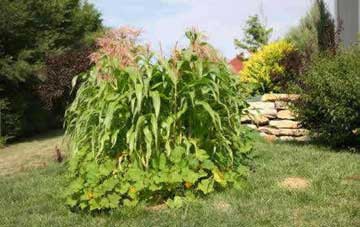
The “three sisters” garden is a gardening technique taken from our Native American forefathers. It is a tradition where corn, beans, and squash are planted together. The corn stalks are used for the beans to climb up as they grow, while the squash provides a living mulch to keep the ground cooler and moister. They are also beneficial to one another for the nourishment they provide to each other. Beans fix nitrogen in the soil that is required by the corn plants. Not only are they good planting companions, they are also good companions for our tables. Beans provide the protein, corn our carbohydrates, and squash gives us vitamin A.
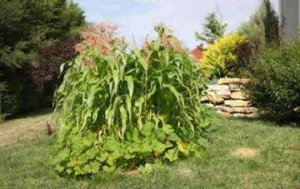 Traditionally the three sisters were grown in mounds. I built my mounds in one of my raised beds; you may plant your sisters in whatever style bed you are using. Prepare your bed by pulling any weeds from it and removing any twigs and other debris that may have accumulated during the winter months. Cultivate your beds six to eight inches deep to give your plants plenty of room to grow a good foundation.
Next you will want to add some type of organic fertilizer about one inch deep and work it into the ground. I went out to the rabbit hutch and filled a five gallon bucket with their droppings. If you have rabbits, you can use their droppings too, or you may add steer manure from the pasture or bought in bags from your garden center. Try to avoid fresh manure of any kind. It needs to have been composted – left to set for a time – so it won’t be too harsh. I also would refrain from using uncomposted chicken manure, as this may be too hot for your plants, too.
The Ultimate Guide to Growing Your Own Food…
Some traditions say that our Native American ancestors buried a fish carcass under the mounds to feed their plants; then they planted three bean seeds, three corn seeds, and three squash seeds together in each mound. Legend says that they planted one of each seed for the “Great Father,” one for the birds, and one for themselves. Planting three seeds of each kind is a good way to start out if your growing season is good and long. When there is a long winter, I buy plants for my garden, as our growing season will be shorter than it usually is in those years.
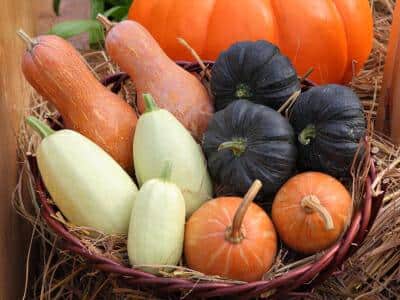
I have several different squash varieties in my three sisters garden, as I like many different squashes. I have a mound of zucchini, one of summer squash, one of spaghetti squash, and one of pumpkins. You may plant whatever squash varieties you enjoy eating in yours. There are also many types of corn and beans you can choose from for your sisters.
I have made a new addition to my three sisters garden this year—I have added rosemary plants to my mounds. Due to my recent research on companion planting, I have learned that Rosemary planted with your beans will keep their natural pests at bay. So I bought two varieties of rosemary and planted them along side my three sisters. Hopefully that will keep the pests at bay!
Three Sisters Stew
- 1 cup dried pinto beans
- 1 small pumpkin or large butternut squash (about 2 lbs.)
- 1 tablespoon olive oil
- 1 medium onion, chopped
- 2 to 4 cloves garlic, chopped
- ½ medium green bell pepper, chopped
- 16 ounces canned diced tomatoes (with juice)
- 2 to 3 ears of corn
- 2 cups vegetable stock or water
- 1 or 2 fresh hot chilis
- 1 teaspoon ground cumin
- 1 teaspoon dried oregano
- Salt and pepper to taste
- ¼ cup fresh minced cilantro
Cover beans with water and soak at least two hours before cooking – overnight is better.
Preheat oven to 400 degrees. Halve pumpkin or squash and scoop out seeds. Place cut side up in shallow baking dish, cover tightly with foil and bake for 40 to 50 minutes – until done but still firm. When cool, scoop out pulp and cut into bite-sized chunks. Set aside until needed.
Put beans to cook in vegetable stock (or water) and cook until fork tender, about an hour to an hour and a half.
Heat oil in a large soup kettle. Add onion and sauté over medium-low heat until translucent. Add the garlic and continue to sauté until onion is golden brown. Pour in beans and stock, add pumpkin and remaining ingredients (save the last two), and bring to a simmer. Cover and simmer gently 20 to 30 minutes. Season to taste with salt and pepper.
Let set one to two hours before serving, and then heat through. Stir in cilantro and serve. The stew should be thick and moist, but not soupy. Add water or stock as needed. Serve in shallow bowls.
©2012 Off the Grid News