 Print
Print
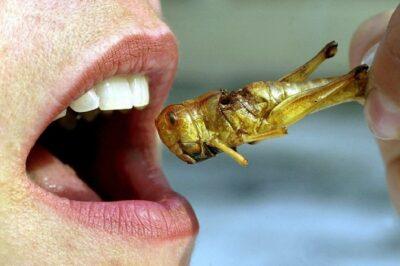
In many countries around the world, bugs are a featured item on the daily menu. Not only that, but in some cultures they are considered a delicacy. In the Bible, we learn that John the Baptist enjoyed a steady diet of locusts and honey, but in the western world, the only time you may see people consuming insects is on television shows such as Fear Factor.
Perhaps now is as good of time as any to change our mindset on insects.
Native American tribes have a long history of eating insects, although we have imposed our Western values on them and discouraged such practice — making it clear that we think that eating insects is a highly primitive practice and one that should be avoided.
In sub-Saharan Africa, young children can no longer hunt for and eat grasshoppers — a valuable source of protein in an area where people are hungry — because western corporations have come in and sprayed pesticides on crop land to ensure high yield. This has left the people scared that the grasshoppers may be poisoned with pesticides and has reduced the insect population substantially.
Statistics tell us that more than 2 billion people eat insects on a routine basis. If you visit a market in the Democratic Republic of the Congo, you will see caterpillars available for purchase. The peoples of this area are fond of their slightly nutty and fruity taste. In the Congolese capital Kinshasa, over 96 tons of caterpillars are eaten annually.
New Survival Seed Bank™ Lets You Plant A Full Acre Crisis Garden!
A variety of insects are also offered to tourists in Southeast Asia, where more than 200 different species of insects are enjoyed.
While beetles and caterpillars are consumed as much as all other edible insects put together, bees, ants and wasps are also favorites in many areas along with cicadas, locusts, flies, crickets and dragonflies.
Let’s take a look at three popular insects and just why so many people enjoy them and maybe why you should consider adding them to your diet — even if it’s your survival plans — as well.
1. Grasshoppers
The nutritional profile of grasshoppers is actually quite impressive. Four average-sized grasshoppers contains about as much protein as a serving of chicken breast. Imagine how much you could save on your grocery bill if you switched out your chicken for grasshoppers?
Grasshoppers can be prepared any number of ways, but boiling and frying seem to be the two most popular. Some people like to sauté them with lemon juice, garlic, onions and chiles while others even incorporate them into fritters. There is really no wrong way to enjoy grasshoppers as long as you cook them. If you eat them raw, you run the risk that they may be carrying parasites. Also, always be sure that you are obtaining your grasshoppers from a reliable source and that they have not been exposed to pesticides.
2. Ants
There are more than 1,200 species of edible ants, and almost all have a somewhat sour flavor due to the fact that they secrete an acid when they are threatened. Ants are often roasted with salt and also eaten after being covered in chocolate. The larvae are commonly eaten as well and don’t have a sour taste like the adult ants.
Red ants, in particular, are favorites of many cultures and, like grasshoppers, contain a great deal of protein and are thought to relieve joint pain. However, caution must be used when harvesting red ants as their bite is painful.
3. Caterpillars
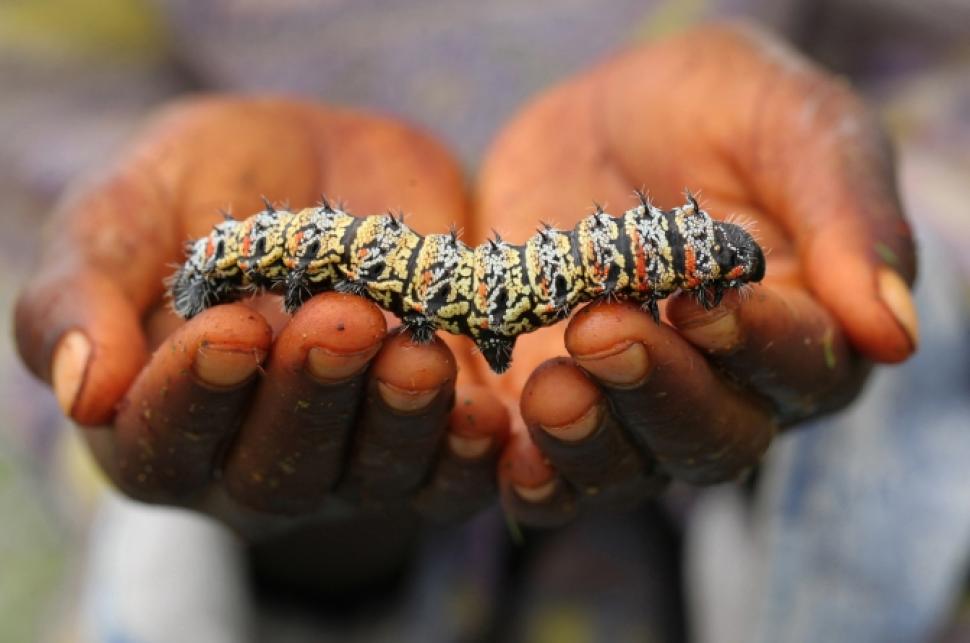
Mopane caterpillars are the larval stage of the emperor moth and are very popular in the southern part of Africa. In fact, harvesting these caterpillars is a multi-million dollar business in places where women and children usually do the work of harvesting. These highly nutritious insects are generally boiled in salt water and dried in the sun. They can last for three months without refrigeration and contain 31 milligrams of iron per 100 grams. They also include sodium, potassium, phosphorous, zinc, magnesium, copper, zinc and manganese.
Other insects
The United Nations released an extensive document that outlined the benefits of raising insects to be used for food for humans and cattle. In a press release, Eva Muller, director of the UN FAO’s Forest Economic Policy and Products Division, noted that insects are virtually untapped for their potential for a world food source. Insects are abundant and environmentally friendly, inexpensive and highly nutritious.
Following is a short list of other insects that are enjoyed in a variety of locations throughout the world:
- Witchetty grub. A staple for aboriginal people in Australia. Tastes like almonds when cooked and is high in oleic acid.
- Termites. Amazingly, 38 percent of a termite is protein. One variety contains 64 percent protein (Syntermes aculeosus). Termites are rich in iron, calcium and essential fatty acids.
- Stink bugs. Popular in Asia, South America and Africa, these bugs are generally eaten raw with the head removed. They are a good source of protein, potassium, iron and phosphorus.
- Mealworms. Raised for human consumption in the Netherlands, the larvae of the mealworm beetle are also consumed in the Western world. Mealworms go head to head with beef for their protein content and are also a good source of potassium, iron, copper, iron, zinc, selenium and sodium.
- African palm weevil. This bug, collected from the trunks of palm trees, is a delicacy amongst a number of African tribes. They are most often pan fried because their body is full of fat, but they are also eaten raw. Research has demonstrated that this insect is loaded with potassium, zinc, iron and phosphorous, in addition to monounsaturated and polyunsaturated fats.
After the Lord created all creatures, he stated it was good; let’s not forget that this also includes insects. If you are ready to move toward a more sustainable future – and go the next step in a survival diet — perhaps insects should be a part of your next meal. All it takes is an open mind and a willingness to think and eat outside of the box!
Would you or have you ever eaten insects? What did you think? Leave your comment in the section below:
Get $600 worth of survival blueprints … absolutely free!