 Print
Print
Nothing quite compares to the taste of fresh beans directly out of your own garden. Visually interesting, easy to grow and relatively low maintenance, it is no wonder that these are a gardening favorite. Beans are legumes – that is, plants which grow pods which contain a single row of seeds.
It can be argued that the common bean is the most important legume in the world. High in protein, fiber and complex carbohydrates, it is estimated that approximately 18.7 million tons are grown in 150 countries around the globe.
There are literally thousands of varieties of the plant, but they all can be divided into two main groups. In one group, you have beans that can be eaten pod and all – such as your typical green bean. This group can be further divided into pole and bush varieties. This group of beans are called snap beans.
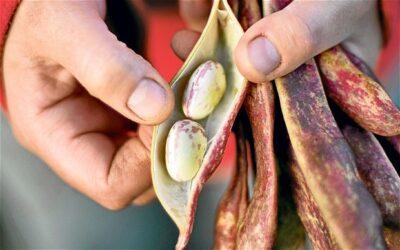
In the second group, you have beans in which only the seeds are eaten – either fresh or dried (for soups, etc.). These beans are called shell beans.
Selecting Beans to Grow
Because there are so many varieties, there are beans that are right for just about any climate. Vines can range greatly in size – anywhere from about eight inches to over nine feet. They can be green, yellow, red, purple or even black.
Snap Beans
Most types of snap beans are available in both bush and pole varieties. If growing pole beans, you will have to set up some kind of structure in your garden for them to climb. A tee-pee set up with a pole in the middle, a round base at the bottom and several strings joining the base to the top of the pole is ideal.
Use The Secrets Of Sea Minerals To Grow More Nutrient Rich Food
Bush beans require less care, but will take up more space in your garden. The time to mature for snap beans is typically 50-55 days for bush beans and 50-67 days for pole beans.
Shell Beans
Shell beans grow very much like snap beans; however, their pods only stay tender for a very short period of time. The shells will quickly become hard, for the seeds to mature. Shell beans take about 55 days to produce pods, and 85 days for the seeds inside to dry.
Planting Beans
Beans should be planted directly in your garden after the soil has reached a temperature of at least 60 degrees Fahrenheit. Unlike their cousin the pea, they should not be planted in cooler temperatures, as this can interfere with germination and possibly cause the seeds to rot.
Plant seeds 1-1.5 inches deep and space them 2-4 inches apart for bush beans and 6-10 inches apart for pole beans.
Caring for Your Bean Plants
Beans are notoriously easy to grow. You should plant them in fertile soil, but once the plants are established, don’t worry too much about fertilizing them since they actually produce most of the nitrogen that they need.
Harvesting Beans
Once flowers have developed on your plants, beans will be ready to pick in about two weeks. For snap beans, try to pick them when they are a good size for their variety but before bumps have formed on the pods. For shell beans, allow them to dry on the vine before harvesting.
New Natural Fertilizer Doubles Garden Production!
Make sure to pinch the beans off the plant rather than pulling them so that you don’t cause any damage. You should be able to harvest every two to three days.
Bean Problems -Troubleshooting
Like most plants in your garden, beans do have a few enemies against which you have to guard. The following are some of the most common pests and diseases, how to identify them and what to do about them:
- Aternaria leaf spot – (brown lesions on leaves) Ensure beans have been planted in fertile soil.
- Anthracnose – (small dark lesions on stems) Ensure you are watering plants at the base and never on the leaves. Also, rotate crops.
- Aphids – (small soft insects that can usually be found on the underside of leaves) If only a few leaves have aphids, simply pinch off those leaves. If there are more, soapy water works as well as planting companion plants, which attract natural predators.
- Black root rot – (long purple lesions on root tissue which can eventually cause plant death) Rotate bean crops with grasses that are not susceptible.
- Cutworms – (these insects severe or “cut” seedlings at the soil line) Ensure that plant debris is removed from the soil.
- Loopers –(These insects will eat holes in the leaves and can be very destructive) Hand pick to remove.
- White mold – (fuzzy white mold on plant flowers) Ensure plenty of space between rows and rotate crops between seasons.
Beans make an excellent addition to any garden, and with so many varieties available, there is something perfect for every garden. So plant some old favorites, or try something completely new!