 Print
Print
We all know the importance of a balanced diet for people, and the same is true for the microorganisms that make composting magic happen. Rather than four major food groups, though, the “food plate” for these miniature humus-makers only includes two categories: carbon and nitrogen.
Carbon and Nitrogen
These two chemical elements, carbon (C) and nitrogen (N), each bring something different to microorganism mealtime. Carbon is the basic building block of life for all organic creatures, and is an important source of energy. The bacteria and fungi living inside a compost pile require large amounts of carbon just to sustain their existence. Nitrogen plays a different, but no less important role, providing a critical component of proteins, genetic material and cell structures.
|
When Something’s Missing
Composting is often misunderstood, and common problems can generally be traced back to an imbalance of these two key ingredients. When a pile doesn’t seem to be breaking down as quickly as expected, the reason is often an abundance of carbon. Without adequate nitrogen, the microbe population can’t expand and the pile simply sits there.
Seamazing: The Low-Cost Way To Re-mineralize Your Soil
Foul odors, on the other hand, are most often the result of excess nitrogen. If there’s too much nitrogen and not enough carbon, the microorganisms can’t make use of all of the nitrogen and it instead escapes in the form of ammonia, giving the pile an unpleasantly sour smell.
The 25:1 Ratio
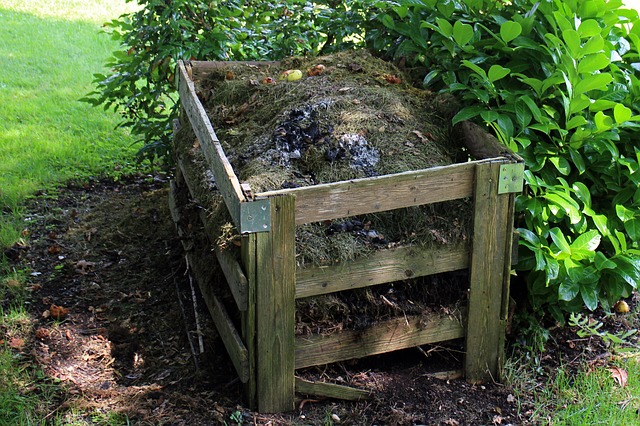
The best way to avoid these compost conundrums is to aim for an overall ratio of 25:1 — 25 parts carbon to 1 part nitrogen. Microorganisms are most effective at decomposing materials when the proportion of carbon to nitrogen is kept close to this ratio. And while virtually everything that can be added to a compost pile includes both of these important nutrients, the percentage of each varies dramatically from material to material. Some materials, like leaves, are carbon rich, with a carbon-nitrogen ratio of 60:1. Others narrow the gap between the two, contributing a more substantial percentage of nitrogen, like bloodmeal which has a carbon-nitrogen ratio of 4:1. By balancing different materials so that, overall, the pile approaches a carbon-nitrogen ratio of 25:1, you’re in an ideal position to maximize your composting capabilities.
The chart below summarizes the carbon-nitrogen ratio of some common composting materials:
Carbon-Nitrogen Ratios*
| Material | Carbon-Nitrogen Ratio |
| Blood meal | 4:1 |
| Coffee grounds | 20:1 |
| Eggshells | 35:1 |
| Fruit waste | 35:1 |
| Grass clippings | 20:1 |
| Leaves | 60:1 |
| Manure | 10-20:1 |
| Pine needles | 90:1 |
| Saw dust | 500:1 |
| Straw | 80:1 |
| Vegetable peelings | 10-12:1 |
* Source: University of Arkansas Department of Agriculture
Green and Brown
To make the process of achieving the elusive 25:1 ratio easier, it can be helpful to alternate layers of “green” and “brown” materials. While not necessarily literally green-colored, “green” layers are made up of fresh organic matter, like vegetable scraps, grass clippings, rotted manure and general garden waste. These components contribute a greater percentage of nitrogen to the pile.
Need Non-GMO Seeds For Your Organic Garden? The Best Deals Are Right Here!
“Brown” materials, so-called because they tend to be older and more dried-out, include leaves, straw, pine needles, sawdust, etc., and are excellent carbon donors. Thinking in terms of these two main categories will make it easier to adjust your pile to find the perfect balance, which many gardeners suggest is approximately two-parts green to every one-part brown.
| Problem: Pile doesn’t seem to be breaking down.
Solution: Pile has too much carbon. Increase percentage of nitrogen-rich “brown” material. Problem: Pile has a sour smell. Solution: Pile has too much nitrogen. Increase percentage of carbon rich “green” material. |
The real action in any compost pile happens on a scale too small to see, and being mindful of how your pile operates on this level is critical to turning raw materials into soil-enriching black gold. The 25:1 carbon-nitrogen ratio is a surefire recipe for microbe satisfaction, and the best way to ensure composting success.
What advice would you add on making compost? Share your tips in the section below:
Bust Inflation With A Low-Cost, High-Production Garden. Read More Here.