 Print
Print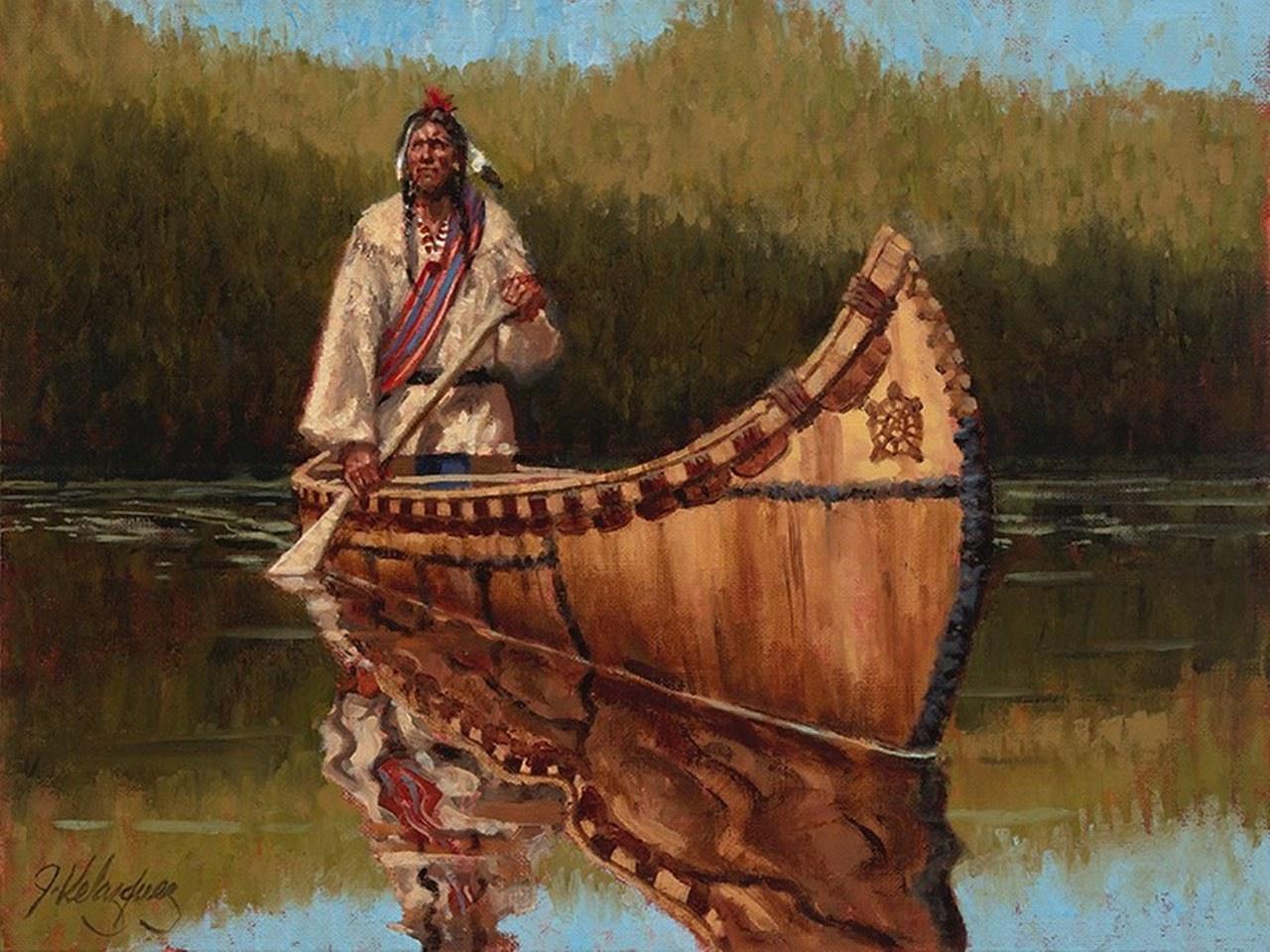
Most of us see little use for bark. We peel it before we build with it, we trim it off before smoking fish or game, and we generally don’t see much value in it as firewood or a dependable heat source.
Native people, though, had a much different viewpoint. They used bark from many trees as a resource for numerous solutions, but there’s a trick to working with this material.
Paper birch is the bark of choice for bark crafters, and the Ojibway took barkcraft to a new level thanks to the fact that birch grew everywhere they lived. Other tribes had to make-do with stiffer and less pliable resources, although slippery elm, willow and aspen offered workable solutions.
Harvesting Bark
Be careful with living, green trees. If you remove too much bark, you will potentially kill the tree. In fact, if you cut the bark from a tree around its circumference, it will be dead in weeks, if not months. Native peoples would sometime “girdle” a tree. This involved removing bark around the full circumference of the tree; this was a designed action and they knew that the following year the tree would be dead. Often, a large fire was started at the base and stone axes were used to cut into the weakened and charred wood until repeated fires and chopping felled the tree.
Discover The Secrets Of The Word’s Top Survivalists!
Even a dead birch tree will provide a strong and pliable source of bark. If you come across a dead-fall birch, harvest the bark to your heart’s content. If you’re desperate and only have access to live trees, limit your cuts and stripping to half of the tree if you can. That will at least give it a fighting chance for recovery.
You may be wondering: Why is bark so important to a tree? The inner bark or “xylem” is essentially the circulatory system for any tree. Water and nutrients are delivered to the tree from the roots to its leaves by this circulation. That’s why a “girdled” tree will soon die. When its only source of water and nutrients is cut off, the tree has no options for survival.
Pre-Treating Bark
There are a few steps to making any bark more workable. Some tree bark, like the slippery elm, requires a bit of scraping of the outer bark to make the piece more pliable. Birch is naturally flexible, but it will be curved when first harvested. Native Americans flattened the birch bark on the ground with the curved side down and weighted it with stones. The moisture in the ground and the weight of the stones eventually flattened the bark.
Another key step is to soak the bark in hot water before working with it. This also adds some flexibility, and it helps to keep the bark from splitting when it’s folded or shaped.
Many bark creations were sewn at the seams with cordage or strips of leather to re-enforce items like baskets and bowls. If the object needed to hold water, the seams were sealed with pine pitch.
Let’s take a look at items the Native Americans made from bark:
1. Cup
One of the easiest and most common uses for bark was for a ladle or drinking cup. A circle of birch bark was cut and a triangular fold was made from the center to the edge. This fold was then overlapped to form a cone. The creased bark was held in place with a stick with a split in it, and the fact that the bark was not cut made it water tight to either scoop water from a spring, or to simply drink it as a cup.
2. Bowl
This same approach was used with a wider circle of birch bark or slippery elm to make bowls supported by rocks around the side, or a hat that would shade you from the sun or protect you from the rain.
Story continues below video
https://www.youtube.com/watch?v=V1x_mTkDrps
3. Pot
The bowl concept also can allow you to cook with a bark cooking pot. Hot stones were picked from a fire with two sticks much like chop sticks, and the stones were swirled in the water until the water actually started to boil.
But be careful with hot rocks. A rock from a river may appear nice and smooth, but many of them contain moisture in their cracks and crevices and can explode and shatter in the fire. Igneous rocks like granite or basalt are the best because they are less likely to be porous and allow water to seep in.
4. Sunglasses
“Sunglasses” are another option, with a piece of bark cut about six inches wide and two inches in height. You may doubt the need for sunglasses, but in winter, snow-blindness is a serious problem, as sunlight reflects off forests and fields of snow. These sunglasses, though, did not contain any glass or plastic. A couple of sticks were used to support the bark strip over the ears like a regular pair of sunglasses, and two crosses in the shape of a plus sign (+) were cut into the bark at eye level.
Ultra-Compact Water Filter Fits In Your POCKET !
A semi-circular cut was made to fit over the bridge of the nose. The size of the crosses was usually a half-inch long both up and across, and the slit was about an eighth of an inch wide. You look at the world through the slit, which allows less light and protects your eyes. This was actually an Eskimo invention.
5. Backpack
A backpack is also easy to make with a long piece of bark about three feet in length and a foot and a half wide. The bark was folded over, and the seams on either side were sown together with cordage or long strips of leather. Holes were poked first and the cordage or leather simply woven through. Straps from cordage or leather were attached and reinforced with more lacing. and everything from personal items to harvested plants, fruits and vegetables could be carried with ease.
6. Candle lantern
A curved piece of birch bark, wrapped and held in place at the base around a circle of sawn wood creates a wind block and reflector for a candle lantern in a fixed camp. Be careful using this indoors. Birch bark is highly flammable, which makes it great tinder, but not something you want to burst into flames in a cabin.
7. Torch
A simple torch is easy to improvise, with strips of birch bark held in place by a slit in a long branch. Additional strips of bark can be added as the birch burns; it actually gives off a good amount of light for a long time.
Final thoughts
All Native American tribes crafted canoes from birch, but that’s something that’s a bit beyond my expertise, although I’ve had success making small-scale toy canoes from birch bark, and my kids and grandkids still play with them. Maybe someday I’ll see if I can scale it up and actually make a birch bark canoe, but I’ll definitely be testing it in very shallow water.
What advice would you add on making tools and utensils from bark? Share your tips in the section below:
Every Year, Gardeners Make This Stupid Mistake — But You Don’t Have To. Read More Here.