 Print
Print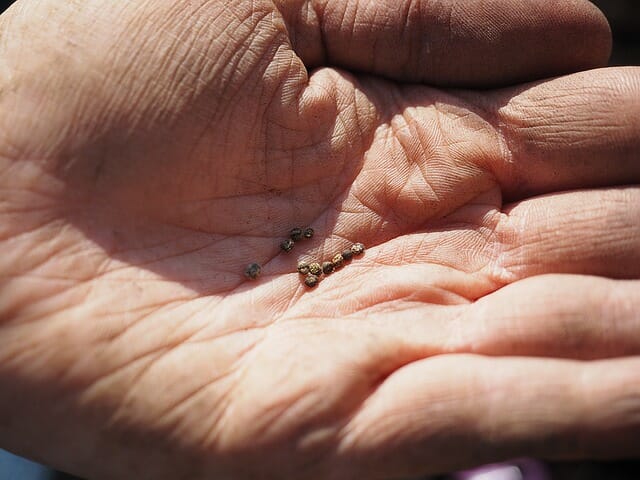
A legitimately independent gardener/homesteader incorporates some aspect of both plant breeding and seed saving into the list of skills that are required for supporting a family through good times and bad. Fortunately, learning to save seeds is relatively easy.
First, it is a good idea to familiarize yourself with some necessary terminology. For seed-saving, these terms include “annual,” “biennial” and “perennial.”
Annual plants are those that grow to maturity and produce seed within one growing season. A few good examples of annual plants include head lettuce, arugula, mustard greens, corn, tomatoes, peppers, eggplant cucumbers and melons. This category also covers several important medicinal flowers and herbs, such as dill, cilantro, calendula and nasturtiums.
Biennial plants are those that produce a crop within the first season but will not produce seeds until the second year of growth. Some examples of biennial crops include carrots, parsnips, shallots, onions and leeks.
Perennial crops are those that come back year after year. Although seed can be saved from perennials, typically these plants are propagated by divisions or cuttings. Some examples of perennial crops include rhubarb, raspberries, grapes, horseradish and asparagus.
Open Pollinated, F1 Hybrid, Grafted Stock
Another important set of terms relates to how the seed was originally bred. This terminology is also important to understand because it can affect the overall outcome of your success as a new seed-saver. Some terms used to describe breeding techniques include “open pollinated,” “F1 hybrid,” “grafted stock” and “genetic modification.”
Get The Best Deals On Non-GMO Seeds For Your Garden Right Here!
Open-pollinated seeds are the best planting stock for folks who are truly interested in experimenting with at-home seed saving. Since they have been allowed to cross naturally with each other, these seeds still have the ability to adapt quickly to their host environment through the exhibition of a large variety of traits that still remain present within their genetic make-up … in other words, they are still a little bit “wild.”
F1 Hybrids are plants that are bred using traditional breeding techniques — usually hand pollination by humans. Some F1 Hybrids produce sterile seed, making them less ideal for at-home seed-saving. However, many of today’s F1 Hybrids have been in production long enough to be incredibly stable, and the seed that is produced is frequently still viable.

Grafting stock usually refers to fruit trees. During this process, a branch is clipped from a tree that produces a known variety (such as Fuji Apples) and is attached to a hardy rootstock via a graft. There are multiple rootstocks available for the same variety. Each rootstock is geared toward a specific overall tree size, disease resistance or a certain soil type. It is possible to graft trees at home; however, unless you plan on growing your own rootstock, grafting is less sustainable than other forms of plant breeding.
Finally, genetically modified organisms are those that are created within a laboratory. To date, it is not practical to produce genetically modified crops at home. Of course, supporters of organic gardening wouldn’t want to do so, anyway.
How I Save Seed
So now that you have a small vocabulary of terms at your disposal, what is the next step? Start by identifying the crops that you utilize most regularly within your garden. At my house, we eat a lot of lettuce, so it makes sense for us to save our own seed. During the early part of the season, we identify individual plants that seem to be doing exceptionally well within our climate. We look for characteristics that are important to us, such as speed of growth, overall size, color, texture and (most importantly) flavor. We then mark those individual plants with a flag or some other type of marker – and we do not harvest them.
As the season goes on, these plants will continue to grow and will eventually send up flowers. We allow them to pollinate naturally via insects or the wind. Once there are mature seeds available for harvest, we clip the entire flower stalk and place it upside down in a paper bag. Using our fingertips, we roll the seed free from the chaff and discard the hard and poky stems. We agitate the seed slightly to shake the fluff off the seed and then use a blow dryer to blow out the lighter material. We then have hundreds and hundreds of beautiful lettuce seeds that we can plant again the following season. We place these seeds into a sealed glass jar and store them in a cool and dark location. The jars are labelled with the year the seed was collected and the original variety. For most annual plants, this is about as complicated as things get.
For more information on how to save seed for other crops in your garden, check out the book Seed to Seed by Suzanne Ashworth. She does an amazing job of helping newbie seed savers understand the process of both creating and saving seed at home.
Happy gardening!
Share your tips on saving seeds in the section below: