 Print
Print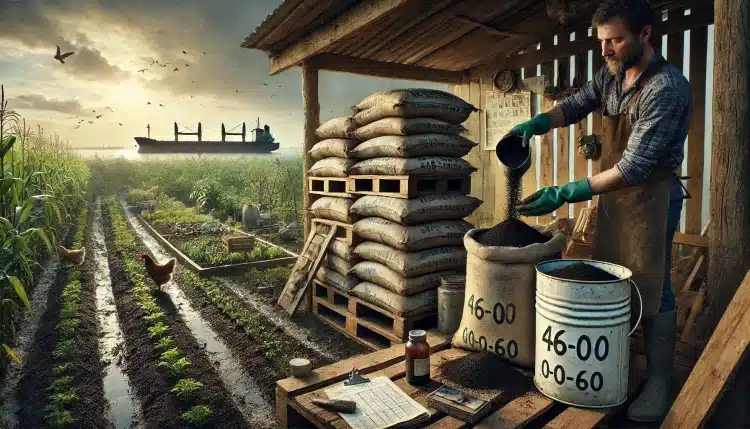
The 6.5% Spike That Just Put Homesteaders on the Clock
Fertilizer prices just jumped 6.5% in a matter of a few days, and for small farms and homesteads that isn’t just a market headline—it’s a warning siren.
Out where food actually gets grown, fertilizer isn’t some abstract commodity on a chart. It’s the difference between a full root cellar and a thin harvest. And when prices move this fast, the message is simple: secure what you need now, or plant the next two seasons at the mercy of global chaos.
For homesteaders planning their 2026–2027 gardens, pastures, and feed plots, this spike may be the first tremor of something much bigger.
Why This Price Spike Matters for the Next Two Growing Seasons

First off, this isn’t normal commodity noise.
As of early March 2026, global fertilizer benchmarks have surged roughly 6.5% in just days, even while metals like copper and iron ore drift lower. That kind of divergence is a signal. It suggests the ingredients that grow food are breaking away from the rest of the market and being treated less like bulk commodities and more like strategic resources.
Modern yields—whether you’re growing corn, wheat, hay, or just trying to keep a productive garden—lean heavily on three pillars: nitrogen, phosphate, and potash.
When prices jump this quickly, farmers and small producers are forced into two uncomfortable choices:
First, they can pay whatever the dealers ask and swallow the higher costs.
Or second, they can cut application rates and accept lower yields.
Neither option is great.
For a homesteader, that decision shows up in very practical ways:
less animal feed, smaller harvests, more grocery trips, and more dependence on a food system that’s already wobbling.
Agronomists warn that if farmers cut nitrogen and phosphate by more than about 10%, global corn and wheat yields could slide 5–8% during the 2026–2027 season.
That may not sound huge—until you realize how tight global grain stocks already are.
When yields slip even a little, the ripple spreads everywhere:
- Grain prices climb
• Animal feed becomes more expensive
• Meat, milk, and eggs follow
And suddenly every household that eats bread, beef, or scrambled eggs feels the squeeze.
The Geopolitical Fuse That Just Got Lit
Now here’s the part that makes this spike different from the usual seasonal bump.
This isn’t just supply and demand.
It’s war, energy, and shipping chokepoints colliding all at once.
Recent military action—reportedly dubbed “Operation Epic Fury”—targeted Iranian infrastructure after months of rising maritime tension in the Persian Gulf.
Iran responded in a way markets fear most: by effectively shutting commercial traffic through the Strait of Hormuz.
That narrow strip of water carries:
- roughly one-third of globally traded fertilizer
• massive volumes of oil and LNG exports
• and key feedstocks for global agriculture
Once that shipping lane tightens, fertilizer markets feel it almost instantly.
Natural gas is the main ingredient used to produce ammonia and urea, the backbone of nitrogen fertilizers. When gas prices jump—or shipments stall—nitrogen fertilizer prices follow within days.
That’s exactly what we’re seeing now.
While headline fertilizer benchmarks show a 6–7% move, some regional markets are reporting urea price jumps of 20–30% in a single week.
And that’s only the first layer.
China Quietly Pulled Phosphate Off the Market
At the same time, another major supply lever just moved.
China—one of the world’s dominant phosphate fertilizer producers—has sharply restricted exports until at least August 2026.
The goal is simple: protect its own agriculture and industry.
But the global effect is dramatic.
It removes a large chunk of phosphate supply from international markets right as:
- Northern hemisphere farmers are securing spring fertilizer
• Southern hemisphere growers are planning their next cycle
Meanwhile, Europe has imposed tariffs on Russian and Belarusian fertilizers, redirecting trade flows toward countries like India and Brazil.
Put all those pieces together and the picture becomes clear:
Western buyers are now competing for a smaller, more expensive supply pool.
And small producers?
They are almost always last in line.
What This Means for Homesteads and Small Farms
Most headlines focus on giant agribusiness companies and global commodity traders.
But the real pressure often lands on the smallest producers—the people raising food close to home.
Across North America, fertilizer dealers are already reporting:
- fast price adjustments in nitrogen products
• tight inventory in some regions
• and early signs of panic buying
Meanwhile many farmers are entering what analysts call a “buying freeze.”
They’re waiting… hoping prices fall before planting.
But history shows what usually happens next.
Everyone waits.
Then suddenly everyone tries to buy at once.
That’s when shelves empty.
For homesteaders, the risks show up in a few practical ways.
First, the fertilizer you normally rely on—urea, ammonium sulfate, triple superphosphate, or your usual NPK blend—may simply not be available in normal quantities.
Second, prices may jump high enough that you’re tempted to cut application rates, even when your soil actually needs more nutrients.
And third, if the Hormuz disruption drags on for several months, analysts warn the current 6.5% spike could snowball into something far worse—similar to the fertilizer shock of 2022 when prices doubled or tripled in some regions.
Those are exactly the kinds of conditions where you don’t want to rely on just-in-time inputs.
Especially for the crops that anchor your calorie supply.
The Smart Move: Stock Up Before Everyone Else Wakes Up
The solution isn’t panic.
It’s moving early and moving strategically.
Right now, the fertilizer market still has inventory moving through the system. But once fear hits the buying side, prices often disconnect from reality.
Homesteaders can take a few practical steps in the coming weeks.
Start by calculating what you normally use for:
- gardens
• pastures
• hay fields
• grain or feed plots
Then consider securing one additional season of nutrients if your budget allows.
Focus on versatile fertilizers like:
- Urea (46-0-0)
• Ammonium sulfate
• DAP or MAP phosphate
• Potash (0-0-60)
These can support multiple crops and soil types when applied carefully.
Build Fertility That Doesn’t Depend on the Global Market
At the same time, it pays to strengthen the fertility systems that live right on your property.
Compost, manure, cover crops, and plant residues may not completely replace synthetic nitrogen—but they provide a powerful buffer when commercial fertilizer becomes scarce.
If you have access to livestock manure or stable bedding waste, now is the time to lock in that relationship before everyone else starts searching for the same resource.
Mineral amendments can help too.
Materials like lime, gypsum, sulfur, or rock phosphate improve soil efficiency and stretch the value of every pound of fertilizer you apply.
Storing Fertilizer the Right Way
If you do stock up, storage matters.
Most fertilizers keep well if protected from moisture.
The basic rules are simple:
Keep it dry.
Keep it cool.
Keep it sealed.
Urea and blended fertilizers can absorb moisture and cake if left open, but when stored in sealed bags or bins—on pallets and under cover—they remain usable for years.
A few tarps and pallets are cheap insurance compared to buying replacement fertilizer during a shortage.
The Bigger Lesson: Fertility Is Now a Strategic Resource
What’s happening right now is bigger than one price spike.
It’s a reminder that the global food system rests on fragile supply chains and narrow shipping lanes.
Policymakers are already talking about national fertilizer reserves, new domestic production, and experimental “green ammonia” plants.
But those solutions will take years.
Homesteaders don’t have to wait.
You can start building fertility independence today by:
- keeping a rolling inventory of key nutrients
• testing soil regularly to avoid waste
• using cover crops that fix nitrogen
• mulching and composting aggressively
• exploring local nutrient sources like biochar and vermiculture
In short, treat fertilizer the same way you treat seed or livestock feed:
As a strategic supply worth securing ahead of time.
The Window to Prepare Is Open—But It May Not Stay That Way
If disruptions in the Persian Gulf continue into late spring, analysts warn fertilizer markets could tighten quickly as growers across both hemispheres compete for limited supply.
And once panic buying starts, prices rarely rise in a smooth line.
They jump.
They disconnect from fundamentals.
They become driven by fear.
You can’t control the Strait of Hormuz.
You can’t control export bans or war.
But you can control one critical thing:
whether your soil has what it needs for the next two seasons.
That’s why the smartest move right now is simple.
Take inventory this week.
Call your supplier.
Coordinate with neighbors if needed.
And secure the nutrients your land depends on before the rest of the market catches on.