 Print
Print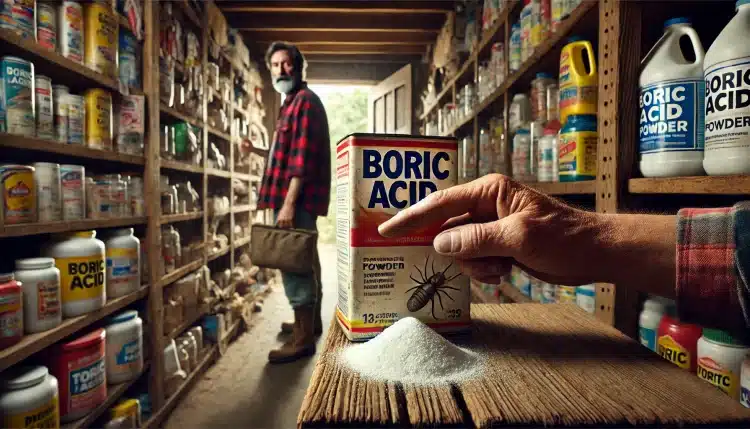
The Old-Timer, The Bottom Shelf… And The Solution Nobody’s Pushing
A few years ago, an old-timer back in Stockton, IL, showed me something in a hardware store that I almost walked right past.
No flashy label. No bold claims. No “professional strength” branding.
Just a plain box of white powder sitting on the bottom shelf, half-covered in dust like it had been waiting there for years.
He tapped it with one finger and said, real casual,
“That right there will stop termites cold… and nobody’s gonna tell you to use it.”
I laughed it off at first.
I mean, how many times have you heard that before? Some “simple trick” that’s supposed to replace an entire industry?
But he didn’t smile back.
Instead, he just said,
“Think about it… if something that cheap actually worked, who would make money telling you?”
And right there, standing between the bug spray aisle and the overpriced traps, something started to click.
Because when it comes to termites, most folks—even the independent, do-it-yourself types—have been trained the same way.
You see damage… you picture thousands of dollars… and your first instinct is to reach for a phone.
Call the company.
Schedule the inspection.
Brace for the estimate.
But what if the solution was already sitting there… ignored?
The Powder That Doesn’t Quit
Now here’s where things get interesting.
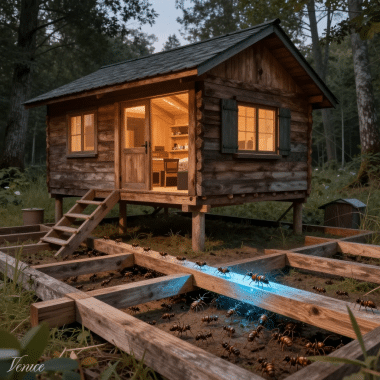
That plain white powder is boric acid—and once it gets into wood, termites don’t “learn around” it. They don’t adapt. They don’t build resistance like they do with many synthetic chemicals.
Instead, it becomes a permanent problem for them.
Inside a crawlspace, a wall cavity, or a beam, boric acid doesn’t evaporate. It doesn’t quietly break down. It doesn’t fade away like sprayed treatments that come with a five-year reminder and another bill.
It just stays there.
Waiting.
And for a wood-chewing insect, that’s about as bad as it gets.
How It Really Works (And Why It’s So Effective)
Unlike a lot of modern pesticides, boric acid doesn’t rely on complicated chemistry.
Instead, it works in a simple, almost brutal way.
The powder clings to an insect’s body like microscopic shards. It scratches, dries, and disrupts them from the outside. Then, when they groom themselves—as insects always do—they ingest it.
And that’s when the real damage starts.
But here’s the part most people never hear.
Termites don’t just die and disappear.
They get eaten.
So one exposed termite doesn’t stay isolated. It carries that boric acid back into the colony, where it spreads slowly, quietly, from one insect to another.
No spray hose.
No trenching.
No repeat visits.
Just a chain reaction that keeps working after you’ve walked away.
The Invisible Shield Around A Homestead
Now step back and think like a builder.
If termites die every time they feed on treated wood… what happens when the wood itself becomes the barrier?
That’s exactly what builders figured out decades ago.
As early as the 1930s, researchers were testing boric acid on termites with striking results—mass die-offs within weeks, and complete mortality when feeding on treated wood.
By the mid-1900s, some builders were dusting wall cavities and treating lumber during construction, creating what amounts to an invisible shield inside the structure itself.
One messy afternoon…
Instead of a lifetime of treatments.
And out on an off-grid homestead, that kind of built-in protection isn’t just convenient—it’s common sense.
When A Simple Fix Becomes Bad For Business
But here’s where things take a turn.
Because termite control today isn’t built around one-time solutions.
It’s built around contracts.
Every year, hundreds of thousands of homes take termite damage. Billions of dollars get spent—not just fixing the problem, but managing it year after year.
Inspection fees.
Treatment plans.
Annual renewals.
And the kicker?
Most insurance policies won’t cover termite damage. It’s labeled “preventable.”
So you pay out of pocket… again and again.
Now drop a $5 solution into that system—something that can be applied once and keep working for years—and suddenly it doesn’t fit the model anymore.
And when something doesn’t fit the model… it doesn’t get talked about.
Safer Than You’ve Been Led To Believe
Of course, one of the first things you’ll hear is that termite chemicals are too dangerous for regular people to handle.
And that’s true—for many of the synthetic options used today.
But boric acid is different.
According to toxicology data, it’s considered low in acute toxicity and isn’t carcinogenic. In fact, in lab comparisons, mammals tolerate higher doses of boric acid than table salt before reaching lethal levels.
Let that sink in.
Now, that doesn’t mean you treat it carelessly. You still use gloves. You wear a dust mask. You keep it away from kids and animals—just like any fine powder on a working homestead.
But the gap between “dangerous chemical” and “low-toxicity mineral” is wider than most people realize.
The Business Of Keeping You Dependent
So why isn’t this common knowledge?
Because modern pest control isn’t built on permanent fixes—it’s built on repeat business.
Large upfront fees.
Ongoing monitoring.
Annual renewals.
From a corporate standpoint, it’s predictable and profitable.
But for someone living off-grid—or just trying to stay financially independent—it’s a drain.
Boric acid doesn’t play along.
You can’t patent it.
You can’t upsell it.
And once it’s in place, it doesn’t need much attention.
So instead of being front and center, it gets buried—under regulations, licensing language, and marketing that quietly points you somewhere else.
Turning A $5 Fix Into A $5,000 Problem
Out on a homestead, every dollar matters.
Money you don’t spend on unnecessary services can go toward solar panels, water systems, tools, livestock—things that actually build independence.
But when termites show up, even seasoned DIY folks have been conditioned to hand the problem off.
Meanwhile, boric acid has been quietly proving itself for decades.
It doesn’t evaporate out of dry wood.
It doesn’t degrade under normal conditions.
And it’s recognized as a legitimate long-term treatment in building practices.
So the real barrier isn’t science.
It’s awareness.
Reclaiming Old-School Termite Defense
Think about the old-timers for a minute.
They didn’t outsource everything. They paid attention. They used what worked. And they passed it down.
That mindset still matters—maybe more now than ever.
Because boric acid fits that world perfectly.
It takes a little time.
A little dust.
A willingness to crawl into tight spaces and do the job yourself.
But in return, you get something most modern systems don’t offer:
A solution that keeps working long after everyone else has left.
And in a world where services can disappear overnight… where trucks stop rolling and phones go quiet…
That kind of quiet, built-in protection isn’t just useful.
It’s the difference between holding your ground… and watching it slowly get eaten out from under you.